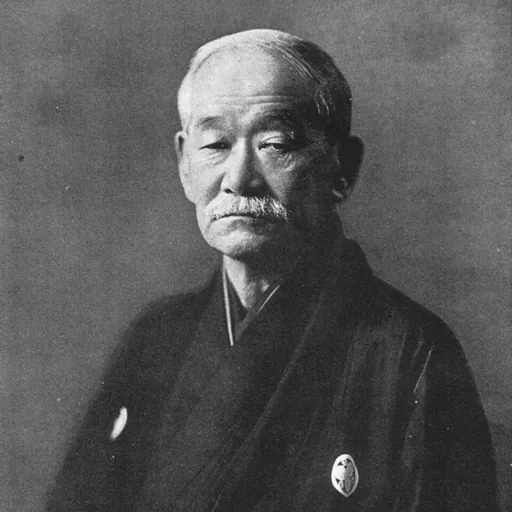
About Kanō Jigorō
Lived 1860 – 1938 (aged 77). Kanō Jigorō was a Japanese judoka, educator, translator, politician, martial artist and pedagogue.
Important postings included serving as director of primary education for the from 1898 to 1901, and as president of Tokyo Higher Normal School from 1900 until 1920. He was the educational founder of Nada Middle High School in Kobe, Japan. Accomplishments included being the first Asian member of the International Olympic Committee (IOC) (serving from 1909 to 1938), officially representing Japan at most Olympic Games held between 1912 and 1936, and serving as a leading spokesman for Japan's bid for the 1940 Olympic Games.
His official honors and decorations included the First Order of Merit and Grand Order of the Rising Sun and the Third Imperial Degree. Kanō was inducted as the first member of the International Judo Federation (IJF) Hall of Fame on 14 May 1999.
Early years Childhood
Kanō Jigorō was born to a sake-brewing family in the town of Mikage, Japan (now within Higashinada-ku, Kobe). The family sake brands included "Hakushika", "Hakutsuru", and "Kiku-Masamune". However, Kanō's father Kanō Jirōsaku (né Mareshiba Jirōsaku) was an adopted son and he did not go into the family business. Instead he worked as a lay priest and as a senior clerk for a shipping line. Kanō's father was a great believer in the power of education in the modern world, and he provided Jigorō, his third son, with an excellent education. The boy's early teachers included the neo-Confucian scholars Yamamoto Chikuun and Akita Shusetsu. Kanō's mother died when the boy was nine years old, after which his father moved the family to Tokyo. The young Kanō was enrolled in private schools, and had his own English language tutor. In 1874 he was sent to a private school run by Europeans, Ikuei Academy, to improve his English and German language skills.
At the time of his adolescence, Kanō stood but weighed only . He was frequently bullied at Ikuei due to this small size and his intellectual nature, to the point other students sometimes dragged him out of the school buildings to beat him up, so he wished he were stronger in order to defend himself. One day, Nakai Baisei, a friend of the family who was a member of the shōguns guard, mentioned that jūjutsu was an excellent form of physical training, and showed Kanō a few techniques by which a smaller man might overcome a larger and stronger opponent. Seeing potential for self-defense on this, Kanō decided he wanted to learn the art, despite Nakai's insistence that such training was out of date and dangerous. During his time at the university, he started looking for jūjutsu teachers. He first looked for bonesetters, called seifukushi. His assumption was that doctors who knew the martial art were better teachers. His search brought him to Yagi Teinosuke, who had been a student of Emon Isomata in the Tenjin Shin'yō-ryū school of jūjutsu. Yagi, in turn, referred Kanō to Fukuda Hachinosuke, a bonesetter who taught Tenjin Shin'yō-ryū in a 10-mat room adjacent to his practice. Tenjin Shin'yō-ryū was itself a combination of two older schools: the Yōshin-ryū and Shin no Shindō-ryū.
Fukuda's training method consisted mostly of the student taking fall after fall for the teacher or senior student until he began to understand the mechanics of the technique. Fukuda stressed applied technique over ritual form. He gave beginners a short description of the technique and had them engage in free practice (randori) in order to teach through experience. It was only after the student had attained some proficiency that he taught them traditional forms (kata). This method was difficult, as there were no special mats for falling, only the standard straw mats (tatami) laid over wooden floors.
Kanō demonstrated jūjutsu for Ulysses S. Grant when the former U.S. president visited Japan in 1879. On 5 August 1879, Kanō participated in a jūjutsu demonstration given for former United States president Ulysses S. Grant. This demonstration took place at the home of the prominent businessman Shibusawa Eiichi. Other people involved in this demonstration included the jūjutsu teachers Fukuda Hachinosuke and Iso Masatomo, and Kanō's training partner Godai Ryusaku. Fukuda died soon after this demonstration, at the age of 52. Fukuda's students were not a large group, and among them Kanō was suitably skilled in randori and was clearly the most advanced in kata, and so Fukuda's widow chose Kanō to inherit the scrolls of his school. She also asked that the dojo remain open under Kanō's leadership, and he did assume this teaching responsibility for a time, but he soon decided that he should train more before accepting the duty of being a lead instructor.
Kanō began studying with Iso, who had been a friend of Fukuda. Despite being 62 years old and standing only tall, Iso had gained a powerful build from jūjutsu training. He was known for excellence in kata, and was also a specialist in atemi, or the striking of vital areas. In Iso's method, one began with kata and then progressed to free fighting (randori). Due to Kanō's intense practice and his solid grounding in the jūjutsu taught by Fukuda, Kanō became an assistant instructor at Iso's school. Iso Masatomo died in 1881. While under Iso's tutelage, Kanō witnessed a demonstration by the Yōshin-ryū jūjutsu teacher Totsuka Hikosuke and later took part in randori with members of Totsuka's school. Kanō continued to associate with students and teachers of the other schools of his era, and learned that Motoyama Masahisa, who was on a baseball team with Kanō and also was a graduate of the University of Tokyo, was the son of a master of the Kitō-ryū school. The senior Motoyama was now elderly and taught only kata, but Kanō had been seeking a teacher to train under actively after his previous teacher had died. Due to Kanō's persistence, Motoyama introduced Kanō to Iikubo Tsunetoshi as a more suitable Kitō-ryū master.
Kanō began training in Kitō-ryū with Iikubo Tsunetoshi (Kōnen). Iikubo was an expert in kata and throwing, and fond of randori. Kanō applied himself thoroughly to learning Kitō-ryū, believing Iikubo's throwing techniques in particular to be better than in the schools he had previously studied.
Menkyo certificate issued by Iikubo to Kanō, October 1883. The term Jūdō (柔道), which had already been in use within Kitō ryū, appears in the first (rightmost) column: the art is identified as Nihonden Kitō Jūdō. After these events, Iikubo granted Kanō menkyo. Iikubo conferred this certification "along with a densho (a document that a master confers on a student who gains master-level proficiency) and everything else that he could bestow". Kanō continued to offer instruction in Kitō-ryū jūjutsu for a few years after this, and the limited records documented from the era show that he was further granted menkyo kaiden: a hontai-no-maki scroll of Kitō-ryū Takenaka-ha (issued in June 1885 to Saigō Shirō) survives which bears the signature of Kanō Jigorō personally.
To name the gradually evolving system he was teaching at the Kodokan, Kanō revived a term that Terada Kan'emon, the fifth headmaster of the Kitō-ryū, had adopted when he founded his own style, the Jikishin-ryū: "jūdō". The name combined the characters , meaning "pliancy", and dō, which is literally "The Way", but figuratively meaning 'method.'
From a technical standpoint, Kanō combined the throwing techniques of the Kitō-ryū and the choking and pinning techniques of the Tenjin Shin'yō-ryū. As such, judo's Koshiki-no-kata preserves the traditional kata of Kitō-ryū, while Itsutsu-no-kata is from Tenjin Shin'yō-ryū; in both cases there are only minor differences from the mainline tradition of each school as learned by Kanō. Similarly, a number of techniques from Tenjin Shin'yō-ryū are preserved in judo's Kime-no-kata, although Kime-no-kata itself was newly composed by Kanō for his judo students.
Kanō's initial work was influenced by various methods and institutions. As he wrote in 1898, "By taking together all the good points I had learned of the various schools and adding thereto my own inventions and discoveries, I devised a new system for physical culture and moral training as well as for winning contests."
In May or June 1882, Kanō started the Kodokan judo with twelve mats, in space belonging to the , a Buddhist temple in what was then the Shitaya ward of Tokyo (now the Higashi Ueno district of Taitō ward), with Iikubo attending the dōjō three days a week to help teach. Kanō had only a handful of students at this time, but they improved their technique through regular contests with local police jūjutsu teams.
The Kodokan moved to a 60-mat space in April 1890. In December 1893, the Kodokan started moving to a larger space located in Tomizaka-cho, Koishikawa-cho, and the move was completed by February 1894.
During the late 1890s, the Kodokan moved two more times; first to a 207-mat space in November 1897, and then to a 314-mat space in January 1898.
The Kodokan moved once again during Kanō's lifetime, and on 21 March 1934, the Kodokan dedicated this 510-mat facility. Guests at the opening included the Belgian, Italian, and Afghan ambassadors to Japan. In 1958, when the Kodokan moved to its current eight story facility, that now has more than 1200 mats, the old building was sold to the Japan Karate Association.
Ideals On 18 April 1888, Kanō and Reverend Thomas Lindsay presented a lecture called "Jiujitsu: The Old Samurai Art of Fighting without Weapons" to the Asiatic Society of Japan. This lecture took place at the British Embassy in Tokyo. Its theme was that the main principle of judo involved gaining victory by yielding to strength.
Being an idealist, Kanō had broad aims for judo, which he saw as something that simultaneously encompassed self-defense, physical culture, and moral behavior.
In 1915, Kanō gave this definition to judo:
In 1918, Kanō added:
During March 1922, Kanō brought all this to fruition through the introduction of the Kodokan Bunkakai, or Kodokan Cultural Association. This organization held its first meeting at Tokyo's Seiyoken Hotel on 5 April 1922, and held its first public lecture three days later at the YMCA hall in Kanda. The mottoes of the Kodokan Cultural Association were "Good Use of Spiritual and Physical Strength" and "Prospering in Common for Oneself and Others." Although those are literal translations, the phrases were usually translated into English as "Maximum Efficiency with Minimum Effort" and "Mutual Welfare and Benefit." The theories of this organization were described in some detail in an article published in an American magazine Living Age in September 1922.
In the Dai Nippon Butoku Kai Aside from his role in Kodokan, Kanō became an important member of the Dai Nippon Butoku Kai, the largest martial arts organization in Japan. He was appointed president of the committee for the establishment of jujutsu randori in 1899 and of jujutsu kata in 1906. He was also one of the three members of the council tasked with establishing the teaching ranks of all martial arts, called hanshi and kyoshi, along with Kunimichi Kitagaki and Noboru Watanabe. Kanō himself was appointed judo hanshi, being one of the youngest masters in the organization. Moreover, he was president of the committee tasked with surveying all martial arts in the Butoku Kai in 1914, covering judo, kendo, iaido, kyūjutsu and sōjutsu, among others. This National Physical Education is still practiced in judo as the Seiryoku Zen'yo Kokumin Taiiku no Kata.
Related to the previous, Kanō also developed the , an artistic form mixing judo techniques with dance moves, conceived to popularize judo among Japanese women of the 20th century. It was taught by one of the Kodokan's first female instructors, Atsuko Futase, and staged in championships and events. It eventually died out with the popularization of women's judo and the death of Futase in 1998.
Professional life
Educator Although Kanō promoted judo whenever he could, he earned his living as an educator.
Kanō entered University of Tokyo during June 1877. He majored in political science and economics, which at that time were taught by the Department of Aesthetics and Morals. One of his most beloved teachers was the American scholar Ernest Fenollosa. In 1883, Kanō was appointed professor of economics at Komaba Agricultural College (now the Faculty of Agriculture at University of Tokyo), but during April 1885, he returned to Gakushuin, with the position of principal.
During the summer of 1892, Kanō went to Shanghai to help establish a program that would allow Chinese students to study in Japan. Kanō revisited Shanghai during 1905, 1915, and 1921. Soon after returning to Japan, he resumed his post as president of Tokyo Higher Normal School, He also helped establish Nada Middle High School in 1927 at Kobe, which later became one of highest-ranked high schools in Japan.
Considering that he majored in political science and economics, Kanō's family thought that after graduating from university, he would pursue a career in some government ministry. Indeed, through influential friends of his father's, he was initially offered a position with the Ministry of Finance. However, his love for teaching led him instead to accept a position teaching at Gakushuin. The students of Japan's elite attended Gakushuin and were of higher social positions than their teachers. The students were allowed to ride in rickshaws (jinrikisha) right to the doors of the classes, whereas teachers were forbidden. The teachers often felt compelled to visit the homes of these students whenever summoned to give instruction or advice. In effect, the teachers were treated as servants. Kanō's manner had the desired effect upon the students, but the administration was slower to warm to his methods and it was not until the arrival of a new principal that Kanō's ideas found acceptance.
Calisthenics, especially as done in the huge formations favored at the time, could be boring, and at the high school and college levels, games such as baseball and rugby were more often spectator sports than a practical source of physical exercise for the masses. Moreover, at elite levels, baseball, football, and even judo did not put much emphasis on moral or intellectual development. Instead, elite coaches and athletes tended to emphasize winning, at almost any cost.
For Kanō, the answer to this conundrum was one word: judo. Not judo in the sense of simply throwing other people around, and definitely not judo in the sense of winning at any cost. Instead, it was judo in the sense of "Maximum Efficiency with Minimum Effort" and "Mutual Welfare and Benefit." Or, as Kanō himself put it to a reporter in 1938: "When yielding is the highest efficient use of energy, then yielding is judo."
International Olympic Committee
Kanō became active in the work of the International Olympic Committee (IOC) in 1909. This came about after Kristian Hellström of the Swedish Olympic Committee wrote to the governments of Japan and China to ask if they were going to send teams to the 1912 Olympics. The Japanese government did not want to embarrass itself on an international stage by saying no, so the Ministry of Education was told to look into this. The Ministry logically turned to Kanō, who was a physical educator with recent experience in Europe. Kanō agreed to represent Japan at the International Olympic Committee, and, after talking to the French ambassador to Japan and reading pamphlets sent by the Swedes, developed, in his words, "a fairly good idea of what the Olympic Games were."
Toward fulfilling his duties as a member, in 1912, Kanō helped establish the Japan Amateur Athletic Association (Dai Nippon Tai-iku Kyokai), which had the mission of overseeing amateur sport in Japan. Kanō was the official representative of Japan to the Olympics in Stockholm in 1912, and he was involved in organizing the Far Eastern Championship Games held in Osaka during May 1917. In 1920, Kanō represented Japan at the Antwerp Olympics, and during the early 1920s, he served on the Japanese Council of Physical Education. He did not play much part in organizing the Far Eastern Championship Games held in Osaka in May 1923, nor did he attend the 1924 Olympics in Paris, but he did represent Japan at the Olympics in Amsterdam (1928), Los Angeles (1932), and Berlin (1936). From 1931 to 1938, he was also one of the leading international spokesmen in Japan's bid for the 1940 Olympics.
Kanō's chief goal in all this was, in his words, to gather people together for a common cause, with friendly feeling. His goals did not, however, particularly involve getting judo into the Olympics. As he put it in a letter to Britain's Gunji Koizumi in 1936:
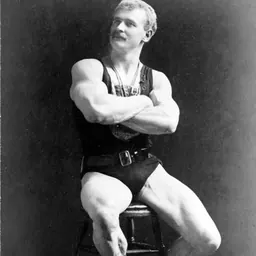
Strength training Kanō got in contact with western strength training in 1900, when he read Sandow's System of Physical Training by pioneer bodybuilder Eugen Sandow. Becoming immediately interested in its workings, he acquired the book's rights to publish it in Japanese under publisher Zoshikai, and also imported Sandow's signature weightlifting gear for its commercialization in Japan. He further researched into the topic while visiting Vienna in 1933 as part of his work in the COI, leading to introduction of powerlifting to the Japanese Ministry of Education. His activities deeply influenced Takemaru Wakaki, considered the pioneer of Japanese bodybuilding, who also trained judoka like Masahiko Kimura and karateka like Mas Oyama.
Hepburn romanization Kanō was a member of the , one of the two groups that emerged after the Russo-Japanese War from the , a group that sought to replace written Japanese with a romanized script instead of kanji and kana. The Rōmaji Hirome-kai supported Hepburn romanization, while the other group, the , supported Nihon-shiki romanization. In 1908, Hepburn romanization was revised by Kanō and others of the Rōmaji Hirome-kai, which began calling it the or .
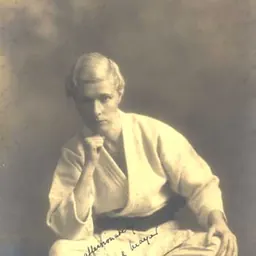
Death and legacy In 1934, Kanō stopped giving public exhibitions. The reason was his failing health, probably compounded by kidney stones. The British judoka Sarah Mayer wrote "People don't seem to think he will live much longer" to his friends in London. Nevertheless, Kanō continued attending important Kodokan events such as kagami-biraki (New Years' ceremonies) whenever he could, and he continued participating in Olympics business.
On 4 May 1938, Kanō died at sea, during a voyage that he made as member of the IOC on board the NYK Line motor ship Hikawa Maru. Because the Japanese merchant fleet of the 1930s used Tokyo time wherever it was in the world, the Japanese date of death was 4 May 1938 at about 5:33 am JST, whereas the international date of death was 3 May 1938 at 20:33 UTC. The cause of death was officially listed as pneumonia but other sources list food poisoning as the cause of death. During the 1990s, there appeared allegations that Kanō was murdered by poisoning rather than dying of pneumonia. Although there is no known contemporary documentation to support this claim, Kanō's opposition to Japanese militarism was well-known, and many others who also opposed it were allegedly assassinated.
Honors Order of the Rising Sun, Gold Rays with Neck Ribbon, 1938 (Japan). On 28 October 2021, Google celebrated Jigorō's 161st birth anniversary with a doodle on its homepage.
Published works Kanō, Jigorō. (October 1898 – December 1903). Kokushi. Lindsay, Thomas and Kanō, Jigorō. (1889, 1915 reprint). "The Old Samurai Art of Fighting without Weapons", Transactions of the Asiatic Society of Japan, XVI, Pt II, pp. 202–217. Kanō, Jigorō. (Jan. 1915 – December 1918). Jūdō. Kanō, Jigorō. (1922). "Jiudo : The Japanese Art of Self Defence", Living Age, 314, pp. 724–731. Kanō, Jigorō. (1932). "The Contribution of Judo to Education", Journal of Health and Physical Education, 3, pp. 37–40, 58 (originally a lecture given at the University of Southern California on the occasion of the Xth Olympiad). Kanō, Jigorō. (1934). "Principles of Judo and Their Applications to All Phases of Human Activity", unpublished lecture given at the Parnassus Society, Athens, Greece, on 5 June 1934, reprinted as "Principles of Judo" in Budokwai Quarterly Bulletin, April 1948, pp. 37–42. Kanō, Jigorō. (1936). "Olympic Games and Japan", Dai Nippon, pp. 197–199. In Thomas A. Green and Joseph R. Svinth, eds., Martial Arts in the Modern World. Westport, Connecticut: Greenwood, 2003, pp. 167–172. Kanō, Jigorō. (1937). Judo (jujutsu) by Prof. Jigorō Kanō. Tokyo: Board of Tourist Industry, Japanese Government Railways. Kanō, Jigorō. (1937). "Jujutsu and Judo; What Are They?" Tokyo: Kodokwan. Kanō, Jigorō. (Undated). Jujutsu Becomes Judo. Kanō, Jigorō. (1972). Kanō Jigorō, watakushi no shōgai to jūdō. Tokyo: Shin Jinbutsu Oraisha. Kanō, Jigorō. (1983). Kanō Jigorō chosakushū. Tokyo: Gogatsu Shobo. Kanō, Jigorō. (1986). Kodokan judo/Jigorō Kanō; edited under the supervision of the Kodokan Editorial Committee. Tokyo and New York: Kodansha International. Kanō, Jigorō. (1995). Kanō Jigorō taikei/kanshū Kōdōkan. Tokyo: Hon no Tomosha. Kanō, Jigorō. (2013). Mind over muscle – writings from the founder of judo Kodansha USA, English translation from Japanese anthology 2005
Don’t just read it —
keep it.
Full-length biographies made to live with: read them, listen on the way to work, watch them tonight.
- E-book
- Audio
- Video
Instant download · yours to keep · every purchase keeps this site free
Important facts
People in Kanō Jigorō's life
Named in this biography and alive at the same time




Related people
Same field, nearest in time

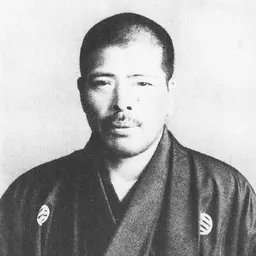
Contemporaries
People whose lives overlapped Kanō Jigorō's
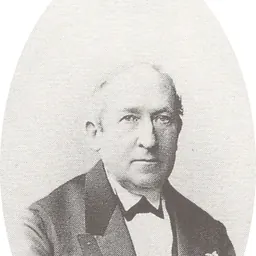

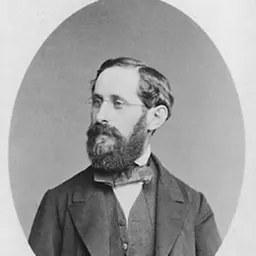

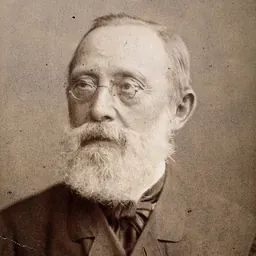

Frequently asked questions
Who was Kanō Jigorō?
Japanese educator and judoka (1860–1938)
When was Kanō Jigorō born?
Kanō Jigorō was born on 10 December 1860 in Kobe.
When did Kanō Jigorō die?
Kanō Jigorō died on 4 May 1938 in at sea.
What was Kanō Jigorō's occupation?
Kanō Jigorō was a judoka, educator, translator, politician, martial artist and pedagogue.
What nationality was Kanō Jigorō?
Kanō Jigorō was Japanese.
Sources & further reading
Cite this page
APA: Biography.guide. (2026). Kanō Jigorō. https://biography.guide/kano-jigoro/
MLA: "Kanō Jigorō." Biography.guide, https://biography.guide/kano-jigoro/.
Chicago: "Kanō Jigorō." Biography.guide. https://biography.guide/kano-jigoro/.
Data last updated: 2026-09-21 · Spot an error? Report a correction.
Portrait: Wikimedia Commons · author & licence
Page generated 2026-09-27 05:00 UTC