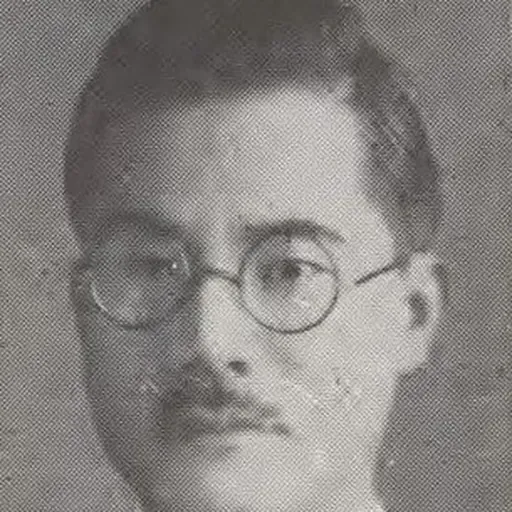
About Kanai Masao
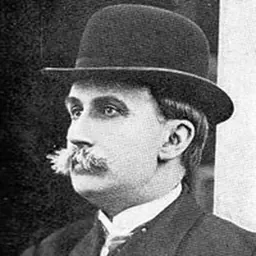
Lived 1892 – 1979 (aged 87). Kanai Masao was a Japanese lawyer, judge and politician.
was a Japanese judge, attorney and politician. He was a member of the House of Representatives for four consecutive terms from 1932 to 1945 and served as the 35th governor of Wakayama Prefecture in 1946. He is known for his strategic leadership role in the Amami reversion movement.
Early life Kanai was born in Ura, Tatsugō Village on Amami Ōshima of southwestern Japan. He was the 5th son of Tōsetsu Kanae. His original name was . His one-character family name was typical of Amami Islanders but was later changed to ordinary-looking Kanai. The two were pronounced the same in his native tongue due to the merger of /e/ into /i/. He changed his given name to Masao in 1915.
Kanai entered Kagoshima Prefectural Ōshima Agricultural School, which was, at that time, the highest educational institution on Amami Ōshima. Having a drive for success, he moved to Tokyo for a transfer to Junten Middle School. He moved up to the Fifth High School. He chose the high school in Kumamoto because he wished to follow the path of Shinkuma Motoji, a renowned lawyer from his home village, Tatsugō. In 1919, he graduated from the Faculty of Law, Kyoto Imperial University. He worked for the Osaka District Court. He also gave lectures at Kansai University for 12 years while publishing several books on law.
The Amami reversion movement reached its first peak before the conclusion of the Treaty of San Francisco on September 8, 1951, demonstrating that 99.8% of the islanders wanted an immediate return to Japan. The peace treaty, however, trampled on the islanders' desire as Article 3 of the treaty had the Amami Islands (together with the Ryūkyū Shotō) separated from Japan and potentially to be placed under trusteeship. While the Amami Islanders considered Article 3 entirely unacceptable, an abrogation of it was virtually impossible because it required approval from all of the 49 countries that ratified the treaty. However, Kanai realized that the U.S. would not place Amami under a trusteeship because it would give way to U.N. intervention. He anticipated that the U.S. would return Amami to Japan in two or three years. He telegraphed Hōrō Izumi, the leader of the reversion movement in the Amami Islands, and urged him to focus on an early reversion, instead of calling for the abrogation of Article 3. The Amami Islands were indeed returned to Japan in 1953 in a way Kanai anticipated.
During the reversion movement, Kanai worked on decoupling Amami from Okinawa because it was considered critically important for Amami's early return to Japan. While devastating Amami's economy, the U.S. military invested heavily in fortifying Okinawa and was highly unlikely to give up Okinawa any time soon. However, he felt regretful for the prolonged military occupation of Okinawa. In 1966, he published a memoir on the Amami reversion movement, which he thought formed a precedent for Okinawa's return to Japan.
Don’t just read it —
keep it.
Full-length biographies made to live with: read them, listen on the way to work, watch them tonight.
- E-book
- Audio
- Video
Instant download · yours to keep · every purchase keeps this site free
Important facts
Related people
Same field, nearest in time


Contemporaries
People whose lives overlapped Kanai Masao's

Frequently asked questions
Who was Kanai Masao?
politician
When was Kanai Masao born?
Kanai Masao was born on 1 February 1892 in Kagoshima Prefecture.
When did Kanai Masao die?
Kanai Masao died on 4 October 1979.
What was Kanai Masao's occupation?
Kanai Masao was a lawyer, judge and politician.
What nationality was Kanai Masao?
Kanai Masao was Japanese.
Sources & further reading
Cite this page
APA: Biography.guide. (2026). Kanai Masao. https://biography.guide/kanai-masao/
MLA: "Kanai Masao." Biography.guide, https://biography.guide/kanai-masao/.
Chicago: "Kanai Masao." Biography.guide. https://biography.guide/kanai-masao/.
Data last updated: 2026-09-23 · Spot an error? Report a correction.
Portrait: Wikimedia Commons · author & licence
Page generated 2026-09-27 05:08 UTC