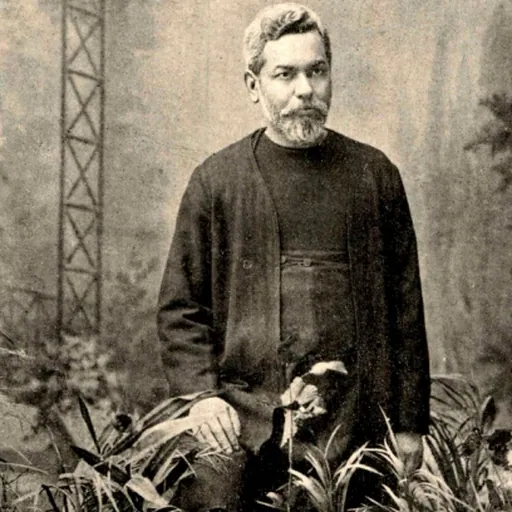
About Kali Charan Banerjee
Lived 1847 – 1907 (aged 59). Kali Charan Banerjee was an Indian politician.
Kali Charan Banerjee (1847–1907), spelt also as Kalicharan Banerji or K.C. Banerjea or K.C. Banurji, was a Bengali convert to Christianity through the Free Church of Scotland, the founder of Calcutta Christo Samaj, a Calcutta lawyer, and a founding member of the Indian National Congress.
Biography Banerjee was born into a Bengali Kulin Brahmin family in Jabalpur in Madhya Pradesh while his father was on a work assignment. Wishing to send his son to a prestigious English-medium college, Banerji's father sent him to the Free Church of Scotland college in Calcutta(present Kolkata) in 1860 where Alexander Duff was principal. Through the encouragement of his teachers in the college and fellow Bengali students, Banerjee began studying the Bible and seeking instruction in the Christian faith. One of the major influences in his spiritual journey was Lal Behari Dey. Upon his decision to become a follower of Christ, Banerjee traveled to his native village and informed his relatives. His family was initially heartbroken and hostile towards his decision, but after a few years Kali Charan was reconciled with the family. On 28 February 1864, Banerjee was baptized at the Free Church college. He later joined the Manicktollah (Maniktala) Free Church, probably the present-day Duff Church, and served for a period as a deacon.
Banerjee proved to be an outstanding student, receiving a scholarship and graduating with honours in 1865 with a Bachelor of Arts. He also completed a Master of Arts in Mental and Moral Philosophy from the Free Church college in 1866. After graduating, Banerjee was appointed as a professor in the Free Church college, a position he held until 1879.
Although he considered seeking ordination to pastoral ministry, he chose instead to pursue a career as a lawyer. Banerjee received his Bachelor of Law in 1870 and began work as an advocate in the city of Calcutta alongside his academic responsibilities. In 1877 he became a Fellow of the University of Calcutta.
He taught reading and writing as a teacher to Brahmabandhab Upadhyay aka Bhabani[Bhawani] Charan Banerjee, a Roman Catholic; Hindu Sadhu(Sanyasi); and Bengali Catholic nationalist, related to K.C. Banerji, who happens to be the uncle of Upadhyay. Upadhyay laid the foundation for a Vedanta-based Christian theology, Vedantic Thomism - Upadhyay came to know Jesus Christ from his uncle Reverend Kalicharan Banerji and Keshub Chunder Sen, Brahmo Samaj and Naba Bidhan leader - he died prematurely as a prisoner, charged with sedition by Colonial government of Calcutta.
Congress leader
He being a fine orator and representative of Bengali Christian community, he joined the Indian National Congress(Congress) in 1885, and regularly addressed the Congress annual sessions in moulding the policy of national movement. Rev. Kalicharan Banerji along with G.C. Nath from Lahore, Ram Chandra Bose from Lucknow, and Peter Paul Pillai from Madras(present Chennai), represented Indian Christians at the four sessions of the Congress between 1888 and 1891, and became a prominent leader in the Congress in the early years of formation.
Indian Christian leader He strongly advocated for and defended the Indian Christian nationality in 1870. At the age of 25, he started a newspaper called The Bengal Christian Herald, later changed its name to The Indian Christian Herald.
He being a Protestant Christian, a group of nationalist leaders who associated themselves with the Indian National Congress perceived that "Christianity in India was full of stagnant Western waters and could be cleansed only through Indian Christian literature."—the attempts of Protestant Christians to indigenize Christianity created rift between Protestants and Catholics leading to establishment of non-denominational missionary organizations; consequently, in 1887, he along with Shome founded the Calcutta Christo Samaj. K.C. Banerjee later changed his attire to wearing the clothes of Sannyasin, and moved closer to Scottish missionaries in Bengal; his association with Scottish missionaries in Bengal brought closer and impressed Scottish missionaries in Madras too, especially Madras Christian College—then-epicenter of the "Re-thinking Christianity in India Group". The Re-thinking Group of Madras, asserted that the missionary emphasis on institutions like Church in India was not wise and reiterated that Christianity must understand the spiritual genius of India, forms of worship, and categories of thought so as to take root in the Indian soil; as a result, development of spirituality through Bhakti tradition, and inculturation of the Christian faith through the avatar entered into their religious affairs.
In spite of Church organisation becoming a Rethinking group in 1877 and then into a new Church movement in 1887, Calcutta Christo Samaj survived only for few years since "non-denominational Indian church" failed to overtake the already well-established missionary churches with solid foundation and adequate local resources, long before. quote|I sought an appointment, which he readily gave me. When I went, I found that his wife was on her death-bed. His house was simple. In the Congress I had seen him in a coat and trousers, but I was glad to find him now wearing a Bengal dhoti and shirt. I liked his simple mode of dress, though I myself then wore a Parsi coat and trousers. Without much ado I presented my difficulties to him. He asked: "Do you believe in the doctrine of original sin?"
"I do," said I. "Well then, Hinduism offers no absolution therefrom, Christianity does," and added: "The wages of sin is death, and the Bible says that the only way of deliverance is surrender unto Jesus." I put forward Bhakti-marga (the path of devotion) of the Bhagavad Gita, but to no avail. I thanked him for his goodness. He failed to satisfy me, but I benefited by the interview. quote|I told Mr. Banerjee, “I have come to you as a seeker—” . . . Well, I am not going to engage you in giving a description of the little discussion that we had between us. It was very good, very noble. I came away, not sorry, not dejected, not disappointed, but I felt sad that even Mr. Banerjee could not convince me. This was my final deliberate striving to realize Christianity as it was presented to me.
Don’t just read it —
keep it.
Full-length biographies made to live with: read them, listen on the way to work, watch them tonight.
- E-book
- Audio
- Video
Instant download · yours to keep · every purchase keeps this site free
Important facts
People in Kali Charan Banerjee's life
Named in this biography and alive at the same time

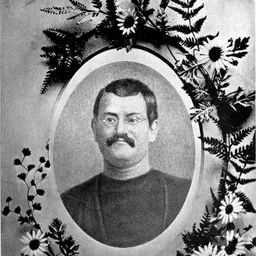

Related people
Same field, nearest in time





Contemporaries
People whose lives overlapped Kali Charan Banerjee's

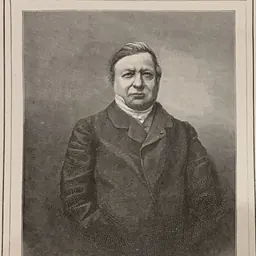
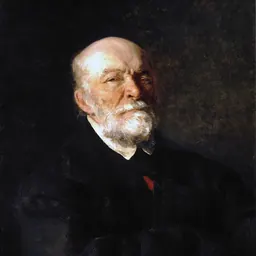


Frequently asked questions
Who was Kali Charan Banerjee?
Indian politician
When was Kali Charan Banerjee born?
Kali Charan Banerjee was born on 9 February 1847 in Jabalpur, Madhya Pradesh.
When did Kali Charan Banerjee die?
Kali Charan Banerjee died on 6 February 1907.
What was Kali Charan Banerjee's occupation?
Kali Charan Banerjee was a politician.
What nationality was Kali Charan Banerjee?
Kali Charan Banerjee was Indian.
Sources & further reading
· Wikipedia: Kali Charan Banerjee
· DBpedia: Kali Charan Banerjee
Cite this page
APA: Biography.guide. (2026). Kali Charan Banerjee. https://biography.guide/kali-charan-banerjee/
MLA: "Kali Charan Banerjee." Biography.guide, https://biography.guide/kali-charan-banerjee/.
Chicago: "Kali Charan Banerjee." Biography.guide. https://biography.guide/kali-charan-banerjee/.
Data last updated: 2026-09-21 · Spot an error? Report a correction.
Portrait: Wikimedia Commons · author & licence
Page generated 2026-09-27 04:59 UTC