
Kakowatcheky
Pekowi Shawnee chief
About Kakowatcheky
Lived 1670 – 1755 (aged 84–85).
Kakowatcheky (c. 1670 - c. 1755 or 1758), also known as Kakowatchiky, Cachawatsiky, Kakowatchy, or Kakowatchey, was a Pekowi Shawnee chief believed to be among the first to bring Shawnee people into Pennsylvania. For about fifty years he and the Shawnees lived together with European colonists in Pennsylvania until the mid-1740s when many Shawnees and other Native Americans migrated to the Ohio River Valley.
In 1743, Kakowatcheky moved to Logstown, on the Ohio River, where he may have continued to live until 1755 or later, that being the last year in which his name appears in the Pennsylvania records. Colonel James Patton of Virginia visited Logstown in June 1752 and refers to him in his journal as being then bedridden. His chieftainship extended for more than sixty years.
Arrival in Pennsylvania Nothing is known of his early life, including his exact date of birth. He may have been born in Ohio. John Heckewelder in his brief history of the "Shawanos" refers to "Chief Gachgawatschiqua," who he says led his people from Ohio and settled at the forks of the Delaware River. He does not provide a date, but Charles Augustus Hanna estimated that this occurred around 1694.
New York's governor, Thomas Dongan was anxious to acquire new Native American allies to support the English colonists against the expansion of New France. The trade in animal skins and furs was a major part of the colonial economy and the Shawnees' skill as hunters was highly prized. Kakowatcheky recognized that by moving east, he was bringing the Shawnees into Iroquois territory, but within a few years he and Opessa Straight Tail had persuaded the English that the Shawnee presence was of economic as well as military value, influencing the Pennsylvania Provincial Government to grant the Shawnee and a few other tribes favored status through a multilateral treaty in 1701.
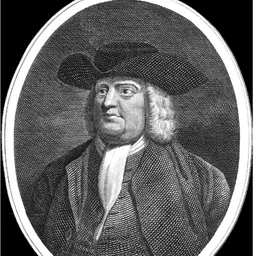
1701 treaty On 23 April, 1701, Opessa and chiefs of the Susquehannock, Piscataway and Onondaga tribes signed a treaty with William Penn ceding lands along the Potomac River to the English in return for protection and trade privileges. By this treaty "it was settled that no Indians be suffered to settle on the Susquehanna or Patomack save those already noted [Shawnee, Mingoes and Gawanese]." Opessa and the other chiefs agreed by their "hands and seals," with each other, with William Penn and his successors, and with other inhabitants of the province, "to be as one head and one heart, and to live in true friendship and amity, as one people." Soon after the Treaty of 1701 many Shawnee migrated from South Carolina to the lower Susquehanna and the upper Delaware, where they settled near the Forks, at a village called Pechoquealin (now Smithfield Township, Monroe County, Pennsylvania).
Conflicts with colonial settlers Under the name "Cohevwickick" Kakowatcheky is referred to in the New Jersey Colonial Records, 30 May, 1709, as one of the sachems of the Shawhena Indians. and believing the chief of the band to be dangerous, the women and children fled in terror.
A group of about twenty settlers took up arms and approached the Indians, sending two men to speak with Kakowatcheky, who, instead of receiving them civilly, drew his sword and commanded his men to fire, which they did, wounding five of the settlers. The other settlers returned fire, wounding Kakowatcheky, who fell, but then got up and ran into the woods, leaving his rifle behind. The identity of these Indians was not known to the settlers until May 20th, when two traders from Pechoquealin came to Governor Gordon and delivered a message from Kakowatcheky, explaining the unfortunate affair, sending his regrets, and asking the Governor for the return of the gun which he had dropped when wounded. The Governor replied with a reprimand for Kakowatcheky's aggressive behavior: It was not becoming [for] any of our friends to come into the Christians' Houses with Guns, pistoles and Swords, painted for War, and to take away the poor People's Provisions by force with great threatnings to those that opposed them. This is not a behaviour becoming [of] friends, nor what we expected of the Shawanese. The English thought these men were foreign Indians come from the French or Spaniards. They went out with some few Arms to defend themselves, but spoke civilly to them and inquired who they were...All the English that went out affirm the Indians fired five Shott before they fired one. And there are Five of our People Sorely wounded...It is well that no lives were lost on either side. These eleven Indians through their foolish behaviour have caused great Confusion...The Governor will take care to inquire for the Gun & other things the Indians have lost, and they may have them again if they are found...The Governor will be glad to see Kakowatchy at Durham some time this year...He will then treat him as his Friend & Brother.
Governor Gordon then went to Manatawny and personally pleaded with those settlers who had left their plantations to return. Having sent Kakowatcheky the gun he had dropped, as well as the tomahawks dropped by his eleven warriors when they fled from the band of twenty settlers, the governor requested that the Indians under his authority be more careful in the future. On 26 May, the Governor, accompanied by thirty residents of Philadelphia, met the Indians at a council at Conestoga where he conferred with Conestoga, Shawnee, Conoy, and Delaware chiefs, and gave them presents. As it turned out, the invasion by Catawba warriors had been a false alarm.
Kakowatcheky's son Quassenung was attending a conference in Philadelphia when he contracted smallpox and died on 26 January, 1733. Kakowatcheky was patient and considerate to Zinzendorf during the missionary's stay at Wyomink. The count had angered some of Kakowatcheky's band when he pitched his tent about a mile away from the village near an old silver mine and on top of the village burial ground. The Shawnees suspected that Zinzendorf was conjuring spirits in his tent to show him the location of the silver mine, and wanted to kill this "sorcerer," but Kakowatcheky was able to use his diplomatic skill and authority to keep the count and his party safe.
Move to Logstown Between April 1743 and August 1744, Kakowatcheky himself, with some of his followers, moved to the Ohio River Valley and settled at Logstown. Céloron then made a speech warning the inhabitants of the town to stop trading with the English, implying that the French would punish any disobedience. On 10 August, Céloron read a message from the Marquis de La Galissonière, the Governor of New France, which described how the English were deceiving the Ohio tribes and planning their "total ruin," adding: "I know the English only inspire you with evil sentiments, and, besides, intend, through their establishments on the Beautiful River, which belongs to me, to take it from me." Kakowatcheky was apparently outraged. George Croghan, who arrived in Logstown a few days after Céloron had left, told Richard Peters that
Old Cackewatcheka was so exasperated at the Pride & Insolence of the French pretending to say that the Indian's land belonged to them that while he [Céloron] was in the midst of his Speech, the old King being blind and unable to stand without somebody to support him said in a low voice to those next to him, Why don't you shoot this French Fellow - Shoot him - shoot him.
Final years On 21 May, 1751 George Croghan visited Logstown to attend a council there with chiefs of the Six Nations, the Lenape and the Shawnees. In his report to the Pennsylvania Provincial Council he wrote: I paid Cochawitchake the old Shawonese king a visit, as he was rendered incapable of attending the council by reason of his great age, and let him know that his brother the Governor of Pennsylvania was glad to hear that he was still alive and that he retained his senses, and had ordered me to cloathe him and to acquaint him that he had not forgot his strict Attachment to the English Interest. I gave him a Strowd Shirt, Match Coat, and a pair of Stockings, for which he gave the Governor a great many thanks.
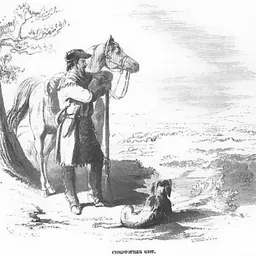
In June, 1752, The Treaty of Logstown was signed by representatives of the Iroquois Confederation, Lenape and Shawnee leaders, and commissioners from Virginia headed by Joshua Fry. Christopher Gist and William Trent represented the Ohio Company. On 11 June the commissioners, addressing themselves to the Shawnees, "acquainted them that they understood that their chief, Cockawichy [Kakowatcheky], who had been a good friend to the English, was lying bed-rid, and that, to show the regard they had for his past services, they took this opportunity to acknowledge it by presenting him with a suit of Indian clothing." Kakowatcheky was succeeded as chief at Wyomink by Paxinosa.
Legacy Historian Malcolm B. Brown describes Kakowatcheky as "A perceptive and astute observer of people, he was one of the wisest and most revered of the sachems of the era, and was more aware of the consequences of Euroamerican-Indian contact than almost anyone else at the time."
Don’t just read it —
keep it.
Full-length biographies made to live with: read them, listen on the way to work, watch them tonight.
- E-book
- Audio
- Video
Instant download · yours to keep · every purchase keeps this site free
Important facts
People in Kakowatcheky's life
Named in this biography and alive at the same time



Contemporaries
People whose lives overlapped Kakowatcheky's




Frequently asked questions
Who was Kakowatcheky?
pekowi Shawnee chief
When was Kakowatcheky born?
Kakowatcheky was born in 1670.
When did Kakowatcheky die?
Kakowatcheky died in 1755 in Logstown.
Sources & further reading
Cite this page
APA: Biography.guide. (2026). Kakowatcheky. https://biography.guide/kakowatcheky/
MLA: "Kakowatcheky." Biography.guide, https://biography.guide/kakowatcheky/.
Chicago: "Kakowatcheky." Biography.guide. https://biography.guide/kakowatcheky/.
Data last updated: 2026-09-20 · Spot an error? Report a correction.
Page generated 2026-09-27 05:07 UTC