
Junius Richard Jayewardene
President of Sri Lanka from 1978 to 1989
About Junius Richard Jayewardene
Lived 1906 – 1996 (aged 90). Junius Richard Jayewardene was a Sri Lankan cricketer, diplomat, politician and lawyer.
Junius Richard Jayewardene (; ; 17 September 1906 – 1 November 1996), commonly referred to by his initials JR, was a Sri Lankan lawyer, and statesman who served as prime minister of Sri Lanka from 1977 to 1978 and as the second president of Sri Lanka from 1978 to 1989. He was a leader of the nationalist movement in Ceylon (now Sri Lanka) and served in a variety of cabinet positions in the decades following independence. A longtime member of the United National Party, he led the party to a landslide victory in the 1977 parliamentary elections and served as prime minister for half a year before becoming the country's first executive president under an amended constitution.
Jayawardene remains a divisive figure in Sri Lankan history. While the open economic system he introduced in 1978 brought the country out of the economic turmoil it was facing as the result of the preceding government's closed economic policies, Jayawardene's social policies, including his response to the Black July riots of 1983, have been accused of heightening ethnic tensions in the country and contributing to the beginnings of the Sri Lankan civil war, which lasted from 1983 to 2009.
Early life and marriage
Childhood Born in Colombo to the prominent Jayewardene family with a strong association with the legal profession, Jayewardene was the eldest of twelve children, of Hon. Justice Eugene Wilfred Jayewardene KC, a prominent lawyer and Agnes Helen Don Philip Wijewardena daughter of Muhandiram Tudugalage Don Philip Wijewardena a wealthy timber merchant. He was known as Dickie within his family. His younger brothers included Hector Wilfred Jayewardene, QC and Rolly Jayewardene, FRCP. His uncles were the Colonel Theodore Jayewardene, Justice Valentine Jayewardene and the media baron D. R. Wijewardena. Raised by an English nanny,
Education and early career Jayewardene gained admission to Royal College, Colombo for his secondary education. There he excelled in sports, played for the college cricket team, debuting in the Royal–Thomian series in 1925; captained the rugby team in 1924 at the annual "Royal–Trinity Encounter" (which later became known as the Bradby Shield Encounter); he was the vice-captain of the football team in 1924; and was a member of the boxing team winning sports colours. He was a Senior Cadet; Captain, Debating Team; editor of the college magazine; first Secretary of the Royal College Social Services League in 1921 and the head prefect in 1925. In later life, he served as president, Board of Control for Cricket in Sri Lanka; President, Singhalese Sports Club; and Secretary, Royal College Union.
Following the family tradition, Jayewardene entered the University College, Colombo in 1926, pursuing the Advocate's course, reading English, Latin, Logic and Economics for two years, after which he entered Ceylon Law College in 1928. He formed the College Union based on that of the Oxford Union with the assistance of S. W. R. D. Bandaranaike who had recently returned to Ceylon. At the Ceylon Law College, he won the Hector Jayewardene Gold Medal and the Walter Pereira Prize in 1929. During this time he worked as his father's private secretary, while later served as a Puisne Justice of Supreme Court of Ceylon and in July 1929, he joined three others in forming a dining club they called The Honorable Society of Pushcannons, which was later renamed as the Priya Sangamaya. In 1931, he passed his advocates exams, starting his legal practice in the unofficial bar.
Marriage On 28 February 1935, Jayewardene married the heiress Elina Bandara Rupasinghe, only daughter of Nancy Margaret Suriyabandara and Gilbert Leonard Rupasinghe, a notary public turned successful businessman. Their only child Ravindra "Ravi" Vimal Jayewardene was born the year after. Having originally settled at Jayewardene's parents house, Vaijantha, the Jayewardenes moved to their own house Braemar in 1938, where they remained the rest of their lives, when not holidaying at their holiday home in Mirissa.
Early political career
Jayewardene was attracted to national politics in his student years and developed strong nationalist views. He converted from Anglicanism to Buddhism and adopted the national dress as his formal attire.
Jayewardene did not practice law for long. In 1943 he gave up his full-time legal practice to become an activist in the Ceylon National Congress (CNC), which provided the organizational platform for Ceylon's nationalist movement (the island was officially renamed Sri Lanka in 1972). He became its Joint Secretary with Dudley Senanayake in 1939 and 1940 he was elected to the Colombo Municipal Council from the New Bazaar Ward.
State Council He was elected to the colonial legislature, the State Council in 1943 by winning the Kelaniya by-election following the resignation of incumbent D. B. Jayatilaka. His victory is credited to his use of an anti-Christian campaign against his opponent the nationalist E. W. Perera. During World War II, Jayewardene, along with other nationalists, contacted the Japanese and discussed a rebellion to drive the British from the island. In 1944, Jayewardene moved a motion in the State Council that Sinhala alone should replace English as the official language.
First finance minister of Ceylon After joining the United National Party on its formation in 1946 as a founder member, he was reelected from the Kelaniya electorate in the 1st parliamentary election and was appointed by D. S. Senanayake as the Minister of Finance in the island's first Cabinet in 1947. Initiating post-independence reforms, he was instrumental in the establishment of the Central Bank of Ceylon under the guidance of the American economist John Exter. In 1951 Jayewardene was a member of the committee to select a National Anthem for Sri Lanka headed by Sir Edwin Wijeyeratne. The following year he was elected as the President of the Board of Control for Cricket in Ceylon. He played a major role in re-admitting Japan to the world community at the San Francisco Conference. Jayewardene struggled to balance the budget, faced with mounting government expenditures, particularly for rice subsidies. He was re-elected in 1952 parliamentary election and remained as finance minister.
Minister of agriculture and food His 1953 proposal to cut the subsidies on which many poor people depended for survival provoked fierce opposition and the 1953 Hartal campaign and had to be called off. Following the resignation of Prime Minister Dudley Senanayake after the 1953 Hartal, the new Prime Minister Sir John Kotelawala appointed Jayewardene as minister of agriculture and food and leader of the house.
Defeat and opposition Prime Minister Sir John Kotelawala called for early elections in 1956 with confidence that the United National Party would win the election. The 1956 parliamentary election saw the United National Party suffering a crushing defeat at the hands of the socialist and nationalist coalition led by the Sri Lanka Freedom Party headed by S. W. R. D. Bandaranaike. Jayewardene himself lost his parliamentary seat in Kelaniya to R. G. Senanayake, who had contested both his constituency Dambadeniya and Jayewardene's constituency of Kelaniya to defeat the latter after he had forced Senanayake out of the party.
Having lost his seat in parliament, Jayewardene pushed the party to accommodate nationalism and endorse the Sinhala Only Act, which was bitterly opposed by the island's minorities. When Bandaranaike agreed with S. J. V. Chelvanayakam in 1957, to solve the outstanding problems of the minorities, Jayawardene led a "March on Kandy" against it, but was stopped at Imbulgoda S. D. Bandaranayake. Throughout the 1960s Jayewardene clashed over this issue with party leader Dudley Senanayake. Jayewardene felt the UNP should be willing to play the ethnic card, even if it meant losing the support of ethnic minorities.
Minister of finance Jayewardene became the vice-president and chief organizer of the United National Party, which achieved a narrow win in the March 1960 parliamentary election, forming a government under Dudley Senanayake. Jayewardene having been elected to parliament once again from the Kelaniya electorate was appointed once again as minister of finance. The government lasted only three months and lost the July 1960 parliamentary election to a new coalition led by Bandaranayake's widow. Jayewardene remained in parliament in the opposition having been elected from the Colombo South electorate.
Minister of state
The United National Party won the next election in 1965 and formed a national government with the Sri Lanka Freedom Socialist Party led by C. P. de Silva. Jayewardene was reelected from the Colombo South electorate uncontested and was appointed Chief Government Whip. Senanayake appointed Jayewardene to his cabinet as Minister of State and Parliamentary Secretary to the Minister of Defence and External Affairs thereby becoming the de facto deputy prime minister. No government had given serious thought to the development of the tourism industry as an economically viable venture until the United National Party came to power in 1965 and the subject came under the purview of J. R. Jayewardene. Jayewardene saw tourism as a great industry capable of earning foreign exchange, providing avenues of mass employment, and creating a workforce which commanded high employment potential globally. He was determined to place this industry on a solid foundation, providing it a 'conceptional base and institutional support.' This was necessary to bring dynamism and cohesiveness into an industry, shunned by leaders in the past, and ignored by investors who were inhibited by the lack of incentive to invest in projects which were uncertain of a satisfactory return. Jayewardene considered it essential for the government to give that assurance and with this objective in view, he tabled the Ceylon Tourist Board Act No 10 of 1966 followed by Ceylon Hotels Corporation Act No 14 of 1966. At present the tourism industry in Sri Lanka is a major foreign exchange earner with tourist resorts in almost all cities and an annual turnover of over 500,000 tourists enjoying the tropical climes and beaches.
Leader of the opposition In the general election of 1970, the UNP suffered a major defeat, when the SLFP and its newly formed coalition of leftist parties won almost 2/3 of the parliamentary seats. Once again elected to parliament J. R. Jayewardene took over as opposition leader and de facto leader of the UNP due to the ill health of Dudley Senanayake. After Senanayake died in 1973, Jayewardene succeeded him as UNP leader. He gave the SLFP government his fullest support during the 1971 JVP Insurrection (even though his son was arrested by the police without charges) and in 1972 when the new constitution was enacted proclaiming Ceylon a republic. However, he opposed the government in many moves, which he saw as short-sighted and damaging to the country's economy in the long run. These included the adaptation of the closed economy and nationalization of many private businesses and lands. In 1976 he resigned from his seat in parliament in protest, when the government used its large majority in parliament to extend the duration of the government by two more years at the end of its six-year term without holding a general election or a referendum requesting public approval.
Prime minister President William Gopallawa and Prime Minister J.R. Jayewardene with the cabinet of ministers in 1977 after being sworn in. President William Gopallawa appoints Jayawardene as the Prime Minister on 23 July 1977, following the victory in the 1977 General election. Tapping into growing anger with the SLFP government, Jayewardene led the UNP to a crushing victory in the 1977 election which held on 21 July 1977. The UNP won a staggering five-sixths of the seats in parliament—a total that was magnified by the first-past-the-post system, and one of the most lopsided victories ever recorded for a democratic election. Having been elected to parliament from the Colombo West Electoral District, Jayewardene was sowrn in as Prime Minister and invited to form a new government by President William Gopallawa on 23 July 1977.
Shortly after becoming Prime Minister, drafted the Second Amendment to the Constitution of 1972 to make the presidency an executive post. The Amendment was passed in the Parliament on 4 October 1977. The provisions of the amendment automatically made the incumbent prime minister—himself—president, and the transition was scheduled to take place on 4 February 1978, on the 30th anniversary of Sri Lanka's independence.
Presidency
Jayawardene was sworn as the 1st Executive President of Sri Lanka on 4 February 1978, at an Inauguration Ceremony held in the Galle Face Green in Colombo. His oath of office was administered by Chief Justice Neville Samarakoon. Two days later, he appointed Ranasinghe Premadasa as the New Prime Minister.
He passed a new constitution on 31 August 1978 which came into operation on 7 September of the same year, which granted the president sweeping—and according to some critics, almost dictatorial—powers. He moved the legislative capital from Colombo to Sri Jayawardanapura Kotte. He had likely SLFP presidential nominee Sirimavo Bandaranaike stripped of her civic rights and barred from running for office for six years, based on her decision in 1976 to extend the term of parliament. This ensured that the SLFP would be unable to field a strong candidate against him in the 1982 election, leaving his path to victory clear. This election was held under the 3rd amendment to the constitution which empowered the president to hold a Presidential Election anytime after the expiration of four years of his first term. He held a referendum to cancel the 1983 parliamentary elections, and allow the 1977 parliament to continue until 1989. He also passed a constitutional amendment barring from Parliament any MP who supported separatism; this effectively eliminated the main opposition party, the Tamil United Liberation Front.
Economy There was a complete turnaround in economic policy under him as the previous policies had led to economic stagnation. He opened the heavily state-controlled economy to market forces, which many credit with subsequent economic growth. He opened up the economy and introduced more liberal economic policies emphasizing private sector-led development. Policies were changed to create an environment conducive to foreign and local investment, to promote export-led growth shifting from previous policies of import substitution. To facilitate export-oriented enterprises and to administer Export Processing Zones the Greater Colombo Economic Commission was established. Food subsidies were curtailed and targeted through a Food Stamps Scheme extended to the poor. The system of rice rationing was abolished. The Floor Price Scheme and the Fertilizer Subsidy Scheme were withdrawn. New welfare schemes, such as free school books and the Mahapola Scholarship Programme, were introduced. The rural credit programme expanded with the introduction of the New Comprehensive Rural Credit Scheme and several other medium and long-term credit schemes aimed at small farmers and the self-employed.
He also launched large-scale infrastructure development projects. He launched an extensive housing development program to meet housing shortages in urban and rural areas. The Accelerated Mahaweli Programme built new reservoirs and large hydropower projects such as the Kotmale, Victoria, Randenigala, Rantembe and Ulhitiya. Several Trans Basin Canals were also built to divert water to the Dry Zone. after his successor Ranasinghe Premadasa was formally inaugurated on 2 January 1989. He did not re-enter politics during his retirement even after the assassination of Premadasa in 1993. President Jayawardene with his wife and first lady, Elina, on their 50th Wedding Anniversary in 1985.
Death Jayewardene died of colon cancer, on 1 November 1996, aged 90, at a hospital in Colombo. He was survived by his wife, Elina, and his son, Ravi. The government had announced that the state funeral would be held at Independence Square, a site of national significance where many of Sri Lanka's greatest leaders have been cremated. United National Party (UNP) leader Ranil Wickremesinghe also expressed his support for this location, honoring the late President's stature and legacy.
However, a compelling personal request emerged from the late President's only son, Ravi Jayewardene. He revealed a diary entry written by his father in 1991, in which the former president had clearly expressed his final wish. The note read:
"Please cremate my body within 24 hours of my death on the Kelaniya river bank."
This request reflected the President's deep connection to Kelaniya, his original political electorate, and highlighted his desire for a more personal and symbolic farewell.
Legacy On the economic front, Jayewardene's legacy is decisively a positive one. thumb President J. R. Jayewardene and Diyawadana Nilame Dr. Nissanka Wijeyeratne with Raja (elephant)
On the ethnic question, Jayewardene's legacy is bitterly divisive. When he took office, ethnic tensions were present in the country but were not overtly volatile. But relations between the two ethnicities heavily deteriorated during his administration and his response to these tensions and the signs of conflict has been heavily criticized. about the widespread anti-Tamil sentiments among the Sinhalese at that time.
J. R. Jayewardene Centre In 1988, the J. R. Jayewardene Centre was established by the J.R. Jayewardene Centre Act No. 77 of 1988 by Parliament at the childhood home of J. R. Jayewardene Dharmapala Mawatha, Colombo. It serves as an archive for J. R. Jayewardene's library and papers as well as papers, records from the Presidential Secretariat and gifts he received in his tenure as president.
Don’t just read it —
keep it.
Full-length biographies made to live with: read them, listen on the way to work, watch them tonight.
- E-book
- Audio
- Video
Instant download · yours to keep · every purchase keeps this site free
Important facts
Family & relationships
People in Junius Richard Jayewardene's life
Named in this biography and alive at the same time
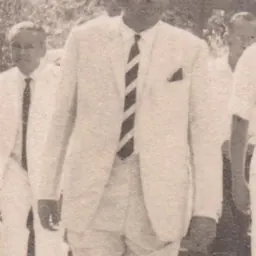


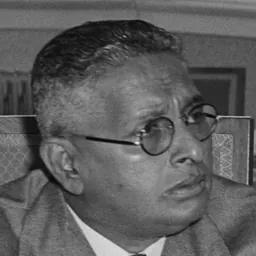

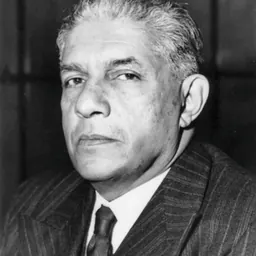

Related people
Same field, nearest in time
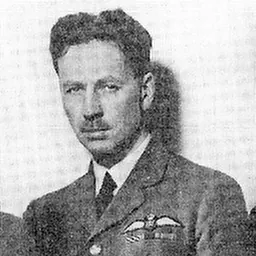


Contemporaries
People whose lives overlapped Junius Richard Jayewardene's

Frequently asked questions
Who was Junius Richard Jayewardene?
President of Sri Lanka from 1978 to 1989
When was Junius Richard Jayewardene born?
Junius Richard Jayewardene was born on 17 September 1906 in Colombo.
When did Junius Richard Jayewardene die?
Junius Richard Jayewardene died on 1 November 1996 in Colombo.
What was Junius Richard Jayewardene's occupation?
Junius Richard Jayewardene was a cricketer, diplomat, politician and lawyer.
What nationality was Junius Richard Jayewardene?
Junius Richard Jayewardene was Sri Lankan.
Sources & further reading
· Wikipedia: Junius Richard Jayewardene
Cite this page
APA: Biography.guide. (2026). Junius Richard Jayewardene. https://biography.guide/junius-richard-jayewardene/
MLA: "Junius Richard Jayewardene." Biography.guide, https://biography.guide/junius-richard-jayewardene/.
Chicago: "Junius Richard Jayewardene." Biography.guide. https://biography.guide/junius-richard-jayewardene/.
Data last updated: 2026-09-20 · Spot an error? Report a correction.
Page generated 2026-09-27 05:24 UTC