
About Julius Stjernvall
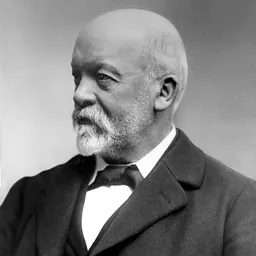
Lived 1874 – 1939 (aged 64). Julius Stjernvall was a Finnish politician and businessperson.
Early life and studies Stjernvall's parents were colonel Carl Julius Stjernvall and Maria née Jakovlev. He graduated from Finnish Cadet School in Hamina in 1896. During his studies he served as ensign in 132nd Bender Infantry Regiment. He was later promoted lieutenant in 1907 when he was already in reserve. Stjernvall continued his studies in Polytechnic Institute in Helsinki and graduated in 1900 as Mechanical Engineer.
Career During 1904–1914, Stjernvall led technical office of Siemens & Halske in Helsinki; in this period the company built the first steam turbine power plant of Finland in Tampere and connected Sveaborg to electrical grid through an undersea cable. Stjernvall represented nobility and chivalry in Diet of Finland in 1904–1905. In 1914, shortly before the First World War Stjernvall moved to Kone- ja Siltarakennus (Kone ja Silta) as Deputy Director. Due to intense arms race between the European superpowers prior the war, the company had a good order backlog from the Russian military; Kone ja Silta produced munition and other military supplies, and repaired ships of the Imperial Russian Navy. Stjernvall became company manager in 1917. In the same year, Finland became independent. In 1918, Swedish People's Party of Finland asked him to join in Lauri Ingman's cabinet as Minister of Trade and Industry. Stjernvall agreed, but the cabinet turned out to be short-living, and already after few months, he was back.
Kone ja Silta grew strongly during Stjernvall's time. In 1923, the company started producing Abloy locks. Kone ja Silta took over Hietalahti Shipyard and Engineering Works on 22 December 1926. The articles of association were changed uniform with Kone ja Silta in December 1927, after which both companies shared the same management.
In 1928–1929, the company turnover reached 90 million marks and made 3 million marks' profit. At the time Kone ja Silta employed 1 300 people.
Stjernvall was entitled vuorineuvos in 1924.
Stjernvall handed over his managerial post of Hietalahti Shipyard and Engineering works to Robert Lavonius on 1 April 1929. At the end of the same year, he submitted his resignation to Kone ja Silta for health reasons.
After his resignation, Stjernvall continued in positions of trust in Helsingin Osakepankki (HOP). Between 1918 and 1939, Stjernvall was twice the chairman of the Board.
Private life and tribute Stjernvall had no family. A street was named after him, Stjernvallintie in Kulosaari, until it was renamed Vuorineuvoksentie in 1958.
Don’t just read it —
keep it.
Full-length biographies made to live with: read them, listen on the way to work, watch them tonight.
- E-book
- Audio
- Video
Instant download · yours to keep · every purchase keeps this site free
Important facts
People in Julius Stjernvall's life
Named in this biography and alive at the same time
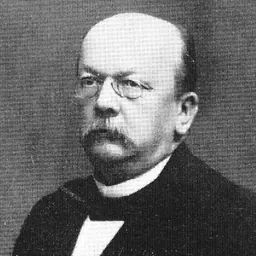

Related people
Same field, nearest in time





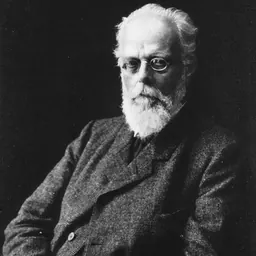
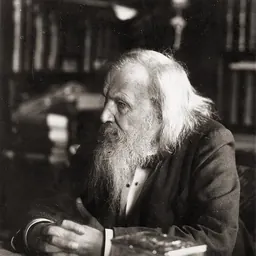
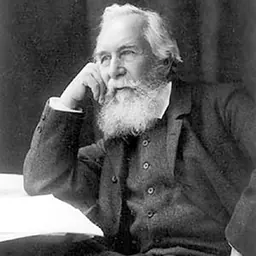
Contemporaries
People whose lives overlapped Julius Stjernvall's

Frequently asked questions
Who was Julius Stjernvall?
Finnish politician
When was Julius Stjernvall born?
Julius Stjernvall was born on 26 October 1874 in Mäntsälä.
When did Julius Stjernvall die?
Julius Stjernvall died on 6 May 1939 in Helsinki.
What was Julius Stjernvall's occupation?
Julius Stjernvall was a politician and businessperson.
What nationality was Julius Stjernvall?
Julius Stjernvall was Finnish.
Sources & further reading
· Wikipedia: Julius Stjernvall
Cite this page
APA: Biography.guide. (2026). Julius Stjernvall. https://biography.guide/julius-stjernvall/
MLA: "Julius Stjernvall." Biography.guide, https://biography.guide/julius-stjernvall/.
Chicago: "Julius Stjernvall." Biography.guide. https://biography.guide/julius-stjernvall/.
Data last updated: 2026-09-20 · Spot an error? Report a correction.
Page generated 2026-09-27 05:19 UTC