
About Julius Podlipny
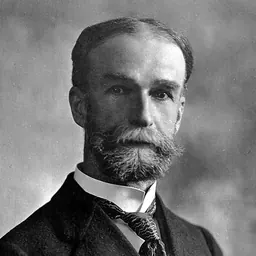
Lived 1898 – 1991 (aged 92). Julius Podlipny was a Romanian painter.
Julius or Iulius Podlipny (most common renditions of the ; ; Hungarian: Podlipny Gyula; Romanian: Iuliu Podlipny; April 12, 1898 – January 15, 1991) was an Austro-Hungarian-born Czechoslovak and Romanian artist, best known for his work in drawing and his long period as teacher at the Art Lyceum in Timișoara. First acknowledged as a promoter of modern art during the interwar period, Podlipny was a contributor to the avant-garde and socialist magazine Ma, edited by Hungarian critic and promoter Lajos Kassák.
Having adopted a style which echoed Expressionism, he influenced Romanian art mainly as a pedagogue: among the critically acclaimed contemporary painters to have been inspired by his views is Ștefan Câlția. Podlipny's widow, Annemarie Podlipny-Hehn, is an art and literary critic. Part of her research is dedicated to her husband's artistic contributions.
Biography Of Slovak origin, but also honoured in the context of Czech culture, Podlipny was born in Pressburg, Austria-Hungary (today Bratislava, Slovakia). His childhood was marked by two train accidents: the first, at age six, during which he lost his right arm; the second, occurring three years later, killed his father. Art critic Pavel Șușară completes the image: young Podlipny was "moved by the suffering of others, fascinated by risk and hunted by police". He made his first visits to the Romanian Kingdom, having earned scholarships to attend the Baia Mare School.
At the time, Podlipny's art was a sample of Romanian Expressionism, focusing especially on depicting images of suffering, marginality and despair, including portraits of physically disabled people, or landscapes seemingly painted in absolute solitude.
After the establishment of the Romanian communist regime, and especially in the 1960s and '70s, Julius Podlipny focused on his work as an educator, helping to create a distinct and critically acclaimed artistic trend among Banat youth, and creating a bridge between early modern art and postwar tendencies. In 2008, she recalled: "following my marriage and through my work at the Banat Museum art section, I 'submerged' myself in the field of fine arts, and thus I could more easily bear the communist dictatorship." and Constantin Flondor.
Several texts by Annemarie Podlipny-Hehn, including a monograph, deal with her husband's work and its context. Discussing these writings, Cornel Ungureanu writes: "To understand the Austro-Hungarian empire with its left-wing movements, to understand the crepuscular art of Central Europe, Mrs. Podlipny shows, is impossible unless we carefully follow the evolution of esteemed Timoșoarans, among whom the most important one in her studies is still Julius Podlipny." In 1998, Podlipny was posthumously granted the title of honorary citizen of Timișoara. A street in the city was renamed in his honour.
Style and influence Podlipny's style was developed under the influence of Central European currents. Writer Livius Ciocârlie, who was active on Timișoara's cultural scene at the same time as Cotoșman and was an acquaintance of Podlipny's, describes the latter as "an interesting Expressionist". He also recalled Podlipny telling his students that "the most important thing we have been given is the total freedom of expression." Constantin Flondor, who was Podlipny's student between 1950 and 1954, remembers being influenced by his "simple, clear and unshakable" pronouncements on artistic matters, such as: "Art requires an abandonment, a self-sacrifice. Taking your place in front of a sheet or a canvass which promises the meeting between a piece of vine charcoal or a brush and the white surface is a moment charged with the thrills of genesis. Nothing and no one has the right to disturb one who is in the sacred moment of labour." Livius Ciocârlie also notes that, although Podlipny "spoke a very corrupted form of Romanian [...], any phrase he had uttered became memorable."
Ciocârlie, who describes Podlipny as "one-armed, nervous, intransigent, sarcastic", recounts the artist's contempt for painting as opposed to drawing and graphics: "to him, colorists were a finical bunch lacking in energy, incapable of tracing a single line." According to Șușară, Podlipny and Baba had a common trait, in that they saw drawing as "fundamental". Podlipny had a rather tense relationship with Cotoșman, who, in 1966, created the nucleus for an underground avant-garde platform, Grupul Sigma. Neumann notes that this might not have been a singular situation, and that Podlipny may have likely been seen as "too demanding" by several other of his pupils.
Don’t just read it —
keep it.
Full-length biographies made to live with: read them, listen on the way to work, watch them tonight.
- E-book
- Audio
- Video
Instant download · yours to keep · every purchase keeps this site free
Important facts
People in Julius Podlipny's life
Named in this biography and alive at the same time


Related people
Same field, nearest in time


Contemporaries
People whose lives overlapped Julius Podlipny's



Frequently asked questions
Who was Julius Podlipny?
Slovak artist (1898-1991)
When was Julius Podlipny born?
Julius Podlipny was born on 12 April 1898 in Bratislava.
When did Julius Podlipny die?
Julius Podlipny died on 15 January 1991 in Timișoara.
What was Julius Podlipny's occupation?
Julius Podlipny was a painter.
What nationality was Julius Podlipny?
Julius Podlipny was Romanian.
Sources & further reading
Cite this page
APA: Biography.guide. (2026). Julius Podlipny. https://biography.guide/julius-podlipny/
MLA: "Julius Podlipny." Biography.guide, https://biography.guide/julius-podlipny/.
Chicago: "Julius Podlipny." Biography.guide. https://biography.guide/julius-podlipny/.
Data last updated: 2026-09-20 · Spot an error? Report a correction.
Page generated 2026-09-27 05:24 UTC