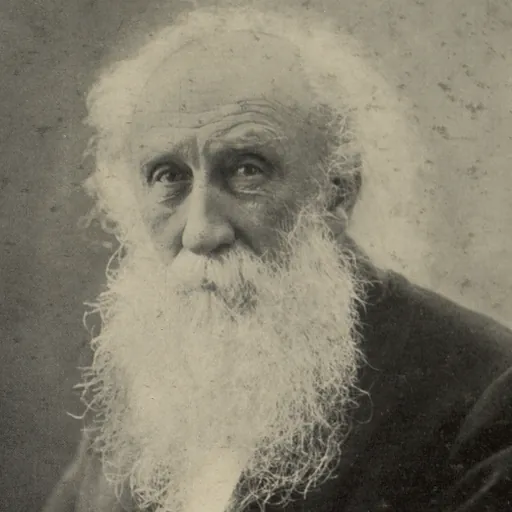
About Julius Otto Grimm
Lived 1827 – 1903 (aged 76). Julius Otto Grimm was a German composer, conductor and pianist.
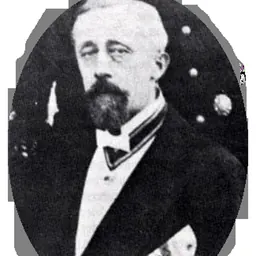
Julius Otto Grimm (6 March 1827 – 7 December 1903) was a German composer, conductor and musician who spent the majority of his professional life in Westphalia. He is most-often remembered today as one of the best friends of Johannes Brahms, whom he met in Leipzig in 1853. Brahms went on to dedicate his 4 Ballades, Op. 10 to Grimm in 1854.
Life and career Grimm was born in Pernau, Livonia, now Pärnu, Estonia. After studying philology and philosophy at the University of Tartu (then the University of Dorpat), concluding his exams in 1848, Grimm began his career and avocation as a tutor in Saint Petersburg. His first compositions were published around this time. From 1851 to 1852, he pursued further studies in Dresden.
In 1855, Grimm took the position of professor of music and choral conductor in Göttingen. In 1860, he accepted the post of conductor of the (music association) of Münster. During his 40-year-long career in Münster, he received many honors and appointments, including an honorary doctorate in 1897.
At his death in Münster, "hundreds of letters from Madame Schumann, Brahms and Dr. Joachim" were found in Grimm's possession. In addition to this collection of correspondence, he owned several of Brahms' manuscripts, which were (presumably) gifted to him. These included Brahms' first Piano Sonata Op. 1, a song from his Op. 3, and his unfinished Missa Canonica, WoO 18.
Grimm's compositions include a violin sonata in A major, three orchestral suites, One of his suites, Op. 10 "in the Form of a Canon", is positively mentioned and described in some detail in a review (of a performance by the Boston Symphony Orchestra conducted by Theodore Thomas, in March 1869) in American music critic John Sullivan Dwight's journal.
Works Orchestral Orchestral Suite No. 1 in the Form of a Canon, Op. 10 Orchestral Suite No. 2 in the Form of a Canon, Op. 16 Two Marches, Op. 17 Symphony in D minor, Op. 19 Sostenuto – Allegro Trauermarsch: Andante Scherzo: Presto Finale: Allegro vivace Orchestral Suite No. 3, Op. 25
Chamber music Violin Sonata in A major, Op. 14
Piano music Five Piano Pieces, Op. 2 Three Elegies, Op. 6 Two Scherzos for Four-Hand Piano Four Piano Pieces in freier canonischer Weise
Choral music An die Musik for Soloists, Choir, and Orchestra, Op. 12 Kaiserhymne for Male Choir and Orchestra, Op. 21 Zum Geburtsfeste des Kaisers for Male Choir and Wind Orchestra, Op. 27 Abendfeier Frühlingslied
Lieder Sechs Lieder, Op. 1 Sechs Lieder, Op. 3 Sechs Lieder, Op. 11 Sechs Lieder, Op. 15 Deutsche Volkslieder
Don’t just read it —
keep it.
Full-length biographies made to live with: read them, listen on the way to work, watch them tonight.
- E-book
- Audio
- Video
Instant download · yours to keep · every purchase keeps this site free
Important facts
People in Julius Otto Grimm's life
Named in this biography and alive at the same time



Related people
Same field, nearest in time


Contemporaries
People whose lives overlapped Julius Otto Grimm's




Frequently asked questions
Who was Julius Otto Grimm?
German composer and conductor (1827–1903)
When was Julius Otto Grimm born?
Julius Otto Grimm was born on 6 March 1827 in Pärnu.
When did Julius Otto Grimm die?
Julius Otto Grimm died on 7 December 1903 in Münster.
What was Julius Otto Grimm's occupation?
Julius Otto Grimm was a composer, conductor and pianist.
What nationality was Julius Otto Grimm?
Julius Otto Grimm was German.
Sources & further reading
· Wikipedia: Julius Otto Grimm
Cite this page
APA: Biography.guide. (2026). Julius Otto Grimm. https://biography.guide/julius-otto-grimm/
MLA: "Julius Otto Grimm." Biography.guide, https://biography.guide/julius-otto-grimm/.
Chicago: "Julius Otto Grimm." Biography.guide. https://biography.guide/julius-otto-grimm/.
Data last updated: 2026-09-23 · Spot an error? Report a correction.
Portrait: Wikimedia Commons · author & licence
Page generated 2026-09-27 05:08 UTC