
About Julius Lamperez
Lived 1920 – 1999 (aged 79). Julius Lamperez was an American musician.
Biography
Lamperez was born in New Orleans but raised in Crowley. By 1932, at age of 12, he learned to read music and play the fiddle and became good friends with Joe Falcon and Cleoma Breaux. He married Bessie Short. In 1934, he formed the Daylight Creepers band along with guitarist Bill Redlich and fiddler Erby Thibodeaux. Their music was broadcast on KVOL. When not playing music, he played football and loved boxing.
He disbanded the group and in 1937, he joined Joe Werner and the Louisiana Rounders playing guitar and singing. They recorded 12 songs in Dallas in 1937 for Decca Records including "Allons Kooche Kooche", a tune based on the Jolly Boys of Lafayette's "Abbeville". The melody would have a huge impact on his later recording of "Grand Texas". While in the band, he would meet Horace Andrus "Uncle Ambrose" Thibodeaux, Leroy "Happy Fats" Leblanc, Oran Guidry and Harry Choates. Happy Fats noticed he always wore a diamond-shaped gem on his tie and finger. Using the Cajun French word for "diamond" ("karo", pronounced "cairo"), his nickname became "Papa Cairo". He played the guitar across his knees with a metal finger attachment. he recorded again with Joe in New Orleans.
By 1941, Lamperez learned to play a Hawaiian-style lap steel guitar and traveled with Happy Fats to Dallas to record for Bluebird Records. During the session, he wrote the song "In The House at the End of the Road". However, soon after, he was drafted into the US Army, became a Sergeant, and fought in Europe during World War II. He was captured by the Germans and held prisoner of war in a stalag. He escaped four times but never got very far, however, he made a fiddle while captured and the guards enjoyed his music.
After the war, he began playing music again touring with Ernest Tubb. In 1946, he played with Harry Choates and his Melody Boys. He would also fill in from time to time with bands such as the Louisiana Hillbillies That year, he would record a second version of his hit song in English called "Big Texas #2" and re-record "Kooche Kooche" in French. In 1951, he would record his own version of the song entitled "Big Texas" for J. D. "Jay" Miller's Feature label. Jealous of Hank Williams' success with "Jamabalaya" in 1952, he claimed the song was stolen from his "Grand Texas" melody and refused to record again. He continued to play around Galveston, Texas.
Another one of his songs, "Just Wait And See", would be the basis for Marty Robbins' song "Pretty Words". At some point, he also recorded "Why Not" and "Smiling Pines" for B & C Records.
Discography
Compilations Swingbillies – Hillbilly & Western Swing on Modern/Colonial/Flair 1947–52 (CHD 893 Ace, 2004)
Don’t just read it —
keep it.
Full-length biographies made to live with: read them, listen on the way to work, watch them tonight.
- E-book
- Audio
- Video
Instant download · yours to keep · every purchase keeps this site free
Important facts
People in Julius Lamperez's life
Named in this biography and alive at the same time

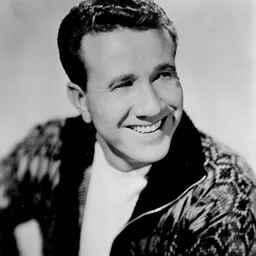



Related people
Same field, nearest in time
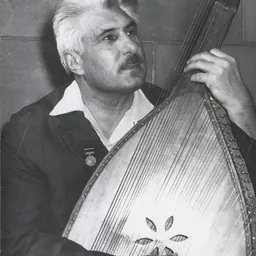





Contemporaries
People whose lives overlapped Julius Lamperez's





Frequently asked questions
Who was Julius Lamperez?
American musician
When was Julius Lamperez born?
Julius Lamperez was born on 27 July 1920 in New Orleans.
When did Julius Lamperez die?
Julius Lamperez died on 13 November 1999 in Crowley.
What was Julius Lamperez's occupation?
Julius Lamperez was a musician.
What nationality was Julius Lamperez?
Julius Lamperez was American.
Sources & further reading
Cite this page
APA: Biography.guide. (2026). Julius Lamperez. https://biography.guide/julius-lamperez/
MLA: "Julius Lamperez." Biography.guide, https://biography.guide/julius-lamperez/.
Chicago: "Julius Lamperez." Biography.guide. https://biography.guide/julius-lamperez/.
Data last updated: 2026-09-20 · Spot an error? Report a correction.
Page generated 2026-09-27 05:24 UTC