
Marty Robbins
American country singer
About Marty Robbins
Lived 1925 – 1982 (aged 57). Marty Robbins was an American singer-songwriter, composer, racing automobile driver, singer, musician and pop singer.
Martin David Robinson (September 26, 1925 – December 8, 1982), known professionally as Marty Robbins, was an American country and western singer and songwriter. He was one of the most popular and successful singers of his genre for most of his nearly four-decade career, which spanned from the late 1940s to the early 1980s. He was also an early outlaw country pioneer.
Born in Glendale, Arizona, Robbins taught himself guitar while serving in the U.S. Navy during World War II, and subsequently drew fame performing in clubs in and around his hometown. In 1952, he released his first number-one country song, "I'll Go On Alone". Four years later, he released his second number-one hit "Singing the Blues", and one year later, released two more number-one hits, "A White Sport Coat" and "The Story of My Life". In 1959, Robbins released his signature song, "El Paso", for which he won the Grammy Award for Best Country and Western Recording. The song began Robbins' association with Western balladry, a style that became a staple of his career. His later releases that drew critical acclaim include "Don't Worry", "Big Iron", "Devil Woman", and "Honkytonk Man", the last for which the 1982 Clint Eastwood film is named, and in which Robbins made his final appearance before his death.
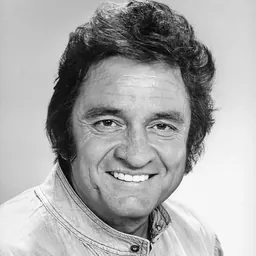
Over the course of his career, Robbins recorded more than 500 songs and 60 albums, and won two Grammy Awards, was elected to the Country Music Hall of Fame and Nashville Songwriters Hall of Fame, and was named the 1960s Artist of the Decade by the Academy of Country Music. His songs "El Paso" and "Big Iron" were ranked by the Western Writers of America among the top-100 Western songs of all time. Robbins was a commercial success in both the country and pop genres, and his songs were covered by many other famous artists, including Johnny Cash, the Grateful Dead, and Elvis Presley. Johnny Cash noted, "there's no greater country singer than Marty Robbins." His music continues to have an influence in pop culture today, featuring prominently in several films, television shows, and video games.
Early life
Robbins was born Martin David Robinson on September 26, 1925, in Glendale, a suburb of Phoenix in Maricopa County. His parents, John "Jack" Robinson and Emma Heckle, divorced in 1937 when Robbins was 12 years old. Robbins later recalled: "He had two little books of poetry he would sell. I used to sing him church songs and he would tell me stories. A lot of the songs I've written were brought about because of stories he told me. Like 'Big Iron' I wrote because he was a Texas Ranger. At least he told me he was."
At 17, Robbins left home to serve in the U.S. Navy as an LCT coxswain during World War II. He was stationed in the Solomon Islands in the Pacific theater. To pass the time during the war, he learned to play the guitar, started writing songs, Robbins was a symbol of the Nashville establishment that younger country fans abandoned in the '70s for the bleached-denim "outlaw school" of Waylon Jennings and Willie Nelson. Robbins belonged to the Jim Reeves era, and wore his embroidered cowboy suits proudly. Best known for the Western ballad, "El Paso", his career also touched the rock 'n' roll side of country in songs like "White Sport Coat and a Pink Carnation", and he kept a touch of the dude about him to the end.
In 1980, Robbins appeared on the PBS music program Austin City Limits (season five). In addition to his recordings and performances, Robbins was an avid race car driver, competing in 35 career NASCAR Grand National Series races with six top-10 finishes, including the 1973 Firecracker 400. In 1967, Robbins played himself in the car-racing film Hell on Wheels. Robbins was partial to Dodges prepared by NASCAR Hall-of-Famer Cotton Owens, and owned and raced Chargers and then a 1978 Dodge Magnum. He was also the driver of the 60th Indianapolis 500 Buick Century pace car in 1976. His last race was in a Junior Johnson-built 1982 Buick Regal in the Atlanta Journal 500 on November 7, 1982, a month before his death.
Music and honors Although by 1960, Robbins' output was largely Western (and some country) music, his initial hits, such as "Singing the Blues", "Knee Deep in the Blues", "The Story of My Life", "She Was Only Seventeen", and "A White Sport Coat and a Pink Carnation", were generally regarded as more pop/teen idol material than his hits from 1960 onwards ("El Paso", etc.). In 1957, he wrote and recorded "A White Sport Coat and a Pink Carnation" which sold over one million copies, and was awarded a gold record. His musical accomplishments include the Grammy Award for his 1959 hit and signature song "El Paso", taken from his album Gunfighter Ballads and Trail Songs. "El Paso" was his first song to hit number one on the pop chart in the 1960s. It was followed up, successfully, by "Don't Worry", which reached number three on the pop chart in 1961, becoming his third, and last, top-10 pop hit. "El Paso" was followed by one prequel and one sequel: "Faleena (From El Paso)" and "El Paso City". Also in 1961, Robbins wrote the words and music and recorded "I Told the Brook", a ballad later recorded by Billy Thorpe.
He won the Grammy Award for the Best Country and Western Recording 1961 for his follow-up album More Gunfighter Ballads and Trail Songs, and was awarded another Grammy, for Best Country Song, in 1970, for "My Woman, My Woman, My Wife". Robbins was named Artist of the Decade (1960–1969) by the Academy of Country Music, was elected to the Country Music Hall of Fame in 1982, was given three awards at the 17th Annual Music City News Country Awards in 1983, and was given a Grammy Hall of Fame Award in 1998 for "El Paso".
When Robbins was recording his 1961 hit "Don't Worry" at the Bradley Studios in Nashville, session guitarist Grady Martin accidentally created the electric guitar "fuzz" effect – his six-string bass was run through a faulty channel in the studio's mixing console. Robbins decided to keep it in the final version. The song reached number one on the country chart, and number three on the pop chart. Robbins was inducted into the Nashville Songwriters Hall of Fame in 1975. For his contribution to the recording industry, Robbins has a star on the Hollywood Walk of Fame at 6666 Hollywood Boulevard.
Robbins has been honored by many bands, including the Grateful Dead, who covered "El Paso" and Bob Weir and Kingfish, who covered "Big Iron". The Who's 2006 album Endless Wire includes the song "God Speaks of Marty Robbins". The song's composer, Pete Townshend, explained that the song is about God deciding to create the universe just so he can hear some music, "and most of all, one of his best creations, Marty Robbins." The Beasts of Bourbon released a song called "The Day Marty Robbins Died" on their 1984 debut album The Axeman's Jazz. Both Frankie Laine and Elvis Presley, among others, recorded versions of Robbins' song "You Gave Me a Mountain", with Laine's recording reaching the pop and adult contemporary charts in 1969. Though Elvis never recorded any of Robbins' songs in the studio, he was a big fan and recorded "You Gave Me a Mountain" live in concert several times; it appeared on 15 Presley albums. Johnny Cash recorded a version of "Big Iron" as part of his American Recordings series, which is included in the Cash Unearthed box set. Cash also recorded other songs by Robbins, including "I Couldn't Keep from Crying", "Kate", and "Song of the Patriot". He held Robbins in high esteem, having him guest-star several times on his network TV show. "Big Iron" was also covered by Mike Ness on his album Under the Influences, on which he paid homage to country music artists. The song, originally released on Robbins' 1959 album Gunfighter Ballads and Trail Songs, gained renewed popularity following its use in the 2010 video game Fallout: New Vegas.
His song "El Paso" was featured in the series finale of the AMC TV series Breaking Bad. "El Paso" was also featured in the Only Fools and Horses prequel made by the BBC.
Robbins was awarded an honorary degree by Northern Arizona University.
In 2001, singer-songwriter Don McLean released his album, Sings Marty Robbins, which features a collection of songs recorded by Robbins in his career.
In 2016, a portion of Glendale Avenue in Robbins' hometown of Glendale, Arizona, was renamed "Marty Robbins Boulevard".
Before Robbins died, he held a performance at the White House, alongside famous American singer Frank Sinatra.
He was named Man of the Decade by the Academy of Country Music in 1970.
Political views
Robbins was a staunch conservative and anti-communist, and his political views remained firmly conservative during his lifetime. He supported Barry Goldwater in his 1964 United States presidential election campaign as a southern director for "Stars for Barry". As the opposition to the Vietnam War strengthened beginning in 1965, Robbins became an increasingly outspoken conservative voice. Two of his songs, "Ain't I Right" and "My Own Native Land", written in the same decade, later became popular songs during the conservative resurgence in the 1980s. The lyrics of "Ain't I Right" describe antiwar protesters as fifth columnists and communists. After Columbia Records refused to publish his more politically charged songs, Robbins' band member Bobby Sykes recorded the songs for Sims Records under the name Johnny Freedom.
Racing career Robbins loved NASCAR racing. With his musical successes, he was able to finance his avocation. Robbins always tried to run at the big racetracks (Talladega Superspeedway, Daytona International Speedway) every year and a smattering of the smaller races when time permitted. Robbins had six top-ten finishes in his career, with a personal-best top-five finish at the 1974 Motor State 360 in Michigan.
Robbins' cars were built and maintained by Cotton Owens. They were painted two-toned magenta and chartreuse, usually carrying car number 42 (though 6, 22, and 777 were also used). Over the years, he ran a few makes and models (Plymouths, Dodges, or Fords) before buying a 1972-bodied Dodge Charger from Owens. Robbins had a few major wrecks during the 1970s, and he had Owens rebuild the car to update the sheet metal to the 1973–1974 Charger specifications, and then finally 1978 Dodge Magnum sheet metal, which he raced until the end of 1980. Robbins' final NASCAR race car was a 1981 Buick Regal that he rented and drove in a few races in 1981 and 1982.
In 1972, at the Winston 500, Robbins stunned the competition by turning laps that were 15 mph faster than his qualifying time. After the race, NASCAR tried to bestow the Rookie of the Race award, but he would not accept it. He had knocked the NASCAR-mandated restrictors out of his carburetor and admitted he "just wanted to see what it was like to run up front for once."
Robbins is credited with possibly saving Richard Childress' life at the 1974 Charlotte 500 by deliberately crashing into a wall rather than T-bone (broadside) Childress's car that was stopped across the track.
In 1983, one year after Robbins' death, NASCAR honored him by naming the annual race at Fairgrounds Speedway the Marty Robbins 420.
Robbins' Dodge Magnum was restored by Owens and donated to the Talladega Museum by his family, and was displayed there from 1983 to 2008. The car is now in private hands in Southern California and raced on the Vintage NASCAR club circuit.
In 2014, Robbins' 1969 Dodge Charger Daytona was featured on an episode of Discovery Channels TV show Fast and Furious: Rolling Thunder. In that same year, an episode of Velocity's AmeriCarna featured ex-race team owner Ray Evernham spearheading the restoration of another of Robbins' NASCAR racers, a 1964 Plymouth Belvedere.
For the 2016 Darlington throwback weekend, Kyle Larson's number 42 NASCAR Xfinity Series car was painted purple and gold in honor of Robbins. For the 2021 Goodyear 400, Tyler Reddick's RCR number 8 NASCAR Cup car carries Robbins' signature magenta and chartreuse livery. For the 2022 running, Corey LaJoie's Spire Motorsports number 7 ran a throwback to Robbins' infamous 777 car that he ran in his career.
Personal life and death In 1948, Robbins married Marizona Baldwin, who claimed she had always wanted to marry a singing cowboy. They had a son, Ronnie, and a daughter, Janet.
Robbins developed cardiovascular disease early in life, and suffered his first heart attack at age 43 in 1969. After his third heart attack on December 2, 1982, he underwent quadruple coronary artery bypass surgery. He did not recover, and died on December 8 at St. Thomas Hospital in Nashville. He was 57 years old.
Legacy The city of Glendale, Arizona, honored Marty Robbins in various ways. In 2015, a bronze plaque was placed along the amphitheater walkway. In 2016, the 1-mile stretch of Glendale Avenue, between 59th and 51st Avenues, was renamed to Marty Robbins Boulevard. Following the release of Fallout: New Vegas, Robbins' song "Big Iron" substantially increased in popularity and inspired internet memes.
Discography
Robbins' discography consists of 52 studio albums, 13 compilation albums, and 100 singles. In his career, Robbins charted 17 number-one singles on the Billboard Hot Country Songs charts, as well as 82 top-40 singles.
Robbins' highest-charting album is 1959's Gunfighter Ballads and Trail Songs. It charted to number six on the all-genre Billboard 200, and was also certified platinum by the Recording Industry Association of America. The album's first single, "El Paso", became a hit on both the country and pop charts, charting to number one on the Hot Country Songs, as well as the Billboard Hot 100. While that would be his only pop number one, in 1957, "A White Sport Coat" charted to number two, and in 1961, "Don't Worry" charted to number three.
His final top-10 single was "Honkytonk Man" from the 1982 eponymous film in which Robbins had a role. He died shortly before its release. Since his death, four posthumous studio albums have been released, but they made no impact on the charts.
Filmography
The Badge of Marshal Brennan (1957) as Felipe, a Mexican outlaw Raiders of Old California (1957) as Timothy Voyle Country Music Caravan (1964) as Himself, singing 1968 Dick Behling 32 Dodge MGR MGY RSD DAY BRI RCH ATL HCY GPS CLB NWS MAR AUG AWS DAR BLV LGY CLT ASH MGR SMR BIR CAR GPS DAY ISP OXF FDA TRN BRI SMR NSV ATL CLB BGS AWS SBO LGY DAR HCY RCH BLV HBO MAR NWS AUG
CAR JFC 78th 0 1970
RSD DAY DAY DAY RCH CAR SVH ATL BRI TAL NWS CLB DAR BLV LGY CLT SMR MAR MCH RSD HCY KPT GPS DAY AST TPN TRN BRI SMR NSV ATL CLB ONA MCH TAL BGS SBO DAR HCY RCH DOV NCF NWS
MAR MGR CAR LGY 94th 57 1971 RSD DAY DAY DAY ONT RCH CAR HCY BRI ATL CLB GPS SMR NWS MAR DAR SBO TAL ASH KPT
DOV MCH RSD HOU GPS DAY BRI AST ISP TRN NSV
BGS ONA MCH TAL CLB HCY
MAR
DOV CAR MGR RCH NWS
69th 120 Winston Cup Series NASCAR Winston Cup Series results Year Team No. Make 1 2 3 4 5 6 7 8 9 10 11 12 13 14 15 16 17 18 19 20 21 22 23 24 25 26 27 28 29 30 31 Pts Ref 1972 Robbins Racing 42 Dodge RSD DAY RCH ONT CAR ATL BRI DAR NWS MAR TAL CLT DOV MCH RSD TWS DAY BRI TRN ATL TAL MCH NSV DAR RCH DOV MAR NWS CLT CAR TWS 54th 860.8 1973 RSD DAY RCH CAR BRI ATL NWS DAR MAR TAL NSV CLT DOV TWS RSD MCH DAY BRI ATL TAL NSV DAR RCH DOV NWS MAR CLT CAR 83rd 828.80 1974 RSD DAY RCH CAR BRI ATL DAR NWS MAR TAL NSV DOV CLT RSD MCH DAY BRI NSV ATL POC TAL MCH DAR RCH DOV NWS MAR CLT CAR ONT 48th 23.78 1975 RSD DAY RCH CAR BRI ATL NWS DAR MAR TAL NSV DOV CLT RSD MCH DAY NSV POC TAL MCH DAR DOV NWS MAR CLT RCH CAR BRI ATL ONT 81st 121 1976 RSD DAY CAR RCH BRI ATL NWS DAR MAR TAL NSV DOV CLT RSD MCH DAY NSV POC TAL MCH BRI DAR RCH DOV MAR NWS CLT CAR ATL ONT NA – 1977 RSD DAY RCH CAR ATL NWS DAR BRI MAR TAL NSV DOV CLT RSD MCH DAY NSV POC TAL MCH BRI DAR RCH DOV MAR NWS CLT CAR ATL ONT 77th 173 1978 RSD DAY RCH CAR ATL BRI DAR NWS MAR TAL DOV CLT NSV RSD MCH DAY NSV POC TAL MCH BRI DAR RCH DOV MAR NWS CLT CAR ATL ONT 85th 109 1979 RSD DAY CAR RCH ATL NWS BRI DAR MAR TAL NSV DOV CLT TWS RSD MCH DAY NSV POC 70th 207 36 TAL 6 MCH BRI DAR RCH DOV MAR CLT NWS CAR ATL ONT 1980 RSD DAY RCH CAR ATL BRI DAR NWS MAR TAL NSV DOV CLT TWS RSD MCH TAL MCH BRI DAR RCH DOV NWS MAR 71st 204 Warren Racing 79 DAY NSV POC M.C. Anderson Racing 6 Chevy CLT CAR ATL ONT 1982 Robbins Racing 22 Buick DAY RCH BRI ATL CAR DAR NWS MAR TAL NSV DOV CLT POC RSD MCH DAY NSV POC TAL MCH BRI DAR RCH DOV NWS CLT MAR CAR ATL RSD 79th 116
Daytona 500 Year Team Manufacturer Start Finish 1973 Robbins Racing Dodge 37 34 1975 Robbins Racing Dodge 28 39
Don’t just read it —
keep it.
Full-length biographies made to live with: read them, listen on the way to work, watch them tonight.
- E-book
- Audio
- Video
Instant download · yours to keep · every purchase keeps this site free
Important facts
People in Marty Robbins's life
Named in this biography and alive at the same time






Related people
Same field, nearest in time




Contemporaries
People whose lives overlapped Marty Robbins's


Frequently asked questions
Who was Marty Robbins?
American country singer (1925–1982)
When was Marty Robbins born?
Marty Robbins was born on 26 September 1925 in Glendale.
When did Marty Robbins die?
Marty Robbins died on 8 December 1982 in Nashville.
What was Marty Robbins's occupation?
Marty Robbins was a singer-songwriter, composer, racing automobile driver, singer, musician and pop singer.
What nationality was Marty Robbins?
Marty Robbins was American.
Sources & further reading
Cite this page
APA: Biography.guide. (2026). Marty Robbins. https://biography.guide/marty-robbins/
MLA: "Marty Robbins." Biography.guide, https://biography.guide/marty-robbins/.
Chicago: "Marty Robbins." Biography.guide. https://biography.guide/marty-robbins/.
Data last updated: 2026-09-26 · Spot an error? Report a correction.
Page generated 2026-09-27 05:16 UTC