
About Julius Harrison
Lived 1885 – 1963 (aged 78). Julius Harrison was a British conductor, composer and musicographer.
Julius Allan Greenway Harrison (26 March 1885 – 5 April 1963) was an English composer and conductor who was particularly known for his interpretation of operatic works. Born in Lower Mitton, Stourport in Worcestershire, by the age of 16 he was already an established musician. His career included a directorship of opera at the Royal Academy of Music where he was a professor of composition, a position as répétiteur at the Royal Opera House, Covent Garden, conductor for the British National Opera Company, military service as an officer in the Royal Flying Corps, and founder member and vice-president of the Elgar Society.
Life and career
Early years Harrison was born in 1885 in Lower Mitton, Stourport in Worcestershire. and his wife, Henriette Julien née Schoeller, a German-born former governess. He was educated at a dame school in Stourport, Harrison's setting won the first prize at the Norwich Musical Festival, adjudicated by Frederick Delius, Samuel Coleridge-Taylor and Ernest Walker. The Times commented on the inadequacy of the libretto, and praised Harrison's orchestration and melodies but complained that the work was "a series of pictures of unbridled passion devoid of all that ordinary people call beauty." The reviewer in The Manchester Guardian was more complimentary; though he commented on the obvious influence of Bantock, and over-elaborate orchestration, he wrote that Harrison had undoubted talent.
Moving to London when he was 23,
Conducting and later career For most of his career Harrison was obliged to earn a living by conducting and other musical work, to the detriment of his composing. After a second season with Courtneidge, Beecham set up on his own account in 1916, and established the Beecham Opera Company at the Aldwych Theatre of which his father Sir Joseph Beecham was the lessee. Harrison, Pitt, and Eugene Goossens joined him as assistant conductors.
From 1920 to 1923 Harrison was co-conductor of the Scottish Orchestra with Ronald, and from 1920 to 1927 he was also in charge of the Bradford Permanent Orchestra. He secured the services of guest artists including the conductors Sir Henry Wood and Adrian Boult, pianists such as Clifford Curzon and Benno Moiseiwitsch and singers including George Baker. He presented concert performances of neglected works such as Sullivan's and German's The Emerald Isle. After the outbreak of the Second World War the Hastings orchestra was disbanded. From 1940 to 1942 Harrison was director of music at Malvern College. He then accepted a post as a conductor with the BBC Northern Orchestra in Manchester.
Harrison died in 1963, aged 78, in Harpenden in Hertfordshire (at The Greenwood, Ox Lane) where he settled after leaving Malvern towards the end of the 1940s.
Works
Music
Although he had to focus mainly on conducting as his source of income, His output included piano pieces, organ compositions, orchestral and chamber works, songs and part-songs, choral works, and an operetta.
Bredon Hill (1941) for violin and orchestra, influenced by the poem In summertime on Bredon by A. E. Housman, The composition takes its name from Bredon Hill, a low rise in the Worcestershire countryside that Harrison could see from his home in Malvern.
His biographer, Geoffrey Self, writes that after 1940 Harrison wrote a series of substantial works; he notes particularly Bredon Hill and the Sonata in C Minor for Viola and Piano (1945), works which, in Self's view, are influenced respectively by Brahms and Vaughan Williams. Harrison's most ambitious works were his Mass in C (1936–47) and Requiem (1948–57), works which Self describes as "conservative and contrapuntally complex, influenced by Bach and Verdi respectively, [with] a mastery of texture and a massive yet balanced structure".
Literature Harrison's writings about music include Handbook for Choralists (London, 1928) and Brahms and his Four Symphonies (1939), and chapters on Mendelssohn, Schumann, Brahms and Dvořák in The Symphony (London, 1967), a two-volume work edited by Robert Simpson and dedicated to Harrison's memory.
Discography Julius Harrison Orchestral Music; Hubert Clifford Serenade for Strings; Dutton Epoch CDLX7174 (2006)Matthew Trussler (violin); Andrew Knight (harp); BBC Concert Orchestra conducted by Barry Wordsworth Worcestershire Suite for orchestra (1918) Bredon Hill, Rhapsody for violin and orchestra (1941) Troubadour Suite for orchestra (1944) Romance, a Song of Adoration for orchestra (1930) Prelude-Music for harp and string orchestra (1912) Widdicombe Fair, Humoresque for string orchestra (1916) Hubert Clifford – Serenade for Strings (1943) Samuel Coleridge-Taylor: Violin Concerto, Legend, Romance; Julius Harrison: Bredon Hill; Lyrita 317 (2008)Lorraine McAslan (violin); London Philharmonic Orchestra conducted by Nicholas Braithwaite Includes Julius Harrison – Bredon Hill, Rhapsody for violin and orchestra (1941) and music of Samuel Coleridge-Taylor Viola Sonatas: Edgar Bainton and Julius Harrison (World Premiere Recordings); 3 Pieces by Frank Bridge; British Music Society BMSCD415R (2008)Martin Outram (viola); Michael Jones (piano) Includes Julius Harrison – Viola Sonata in C minor (1945) and music of Frank Bridge and Edgar Bainton
'Far Forest', from Severn Country (three sketches for piano, 1928). A Hundred Years of British Piano Miniatures , Grand Piano CD GP789 (2018), Duncan Honeybourne
Don’t just read it —
keep it.
Full-length biographies made to live with: read them, listen on the way to work, watch them tonight.
- E-book
- Audio
- Video
Instant download · yours to keep · every purchase keeps this site free
Important facts
People in Julius Harrison's life
Named in this biography and alive at the same time




Related people
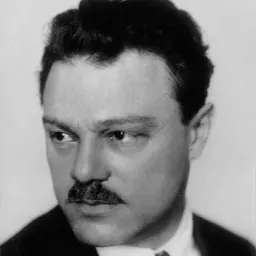
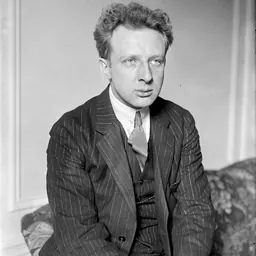
Same field, nearest in time

Contemporaries
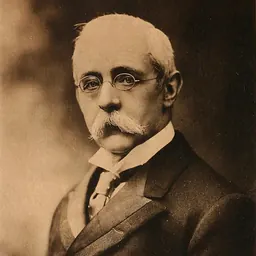
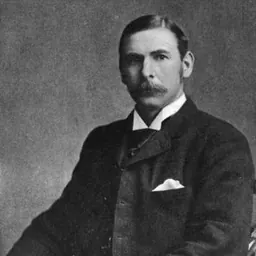
People whose lives overlapped Julius Harrison's


Frequently asked questions
Who was Julius Harrison?
English composer and conductor
When was Julius Harrison born?
Julius Harrison was born on 26 March 1885 in Stourport-on-Severn.
When did Julius Harrison die?
Julius Harrison died on 5 April 1963 in Harpenden.
What was Julius Harrison's occupation?
Julius Harrison was a conductor, composer and musicographer.
What nationality was Julius Harrison?
Julius Harrison was British.
Sources & further reading
Cite this page
APA: Biography.guide. (2026). Julius Harrison. https://biography.guide/julius-harrison/
MLA: "Julius Harrison." Biography.guide, https://biography.guide/julius-harrison/.
Chicago: "Julius Harrison." Biography.guide. https://biography.guide/julius-harrison/.
Data last updated: 2026-09-20 · Spot an error? Report a correction.
Page generated 2026-09-27 05:33 UTC