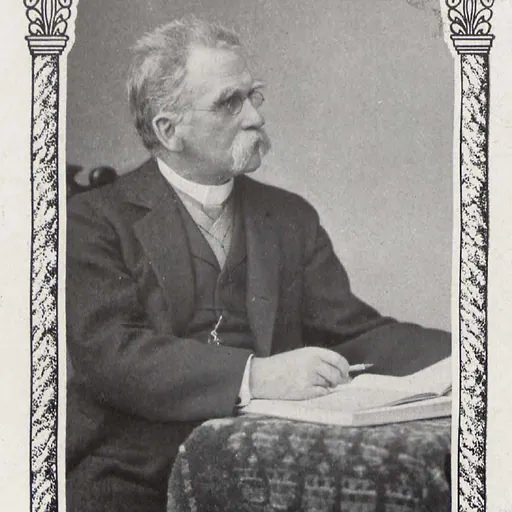
About Julius Carl Raschdorff
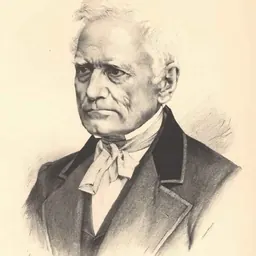
Lived 1823 – 1914 (aged 91). Julius Carl Raschdorff was a German architect, professor and master builder.
Julius Carl Raschdorff (2 July 1823 – 13 August 1914) was a German architect and academic teacher. He is considered one of the notable architects of the second half of the 19th century in Germany and created his most important work with the Berlin Cathedral.
Life
Born in Pleß, after his Abitur in 1842 in Gliwice, Raschdorff studied at the Berlin Bauakademie from 1845 to 1853. From his appointment as 2nd city architect on 1 November 1854, he worked in Cologne until 1878. There, he had a considerable influence on the and renovated among others the (1854–1859) and the town hall. From 1864, he was 1st city architect, but left office in 1872 to settle as a private architect. In 1856, Raschdorff gave a lecture on new building techniques at the Paris World Exhibition. Between 1876 and 1880, the in Düsseldorf, which housed the Prussian and later the Landtag of North Rhine-Westphalia, was built according to his plans. Raschdorff became professor of architecture at Technische Hochschule Berlin in 1878. In 1914, he became emeritus. Raschdorff designed over 220 buildings in Germany and neighbouring countries, of which about 100 were executed in 40 different locations. A bronze portrait of Raschdorff was created by Adolf Brütt in 1895 for the Berlin Cathedral, in which Brütt was just as involved as in the (1888/1890) for Potsdam. In 1896, he received a large gold medal at the Große Berliner Kunstausstellung.
He was laid to rest at the in an Ehrengrab of the city of Berlin.
His son Otto also became an architect and his closest collaborator.
Work Buildings and designs
1858–1860: in Rolandseck 1861: Wallraf-Richartz-Museum (together with Felten) 1865–1866: Haus der Casino-Gesellschaft in Saarbrücken (today Landtag of Saarland) 1859–1860: in Cologne 1869–1872: Municipal theatre in Cologne, Glockengasse (destroyed in the Second World War) 1870–1872: Etzweiler manor house and estate in Elsdorf (Bergheim/Erft district) (listed, but demolished after 2006 for Hambach open-cast mine)) 1871: of the railway stations in Kyllburg and in 1871–1874: Villa for Gottfried Conze in Langenberg (Rhineland), Hauptstraße 103 1872–1873: Villa for Emil vom Rath in (1955 demolished) 1872–1875: Deaconess House "Sarepta" in Bethel (Bielefeld) 1876–1880: Estates House in Düsseldorf 1877: New Protestant Church in Langenberg (Rheinland), Donnerstraße 15 (today "Event-Kirche") 1877: Rectory in Langenberg (Rheinland), Wiemerstraße 12 1877–1878: Villa for Hermann Colsman in Langenberg (Rheinland), Wiemerstraße 8 1877: for the textile manufacturer David Peters in Velbert 1878–1880: Post Office building (Post Office, Telegraph Office and Oberpostdirektion Münster), Domplatz 6/7 1878: Amtsgericht in Langenberg (Rheinland), Hauptstraße 122 1878: Design of a villa for Andreas Colsman in Langenberg (Rhineland) (The execution took place in 1884 in a modified form according to plans by Hermann Otto Pflaume.) 1878–1884: Neubau der Technischen Hochschule in (Berlin-)Charlottenburg (together with Richard Lucae and Friedrich Hitzig) 1879: Tower of the German Church, Stockholm 1880: 1884–1885: St. George's Anglican Church, Berlin in the garden of Schloss Monbijou in Berlin
Publications Das Kaufhaus Gürzenich in Köln. Berlin 1863. Abbildungen deutscher Schmiedewerke. Berlin 1875–78 (short edition 1878). Palastarchitektur von Oberitalien und Toskana. Berlin 1883–88 (2nd part: Toskana, 3rd part: Venedig; als Fortsetzung des von Robert von Reinhardt begonnenen Werks). Ein Entwurf Kaiser Friedrichs zum Neubau des Doms und zur Vollendung des königlichen Schlosses in Berlin. Berlin 1888. Baukunst der Renaissance. 4 volumes, Berlin 1880–90. Rheinische Holz- und Fachwerksbauten des 16. und 17. Jahrhunderts. Berlin 1895.
Don’t just read it —
keep it.
Full-length biographies made to live with: read them, listen on the way to work, watch them tonight.
- E-book
- Audio
- Video
Instant download · yours to keep · every purchase keeps this site free
Important facts
People in Julius Carl Raschdorff's life
Named in this biography and alive at the same time


Related people
Same field, nearest in time


Contemporaries
People whose lives overlapped Julius Carl Raschdorff's



Frequently asked questions
Who was Julius Carl Raschdorff?
German architect and professor (1823–1914)
When was Julius Carl Raschdorff born?
Julius Carl Raschdorff was born on 2 July 1823 in Pszczyna.
When did Julius Carl Raschdorff die?
Julius Carl Raschdorff died on 13 August 1914 in Waldsieversdorf.
What was Julius Carl Raschdorff's occupation?
Julius Carl Raschdorff was an architect, professor and master builder.
What nationality was Julius Carl Raschdorff?
Julius Carl Raschdorff was German.
Sources & further reading
· Wikipedia: Julius Carl Raschdorff
· DBpedia: Julius Carl Raschdorff
Cite this page
APA: Biography.guide. (2026). Julius Carl Raschdorff. https://biography.guide/julius-carl-raschdorff/
MLA: "Julius Carl Raschdorff." Biography.guide, https://biography.guide/julius-carl-raschdorff/.
Chicago: "Julius Carl Raschdorff." Biography.guide. https://biography.guide/julius-carl-raschdorff/.
Data last updated: 2026-09-21 · Spot an error? Report a correction.
Portrait: Wikimedia Commons · author & licence
Page generated 2026-09-27 05:00 UTC