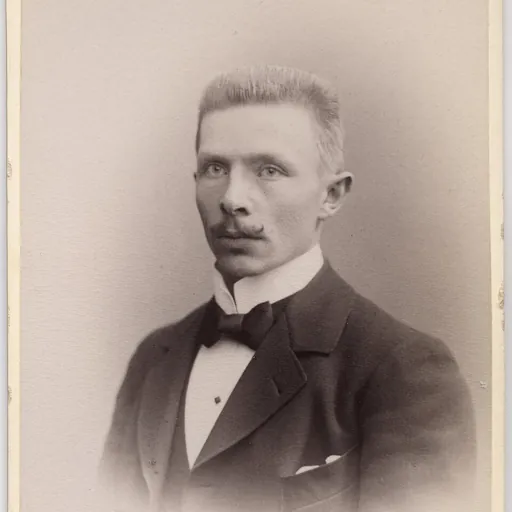
About Julius Ailio
Lived 1872 – 1933 (aged 60). Julius Ailio was a Finnish politician and archaeologist.
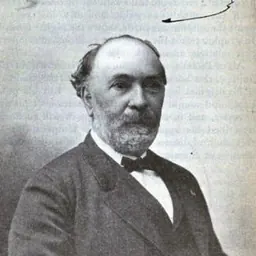
Julius Ailio (19 July 1872 – 4 March 1933) was a Finnish archaeologist and a Social Democratic politician. His archaeological work involved the Stone Age and Early Metal Age in Karelia, especially the isthmus.
Biography On 19 July 1872, Ailio was born in Loppi, Grand Duchy of Finland, Russian Empire to a school teacher and future Social Democratic member of Finnish parliament.
In 1906, he excavated Räisälä Papinkangas. Between 1909 and 1912, he excavated dwelling sites Riukjärvi and Piiskunsalmi. He also researched shore displacement at Lake Ladoga, creating the first model of its history, a history late 19th-century geologists and archaeologists had already found unique for its deviation from the standard land uplift model. In 1909 and 1910, he with salvage excavated Häyrynmäki in Viipuri Province. From his 1909 excavations he first identified the Kiukainen culture and Corded Ware as distinct archaeological cultures, referring to the latter as Alastaro pottery. In 1915, he excavated Heinjoki Vetokallio.
In 1917, during Oskari Tokoi's chairmanship of the Senate of Finland, he served in the body with Väinö Tanner, Väinö Voionmaa, Wäinö Wuolijoki, Matti Paasivuori, and six bourgeoise representatives.
In 1921, he expressed study facial features, skin color, and hair structure as less important than the skeleton and inner organs in anthropology. In Fragen der russischen Steinzeit (1922) Ailio responded to Aarne Michaël Tallgren's conceptualization of Russian Bronze Age cultures, being the third Finnish scholar to do so. Timo Salminen characterized it as bitter and an exercise to prove his knowledge for the archaeology professorship at Helsinki University. Ailio did not believe the Comb Ceramic culture and Fat'janavo related. He considered the latter's pottery connected to Central Europe, the Kuban, and the Tripolye culture, but did not know the main origin. He rejected Allgren's assumption of it being primarily Central European and regarded the culture to be a "broader chronological phenomenon". In the article he also considered a Pärnu figurine as a Muttergott (Mother-God) based on similar findings with the Tripolye. In 1923, Ailio rejected the notion Giant's Churches were former Stone Age man-made structures and instead labeled them as shore formations.
Head of prehistory of the National Board of Antiquities, in late 1922, he was appointed chairman of a committee responsible for the cooperation of local museums, with the proposer, , as secretary; the project received support from the state archeologist . Its first academic conference convened in January 1923 at the National Museum and was attended by 52 representatives. Also involved in the establishment of the Finnish Museums Association, when Ailio became Minister of Education in 1927, the association was subsidized.
In 1930, he signed a manifesto denouncing militarization and conscription.
In 1932, excavated Muolaa Kuusaa Kannilanjoki.
On 4 March 1933, he died in Helsinki.
Works Kansatieteellinen kuvaus ulkohuonerakennuksista Lopella (1896) Kesäkausi Jäämeren ja Vienanmeren rannoilla matkamuistelma (1899) Burg Tavastehus, ihre Entwickelung und ihr Alter (1901) Hämeenlinna sen vaiheet ja sen rakennukset (1901) Lopen asunnot eri kehitysasteissaan (1902) Jääkausi ja sen jälkeiset ajat erityisesti Suomen oloja silmällä pitäen (1903) Raseporin linnanrauniot kuvallinen matkaopas (1905) Die steinzeitlichen Wohnplatsfunde in Finland I- II. Helsinki: Finnische Altertumsgesellschaft. (1909) Kansanvalistusseuran kalenteri 1911: kolmaskymmenesensimmäinen vuosikerta. (1911) Die geographische Entwicklung des Ladogasees im postglacialer Zeit und ihre Beziehung zur steinzeitlichen Besiedlung. Fennia 38-3. Helsinki. (1915) Novgorodilaisten retki Hämeeseen v. 1311 (1915) Hämeenlinnan kaupungin historia. 1 (1917) Fragen der russischen Steinzeit. Suomen Muinaismuistoyhdistyksen Aikakauskirja Vol. XXIX No. 1. Helsinki. (1922) Karjalaiset soikeat kupurasoljet – katkelmia Karjalan koristetyylin kehityshistoriasta (1922) Hämeen museon opas (1922; multiple editions) Ovatko Pohjanmaan "jättiläislinnat" muinaisjäännöksiä?, Suomen Museo XXIX, 1–19 (1923)
Don’t just read it —
keep it.
Full-length biographies made to live with: read them, listen on the way to work, watch them tonight.
- E-book
- Audio
- Video
Instant download · yours to keep · every purchase keeps this site free
Important facts
People in Julius Ailio's life
Named in this biography and alive at the same time

Related people
Same field, nearest in time





Contemporaries
People whose lives overlapped Julius Ailio's


Frequently asked questions
Who was Julius Ailio?
Finnish senator and archaeologist (1872-1933)
When was Julius Ailio born?
Julius Ailio was born on 19 July 1872 in Loppi.
When did Julius Ailio die?
Julius Ailio died on 4 March 1933 in Helsinki.
What was Julius Ailio's occupation?
Julius Ailio was a politician and archaeologist.
What nationality was Julius Ailio?
Julius Ailio was Finnish.
Sources & further reading
Cite this page
APA: Biography.guide. (2026). Julius Ailio. https://biography.guide/julius-ailio/
MLA: "Julius Ailio." Biography.guide, https://biography.guide/julius-ailio/.
Chicago: "Julius Ailio." Biography.guide. https://biography.guide/julius-ailio/.
Data last updated: 2026-09-23 · Spot an error? Report a correction.
Portrait: Wikimedia Commons · author & licence
Page generated 2026-09-27 05:07 UTC