
Julien Freund
French sociologist and philosopher
About Julien Freund
Lived 1921 – 1993 (aged 72). Julien Freund was a French philosopher, sociologist, french resistance fighter and political scientist.
Julien Freund (8 January 1921 – 10 September 1993) was a French philosopher and sociologist. Freund was called an "unsatisfied liberal-conservative" by Pierre-André Taguieff, for introducing France to the ideas of Max Weber. His work as a sociologist and political theorist is a continuation of Carl Schmitt's. Freund, like many people from Alsace, was fluent in German and French. His works have been translated into nearly 20 languages.
Biography Born in Henridorff (Moselle) on 8 January 1921, to a peasant mother and a socialist working class father, Freund was the eldest of six siblings. When his father died he had to end his studies. He became a teacher aged 17, and secretary to the council in his hometown.
His brother Antoine, conscripted against his will into the Wehrmacht, was injured in the battle of Orel in Russia and then deserted. This should have caused the deportation of his family, who were also aiding the resistance in Lorraine. However, they were able to destroy the Gestapo-held documents relating to their proposed deportation.
The resistance During World War II, Freund was a member of the resistance. A member of the Libération group founded by Jean Cavaillès, he was taken hostage by the Germans in July 1940. He managed to escape to the Free Zone of France. In January 1941, he began fighting for the Libération movement of Emmanuel d’Astier de la Vigerie, then in combat groups run by Henri Frenay, all the while getting his degree in philosophy.
Arrested in June 1942 in Clermont-Ferrand, then again in September in Lyon, he was accused alongside Emmanuel Mounier in the trial of Combat. Jailed in the central prison of Elysses, then in the fortress of Sisteron, he escaped on 8 June 1944. Returning to Strasbourg in November 1944, he became a journalist and political activist.
Academic career Initially, Freund was a young teacher in Hommarting (Moselle). He then became professor of philosophy in collège Mangin de Sarrebourg (1946–49), lycée Fabert de Metz (1949–53) and then the lycée Fustel de Coulanges de Strasbourg (1953–60). From 1960 to 1965, he was a head of research at CNRS. In 1965, the year of his thesis at Sorbonne, he was elected professor of sociology at the University of Strasbourg, where he founded the departement of social sciences. He then taught from 1973 to 1975 at the College of Europe in Bruges, then in 1975 at Université de Montréal.
Ideas
Freund was a support of limited democracy and that growing democratisation increases the reach of government, allowing it to become ever more invasive. Politics, Freund believed, cannot solve any cultural problems or impose social values upon society, and it should not be involved in religious affairs. Equally, religion also cannot impose upon the principles of democracy. Freund's work also drew attention to the corruption of language and its misuse in democracy: "La démocratie se décompose quand elle dilapide la sincérité en démagogie et en flatterie", i.e. "Democracy breaks down when it squanders sincerity in demagoguery and flattery".
His idea of "mesocracy" was first used in 1978, against the overuse and overreach of democracy. Mesocracy from its Greek roots, is a form of power that exists in tandem with other 'counter powers'. Rather than speaking of a singular, abstract “freedom”, Freund preferred to refer to specific freedoms, freedom of the press, of association, of conscience etc. Without such concrete freedoms, Freund argued, we will never have freedom in the singular.
Don’t just read it —
keep it.
Full-length biographies made to live with: read them, listen on the way to work, watch them tonight.
- E-book
- Audio
- Video
Instant download · yours to keep · every purchase keeps this site free
Important facts
People in Julien Freund's life
Named in this biography and alive at the same time

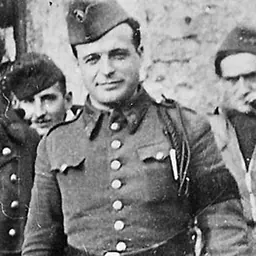




Related people
Same field, nearest in time
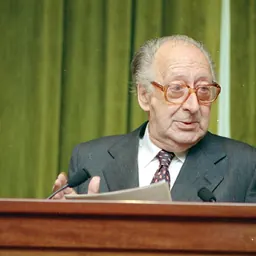

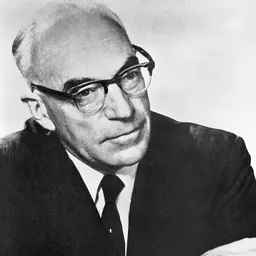



Contemporaries
People whose lives overlapped Julien Freund's




Frequently asked questions
Who was Julien Freund?
French sociologist and philosopher (1921–1993)
When was Julien Freund born?
Julien Freund was born on 9 January 1921 in Henridorff.
When did Julien Freund die?
Julien Freund died on 10 September 1993 in Colmar.
What was Julien Freund's occupation?
Julien Freund was a philosopher, sociologist, french resistance fighter and political scientist.
What nationality was Julien Freund?
Julien Freund was French.
Sources & further reading
Cite this page
APA: Biography.guide. (2026). Julien Freund. https://biography.guide/julien-freund/
MLA: "Julien Freund." Biography.guide, https://biography.guide/julien-freund/.
Chicago: "Julien Freund." Biography.guide. https://biography.guide/julien-freund/.
Data last updated: 2026-09-20 · Spot an error? Report a correction.
Page generated 2026-09-27 05:04 UTC