
About Juliana Seraphim
Lived 1934 – 2005 (aged 70–71). Juliana Seraphim was a painter.
Juliana Seraphim (Arabic: جوليانا ساروفيم; born 1934 in Jaffa, Mandatory Palestine; died 2005 Beirut, Lebanon) was a Palestinian painter. She was a refugee in Sidon, displaced after the 1948 war. She gained prominence in Palestinian, Lebanese, and later, international art spheres for her unique surrealist art style which incorporated themes of homeland, femininity, memory, and identity.
Biography Seraphim was born in 1934 in Jaffa, Mandatory Palestine. At the age of 14, her family was displaced by Arab Israeli war and subsequently fled by boat to Sidon, Southern Lebanon. There, she attended a Catholic boarding school for three years. Seraphim was among the first waves of Palestinian refugees relocate to Beirut, Lebanon in 1952. Upon being displaced, she worked as a secretary at UNRWA while simultaneously attending art classes. After studying at the Lebanese Academy of Fine Arts and independently with other local contemporary artists, she began to exhibit her work in solo exhibitions, gaining fame through her association with a local set of creators dubbed the Ras Beirut artists. During her tertiary years, she was awarded grants to study abroad in Madrid and Florence. Seraphim began her China ink drawings in Madrid; In 1965 Seraphim was awarded a scholarship that helped her travel to Paris, where she stayed for two years.
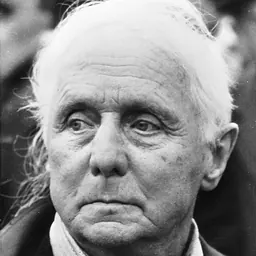
Stylistic influences Early in life, Juliana Seraphim felt a need to create art. With her family's financial support, she trained in both European Old Master and Eastern artistic traditions, embarking on a journey through abstract, surrealist, materialist, and realist expressions. Influenced by the spiritualism movements of the 1960s and 70s, her artwork incorporates empowered women within fantastical, elemental realms of architecture and nature. Additionally, Seraphim cited Hieronymus Bosch and Max Ernst as her artistic influences. Her family name, Seraphim, traces back to the Hebrew plural of “seraph,” the many-winged guardian angels of God's throne, often represented in Byzantine and Islamic art. By avidly incorporating winged motifs in her bold oil portraits of women, Seraphim captured an intricate connection between her art and self-identity.
1960: Internationale Art Gallery in Florence, Italy 1961: La Licorne Art Gallery, Beirut, Lebanon 1964: Elie Garzouzi Gallery, Beirut, Lebanon 1965: Galerie Journal l'Orient, Beirut Lebanon 1967: Galerie Journal l'Orient, Beirut Lebanon 1969: Cassia Art Gallery, Beirut, Lebanon 1971: Samir Nassif Art Gallery, Beirut Lebanon 1975: Brigitte Shehadeh Gallery, Beirut, Lebanon 1977: Tabet Art Gallery, Paris, France 1978: Samia Toutoungi Art Gallery, Lebanon; X Art Gallery, Paris, France 1979: Galerie Art 3, Paris, France 1980: Jordan National Gallery of Fine Arts, Amman, Jordan; Alef Art Gallery, Kuwait 1981: Galerie Bekhazi (GAB Center), Beirut, Lebanon 1983: Suzanne Ponds Art Gallery, Cannes, France; Galerie Bekhazi (GAB Center), Beirut, Lebanon 1985: Gulf Hotel Art Gallery, Qatar; Galerie Art 3, Paris, France 1987: Galerie La Toile, Rimal, Beirut, Lebanon 1988: Galerie La Toile, Rimal, Beirut, Lebanon 1989: Amadis Art Gallery, Madrid, Spain 1990: Khayal Gallery, Ehden, Lebanon 1991: Hotel Chahba-Cham Art Gallery, Damascus, Syria 1992: Station des Arts Gallery, Beirut, Lebanon 1993: Station des Arts Gallery, Beirut, Lebanon
Below is a selected list of Seraphim's group exhibition history.
1961: Nicolas Sursock Museum, Lebanon 1962: Alexandria Biennale, Egypt Barcaccia Gallery, Rome, Italy 1963: Paris Biennale, France 1965: Sao Paulo Biennale, Brazil 1967: Chenil Gallery, London, UK 1968: Gallery Motte, Paris, France (exhibited with painters Dubuffet, Kaimakoff, and Luc Simon) 1969: First National City Bank, Beirut, Lebanon Smithsonian Institution, Washington D.C., USA 1971: Imperial Museum of Tokyo, Japan; Bibliothèque Nationale, Paris, France (exhibited with Picasso and Dalì) 1975: Heirlooms Gallery, Alabama, USA 1978: Museum of Neuilly, Paris, France 1980: Belvedere Museum, Tunis, Tunisia 1995: 1995 Al-Majlis Gallery, Dubai, UAE; Intercontinental Hotel, Bahrain; Salon du Printemps, Beirut, Lebanon; National Museum of Kuwait 1996: Fine Arts Museum, Sharjah, UAE 1997: Salon D’Automne, Sursock Museum, Beirut, Lebanon 2012: Art From Lebanon, Beirut Exhibition Center, Beirut, Lebanon 2013: Tajreed - A Selection of Arab Abstract Art 1908-1960, CAP Kuwait, Kuwait 2016: Lebanon Modern, Les artistes femmes au Liban, curated by Pascal Odile, At the Beirut Art Fair, Beirut, Lebanon 2019: (Nothing But) Flowers, Saleh Barakat Gallery, Beirut, Lebanon 2020: Art on Paper, Gallery One, Dubai, UAE 2022: Beirut and The Golden Sixties: A Manifesto of Fragility. Lyon Museum of Contemporary Art, Lyon, France; Taking Shape: Abstraction from the Arab World, 1950s-1980s. The Block Museum, Chicago, USA The Doche, Seraphim & Barrage: A Search for the Fantastic, Agial Art Gallery, Beirut, Lebanon. In the Eye of the Beholder, Artscoops, Online 2023: Partisans of the Nude: An Arab Art Genre in an Era of Contest, 1920-1960. Wallach Art Gallery, Columbia University, USA; Beirut and The Golden Sixties: A Manifesto of Fragility. Mathaf, Arab Museum of Modern Art, Doha, Qatar; Autumn Harvest, Artscoops, Online; FEMININE FUSION: Women of Yesterday and Today, The LT Gallery, Beirut, Lebanon; Paper & Prints, Artscoops, Online; Lebanon Untitled, Cromwell Place, London, UK; Art for Art's Sake, Artscoops, Online; Middle East Moderne & Contemporain, Mark Hachem Gallery, Paris, France
Awards
Below is a list of awards Seraphim received during her career.
The Florence Prize, Italy The Prize of the Ministry of National Education, Lebanon The Second Prize for Foreigners at the City of Viarregio, Italy
Collections
Below is a list of Seraphim's collections (as of 2023).
The MET, New York, USA Museum of the City of Viarregio, Italy Museum of "La Femme Célèbre", Neuilly Paris, France Musée du suréalisme, Paris, France Institut du Monda Arabe, Paris, France Jordan National Gallery of Fine Arts, Amman, Jordan Nicolas Sursock Museum, Beirut, Lebanon Ramzi and Saeda Dalloul Art Foundation, Beirut, Lebanon The collection of the Ministry of Culture, Beirut, Lebanon Barjeel Art Foundation, Sharjah, UAE
Seraphim's positionality
Seraphim often reflected on the introspection that contributed to her artistic process and philosophy. She spoke of her artistic goals and how she sought to represent her tangible experience as a woman through an abstract lens. The quotes shown below detail certain crucial aspects of Seraphim's artistic development process and philosophy around womanhood, as described by the artist herself.
“I started my China ink drawings in Spain. It was the art critic, Carlos Adriane, who suggested this medium as the one best suited to express the imagery of my surreal imagination…and how right he was! An important change occurred in my painting there, too. I began to explore density, the material properties of paint. I started using it sculpturally, building up abstract forms in bas relief on the canvas with sand and other materials. This technique later developed into the paintings of my Byzantine and Phoenician period.”
”The images in my paintings come from deep within me; they are surreal and unexplainable. Consciously I want to portray a woman's world and how important love is to a woman. Few men understand the quality of love a woman seeks. I try to show them.”
”For a while there were singing lessons, then poetry, and also a brief venture into sculpture. ‘For some reason I avoided painting,’ she says. ’Without understanding why, I was afraid even to try. Maybe the memory of those grand paintings in my grandfather's house still intimidated me, put art on a pedestal higher than my dreams dared to reach. They portrayed a mysterious world — birds, animals, trees, moons, faces…all exotic and foreign, fascinating, and a bit frightening to a child's imagination. Maybe that mystic world still dominated my unconscious, and I wasn't ready to open that door yet, to go so deeply into myself.”
”I was still the responsible, obedient daughter; but more and more, painting became my real world. When I was offered a scholarship to study art in Europe, I decided to go.”
“Men just don't understand the needs of a woman. When she is in love, she is a delicate, fragile flower, easily bruised. How many men have the sensitivity to know this? This was what I wanted to express in my ‘Femme Fleury paintings, the emotional and psychological fragility of a woman. The two men in my life who I would have married failed me, just couldn't fulfill all my needs — the ‘flower’ woman in me, and the artist. They were afraid of both...the woman was too complicated, and the artist was too independent.”
Don’t just read it —
keep it.
Full-length biographies made to live with: read them, listen on the way to work, watch them tonight.
- E-book
- Audio
- Video
Instant download · yours to keep · every purchase keeps this site free
Important facts
People in Juliana Seraphim's life
Named in this biography and alive at the same time


Related people
Same field, nearest in time


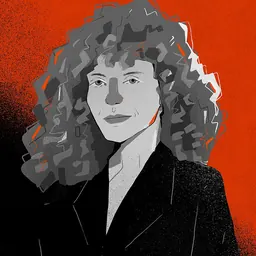
Contemporaries
People whose lives overlapped Juliana Seraphim's


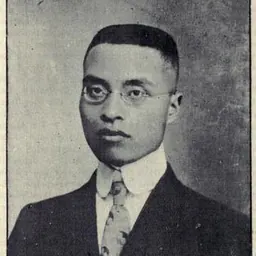

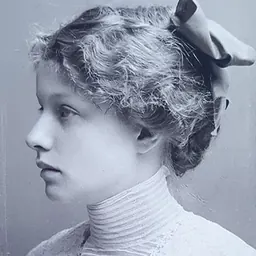
Frequently asked questions
Who was Juliana Seraphim?
Lebanese artist
When was Juliana Seraphim born?
Juliana Seraphim was born in 1934 in Jaffa.
When did Juliana Seraphim die?
Juliana Seraphim died in 2005.
What was Juliana Seraphim's occupation?
Juliana Seraphim was a painter.
Sources & further reading
Cite this page
APA: Biography.guide. (2026). Juliana Seraphim. https://biography.guide/juliana-seraphim/
MLA: "Juliana Seraphim." Biography.guide, https://biography.guide/juliana-seraphim/.
Chicago: "Juliana Seraphim." Biography.guide. https://biography.guide/juliana-seraphim/.
Data last updated: 2026-09-20 · Spot an error? Report a correction.
Page generated 2026-09-27 05:28 UTC