
About Julian Tenison Woods
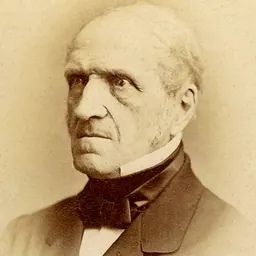
Lived 1832 – 1889 (aged 56). Julian Tenison Woods was an Australian botanist, geologist, malacologist, paleontologist, explorer and catholic priest, known for Geology.
Julian Edmund Tenison-Woods (15 November 18327 October 1889), commonly referred to as Father Woods, was an English Catholic priest and geologist who served in Australia. With Mary MacKillop, he co-founded the Sisters of St Joseph of the Sacred Heart at Penola in 1866.
Early life Tenison-Woods was born in London, the sixth son a sub-editor of The Times, and his wife, Henrietta Maria Saint-Eloy Tenison, and confirmed by Cardinal Wiseman, at that time Vicar-Apostolic of the London District. He attended Thomas Hunt's Catholic school, Kent House, Hammersmith, and, briefly, Newington Grammar School. His health began to fail and he studied at Marist seminaries near Toulon, France, where he also taught English at a naval college. Around this time his interest in geology and natural history appears to have begun. His brother J. D. Woods helped by completing his contract with the newspaper.
Priesthood Tenison-Woods was ordained as a diocesan priest on 4 January 1857 and took charge of the large parish at Penola. He published his first book, Geological Observations in South Australia, in 1862. With Sister Mary MacKillop (who was later canonised), Tenison-Woods co-founded the Congregation of Sisters of St Joseph of the Sacred Heart at Penola in 1866.
Tenison-Woods founded the Southern Cross in 1867. It ceased after two years, but he made a further foray into journalism in 1870 with of The Chaplet and Advocate of the Children of Mary, which may have run to no more than two issues. He was then involved, initially with Archdeacon Russell and Father Byrne, in production of the monthly Southern Cross and Catholic Herald, which was dropped after the weekly Irish Harp and Farmers' Herald had become firmly established and the two amalgamated around November 1873 as The Harp and Southern Cross.
He has been described as a "rigid teetotaller" and a "stern advocate" of temperance for many years.
Geological work Tenison-Woods' district contained many formations of geological interest.
In 1878, Tenison-Woods joined the Linnean Society of New South Wales. His Fish and Fisheries of New South Wales (Sydney, 1883) was published by the colonial government and William III of the Netherlands awarded Tenison-Woods a gold medal for the book. They were subsequently referenced in Flora Australiensis. Tenison-Woods also wrote botanical papers himself, including in the Proceedings of the Linnean Society of New South Wales: Bailey, F. M. & Tenison-Woods, J. E. 1879. A census of the flora of Brisbane. (1)4: 137-204. Tenison-Woods, J. E. 1879. On Arauja albens. (1)4: 111-112. Tenison-Woods, J. E. 1879. On the relations of the Brisbane flora. (1)4: 117-137. Tenison-Woods, J. E. 1882. Botanical notes on Queensland. No. I. (1)7: 76-83. Tenison-Woods, J. E. 1882. On various deposits of fossil plants in Queensland. (1)7: 95-98. Tenison-Woods, J. E. 1882. Botanical notes on Queensland. No. II. The tropics. (1)7: 136-147. Tenison-Woods, J. E. 1882. Botanical notes in Queensland. No. III. (1)7: 305-310. Tenison-Woods, J. E. 1882. Botanical notes on Queensland. No. IV. (1)7: 331-342. Tenison-Woods, J. E. 1882. On a coal plant from Queensland. (1)7: 342-344. Tenison-Woods, J. E. 1883. Botanical notes on Queensland. No. V. (1)7: 565-585. Tenison-Woods, J. E. 1883. On the fossil flora of the coal deposits of Australia. (1)8: 37-167. Tenison-Woods, J. E. 1888a. On the volcano of Taal. (2)2: 685-810. Tenison-Woods, J. E. 1889. On the vegetation of Malaysia. (2)4: 9-106.
Papers published by the Royal Society of New South Wales that focused on botany included: Tenison-Woods, J. E. 1978. Tasmanian forests: Their botany and economical value. (12): 17−28. Tenison-Woods, J. E. 1882. A fossil plant formation in central Queensland (16): 179−192, 1882.
Of the plants collected by Tenison-Woods, these specimens are now cared for by multiple herbaria throughout Australasia, including over 1,000 specimens held by the National Herbarium of Victoria, Royal Botanic Gardens Victoria, the Queensland Herbarium, the National Herbarium of New South Wales, the Northern Territory Herbarium, and the Auckland War Memorial Museum Herbarium.
Evolution Tenison-Woods was an advocate of theistic evolution. In 1880, he commented "I can well believe that there is much truth in evolution. If tomorrow the evidence of its occurrence were established on indubitable grounds, it would be one more beautiful illustration of the plan of nature."
Exploration and acquisitions For three years, between August 1883 and June 1886 Woods travelled through Eastern and Southeastern Asia, including Hong Kong, China and two trips to Japan. In late 1885 Woods had intended to travel along the Yangtze, but because of a cholera outbreak at Shanghai he re-routed to Kobe, before moving inland to the hot spring town of Arima Onsen. He remained in Arima Onsen until February–March 1886 when he departed for Hong Kong, and ultimately returning to Darwin, Australia, for further expeditions.
Weakening health and death He dictated his partly fanciful autobiographical memoir to his carers. South Australian journalist and author of The Province of South Australia. He emigrated in 1853 as an agent of banker John Abel Smith (1802–1871). His contribution to South Australian letters was acknowledged by "A. Pencil" (Sir William Sowden). A grandson, (Julian) Gordon Tenison Woods (1909– ) married Mary Cecil Kitson (1893–1971) on 13 December 1924. She was South Australia's first woman barrister. He was struck of the rolls in 1927 for misuse of trust funds; they divorced in 1933. Terence Albert Tenison-Woods (c. 1835 – 1 July 1887) was postmaster at Penola, died in Sydney.
Commemoration The Father Woods Park in Glenroy, outside of Mount Gambier, was developed on land donated to the Archdiocese of Adelaide that was consecrated by Archbishop Matthew Beovich in 1951. The park features chainsaw-carved wooden sculptures by Kevin Gilders depicting events in Tenison-Woods' life, that were completed in 2010 for the park's re-dedication. In 1974 the highest peak in the D'Aguilar Range (770 m) within Brisbane Forest Park, south-east Queensland, was named Tenison-Woods Mountain. The Tenison Woods Reserve in Goulburn, New South Wales was established in 1889 to commemorate the centenary of Tenison-Wood's death. It features a rose garden, and a small shelter with park table.
Significant publications Tenison-Woods, J.E. 1865. A History of the Discovery and Exploration of Australia. Or, an Account of the Progress of Geographical Discovery in that Continent from the earliest period to the present day. By the Rev. J. E. T. Woods, F. R. G. S. &c., &c., &c. (1865) Tenison-Woods, J.E. 1882. The Hawkesbury Sandstone. Journal and Proceedings of the Royal Society of New South Wales 16:53–116. Tenison-Woods, J.E. 1882. Physical structure and geology of Australia. The Proceedings of the Linnean Society of New South Wales 7(3):371–389.
Don’t just read it —
keep it.
Full-length biographies made to live with: read them, listen on the way to work, watch them tonight.
- E-book
- Audio
- Video
Instant download · yours to keep · every purchase keeps this site free
Important facts
People in Julian Tenison Woods's life
Named in this biography and alive at the same time



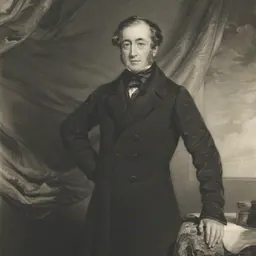


Related people
Same field, nearest in time



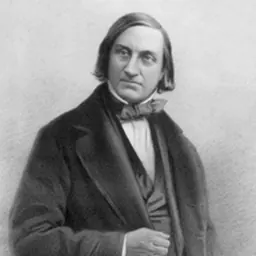

Contemporaries
People whose lives overlapped Julian Tenison Woods's
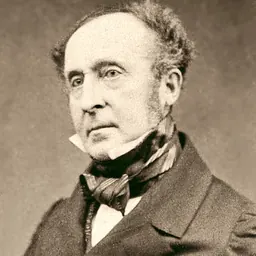
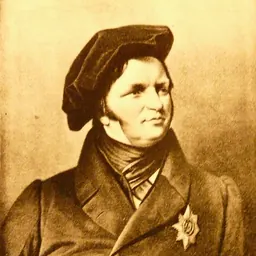

Frequently asked questions
Who was Julian Tenison Woods?
Australian priest and geologist (1832-1889)
When was Julian Tenison Woods born?
Julian Tenison Woods was born on 15 November 1832 in London.
When did Julian Tenison Woods die?
Julian Tenison Woods died on 7 October 1889 in Sydney.
What was Julian Tenison Woods's occupation?
Julian Tenison Woods was a botanist, geologist, malacologist, paleontologist, explorer and catholic priest.
What was Julian Tenison Woods known for?
Julian Tenison Woods was known for Geology.
What nationality was Julian Tenison Woods?
Julian Tenison Woods was Australian.
Sources & further reading
· Wikipedia: Julian Tenison Woods
· DBpedia: Julian Tenison-Woods
Cite this page
APA: Biography.guide. (2026). Julian Tenison Woods. https://biography.guide/julian-tenison-woods/
MLA: "Julian Tenison Woods." Biography.guide, https://biography.guide/julian-tenison-woods/.
Chicago: "Julian Tenison Woods." Biography.guide. https://biography.guide/julian-tenison-woods/.
Data last updated: 2026-09-20 · Spot an error? Report a correction.
Page generated 2026-09-27 05:31 UTC