
About Julia Lermontova
Lived 1847 – 1919 (aged 72). Julia Lermontova was a Russian chemist, known for Chemistry.
Julia Vsevolodovna Lermontova (21 December 1846 – 16 December 1919 O.S. 2 January 1847) was a Russian chemist. She is known as the first Russian woman to earn a doctorate in chemistry. to Elisawjeta Andrejevna Kossikovsky and General Vsevolod Lermontov (second cousin of the Russian poet Mikhail Lermontov), of the aristocratic Lermontov family. During most of her young life she lived in Moscow, as her father was in charge of the Moscow Cadet Corps.
Abroad In autumn 1869, at the age of 22, Julia Lermontova arrived in Heidelberg and attended Heidelberg University, where she was allowed to audit Robert Bunsen's lectures, and was eventually admitted into his lab. It was in Bunsen's lab that she researched platinum compounds. From there, she moved to Berlin, in order to conduct research under German chemist August Wilhelm von Hofmann. (which was about the analysis of methyl compounds), and that fall earned her diploma as a Doctor of Chemistry from the University of Göttingen. She graduated magna cum laude and was the first woman in the world to obtain a doctorate in chemistry.
Research The Butlerov–Eltekov–Lermontova reaction is an organic reaction which allows for the addition of branches onto hydrocarbons. After completing her education, she returned to Russia, and began working in Vladimir Markovnikov's laboratory at the University of Moscow. She then received an invitation to move to St. Petersburg from Alexander Butlerov. Working in the chemical laboratory of St. Petersburg University under Butlerov, she undertook research on 2-methyl-2-butenoic acid.
In 1877, after the death of her father, she moved to Moscow with her family, and began working in Markovnikov's laboratory, in oil research. She was the first woman to work in this area of research. Additionally, she developed a device for the continuous distillation of petroleum, however the device was unable to be adapted to an industrial scale.
At the January 1878 conference of the Russian Chemical Society, A. P. Eltekov reported on a new method of synthesizing hydrocarbons of the formula CnH2n, which Butlerov noted that many of these experiments had been previously conducted by Lermontova. This research later became of value when highly branched hydrocarbon synthesis was further studied for its industrial production and use for some types of motor fuels. This process later became known as the Butlerov–Eltekov–Lermontova's reaction.
Butlerov tried to convince her to accept a position teaching at the Superior courses for women, which she would not accept, stating concerns that she may not be given permission to by the Minister of Education. In 1881, she became the first woman to join the Russian Technical Association.
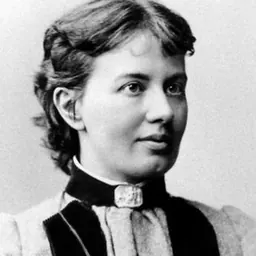
Life after research As she had inherited her family's estate in Semenkovo, she made it a habit to live there in the summer months, and eventually she lived there permanently. After moving to Semenkovo permanently, she retired from chemistry. It was there she developed an interest in the agricultural sciences, developing cheese that was eventually sold throughout Russia and Ukraine. In the spring of 1889, she became seriously ill with double pneumonia, and that fall traveled to Stockholm to visit Sofia Kovalevskaya. In 1890, Kovalevskaya traveled to St. Petersburg with her daughter Fufa, where Lermontova met them and picked up her Fufa prior to Kovalevskaya's death in 1891.
In 1917, after the October revolution, an attempt was made to nationalize the estate in Semenkovo, however, through the intervention of the Minister of Education, Anatoli Lunascharski, she was permitted to keep the estate. Lermontova died in 1919 from a brain hemorrhage. While she never married, Sofia (Fufa) Kovaleyskaya (her step-daughter) inherited the entire estate.
Publications Lermontoff, J. and Moskan (1872), Ueber die Zusammensetzung des Diphenins. Ber. Dtsch. Chem. Ges., 5: 231–236. doi:10.1002/cber.18720050172
Don’t just read it —
keep it.
Full-length biographies made to live with: read them, listen on the way to work, watch them tonight.
- E-book
- Audio
- Video
Instant download · yours to keep · every purchase keeps this site free
Important facts
People in Julia Lermontova's life
Named in this biography and alive at the same time


Related people
Same field, nearest in time



Contemporaries
People whose lives overlapped Julia Lermontova's


Frequently asked questions
Who was Julia Lermontova?
chemist (1847-1919)
When was Julia Lermontova born?
Julia Lermontova was born on 2 January 1847 in Saint Petersburg.
When did Julia Lermontova die?
Julia Lermontova died on 16 December 1919 in Moscow.
What was Julia Lermontova's occupation?
Julia Lermontova was a chemist.
What was Julia Lermontova known for?
Julia Lermontova was known for Chemistry.
What nationality was Julia Lermontova?
Julia Lermontova was Russian.
Sources & further reading
Cite this page
APA: Biography.guide. (2026). Julia Lermontova. https://biography.guide/julia-lermontova/
MLA: "Julia Lermontova." Biography.guide, https://biography.guide/julia-lermontova/.
Chicago: "Julia Lermontova." Biography.guide. https://biography.guide/julia-lermontova/.
Data last updated: 2026-09-20 · Spot an error? Report a correction.
Page generated 2026-09-27 05:26 UTC