
About Jules Amédée Barbey d'Aurevilly
Lived 1808 – 1889 (aged 80). Jules Amédée Barbey d'Aurevilly was a French journalist, essayist, novelist, poet, literary critic and writer.
Jules-Amédée Barbey d'Aurevilly (2 November 1808 – 23 April 1889) was a French novelist, poet, short story writer, and literary critic. He specialised in mystery tales that explored hidden motivation and hinted at evil without being explicitly concerned with anything supernatural. He had a decisive influence on writers such as Auguste Villiers de l'Isle-Adam, Henry James, Léon Bloy, Marcel Proust and Carmelo Bene.
Biography Jules-Amédée Barbey — the d'Aurevilly was a later inheritance from a childless uncle — was born at Saint-Sauveur-le-Vicomte, Manche in Lower Normandy. In 1827 he went to the Collège Stanislas de Paris. After getting his baccalauréat in 1829, he went to Caen University to study law, taking his degree three years later. As a young man, he was a liberal and an atheist, and his early writings present religion as something that meddles in human affairs only to complicate and pervert matters. In the early 1840s, however, he began to frequent the Catholic and legitimist salon of Baronne Almaury de Maistre, niece of Joseph de Maistre. In 1846 he converted to Roman Catholicism.
His greatest successes as a literary writer date from 1852 onwards, when he became an influential literary critic at the Bonapartist paper Le Pays, helping to rehabilitate Balzac and effectually promoting Stendhal, Flaubert, and Baudelaire. Paul Bourget describes Barbey as an idealist, who sought and found in his work a refuge from the uncongenial ordinary world. Jules Lemaître, a less sympathetic critic, thought the extraordinary crimes of his heroes and heroines, his reactionary opinions, his dandyism and snobbery were a caricature of Byronism.
Beloved of fin-de-siècle decadents, Barbey d'Aurevilly remains an example of the extremes of late romanticism. Barbey d'Aurevilly held strong Catholic opinions, yet wrote about risqué subjects, a contradiction apparently more disturbing to the English than to the French themselves. Barbey d'Aurevilly was also known for having constructed his own persona as a dandy, adopting an aristocratic style and hinting at a mysterious past, though his parentage was provincial bourgeois nobility, and his youth comparatively uneventful. What Never Dies: A Romance. London: The Fortune Press (1933). Bewitched. New York and London: Harper & brothers (1928, translated by Louise Collier Willcox).
His complete works are published in two volumes of the Bibliothèque de la Pléiade.
Quotations "Next to the wound, what women make best is the bandage." "The mortal envelope of the Middle Age has disappeared, but the essential remains. Because the temporal disguise has fallen, the dupes of history and of its dates say that the Middle Age is dead. Does one die for changing his shirt?" "In France everybody is an aristocrat, for everybody aims to be distinguished from everybody. The red cap of the Jacobins is the red heel of the aristocrats at the other extremity, but it is the same distinctive sign. Only, as they hated each other, Jacobinism placed on its head what aristocracy placed under its foot." "In the matter of literary form it is the thing poured in the vase which makes the beauty of the vase, otherwise there is nothing more than a vessel." "Books must be set against books, as poisons against poisons." "When superior men are mistaken they are superior in that as in all else. They see more falsely than small or mediocre minds." "The Orient and Greece recall to my mind the saying, so coloured and melancholic, of Richter: 'Blue is the colour of mourning in the Orient. That is why the sky of Greece is so beautiful'." "Men give their measure by their admiration, and it is by their judgements that one may judge them." "The most beautiful destiny: to have genius and be obscure."
Gallery
Don’t just read it —
keep it.
Full-length biographies made to live with: read them, listen on the way to work, watch them tonight.
- E-book
- Audio
- Video
Instant download · yours to keep · every purchase keeps this site free
Important facts
People in Jules Amédée Barbey d'Aurevilly's life
Named in this biography and alive at the same time


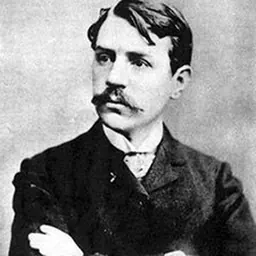
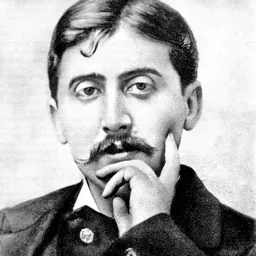


Related people
Same field, nearest in time

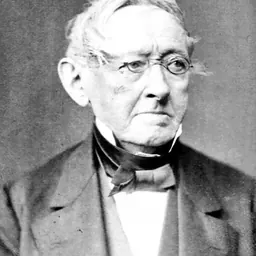

Contemporaries
People whose lives overlapped Jules Amédée Barbey d'Aurevilly's





Frequently asked questions
Who was Jules Amédée Barbey d'Aurevilly?
French writer (1808-1889)
When was Jules Amédée Barbey d'Aurevilly born?
Jules Amédée Barbey d'Aurevilly was born on 2 November 1808 in Saint-Sauveur-le-Vicomte.
When did Jules Amédée Barbey d'Aurevilly die?
Jules Amédée Barbey d'Aurevilly died on 23 April 1889 in Paris, 7th arrondissement of Paris.
What was Jules Amédée Barbey d'Aurevilly's occupation?
Jules Amédée Barbey d'Aurevilly was a journalist, essayist, novelist, poet, literary critic and writer.
What nationality was Jules Amédée Barbey d'Aurevilly?
Jules Amédée Barbey d'Aurevilly was French.
Sources & further reading
· Wikipedia: Jules Amédée Barbey d'Aurevilly
· DBpedia: Jules Barbey d'Aurevilly
Cite this page
APA: Biography.guide. (2026). Jules Amédée Barbey d'Aurevilly. https://biography.guide/jules-amedee-barbey-d-aurevilly/
MLA: "Jules Amédée Barbey d'Aurevilly." Biography.guide, https://biography.guide/jules-amedee-barbey-d-aurevilly/.
Chicago: "Jules Amédée Barbey d'Aurevilly." Biography.guide. https://biography.guide/jules-amedee-barbey-d-aurevilly/.
Data last updated: 2026-09-20 · Spot an error? Report a correction.
Page generated 2026-09-27 05:34 UTC