
About Judy Goldsmith
Born 1938. Judy Goldsmith is an American women's rights activist.
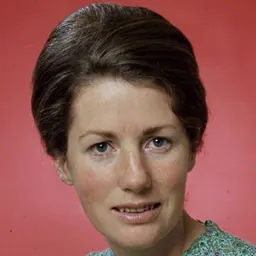
Judy Goldsmith (born November 26, 1938) is an American feminist, academic, and activist. She served as president of the National Organization for Women (NOW) from 1982 to 1985, which is the largest feminist organization in the United States; prior to this she was an English professor. Goldsmith also serves as an honorary board member of the Veteran Feminists of America, whose headquarters are in Phoenix, Arizona.
Early childhood and education Judith Ann Becker was born in November 26, 1938, in Manitowoc, Wisconsin. Her father did not provide for the family and leaving her mother and five siblings to take care of themselves. After completing high school in 1957, Becker received a scholarship that provided the funds to attend the University of Wisconsin–Stevens Point. Goldsmith believed that much discrimination had roots in economics and survival issues. During her tenure she also worked with Coretta Scott-King on the 1983 march commemorating the 20th anniversary of the historic "March on Washington" by Martin Luther King Jr. Smeal unofficially backed Goldsmith's entire slate, the goal being to endorse and hopefully continue Smeal's policies. An article from 1982 in the Washington Post credits Goldsmith's win "as an affirmation of the policies that built NOW into the nation's foremost voice on women's rights, despite the group's inability last year (1981) to win ratification of the Equal Rights Amendment" under Smeal's lead. When Smeal announced she was running in the 1985 election, she said that it was due to her belief that Goldsmith was too moderate and did not focus on the issues that were important to herself. Goldsmith often met with politicians, and felt that progress could only be made when women were elected into political positions. On the issues of abortion and equal rights, Goldsmith said, "It is on our agenda but it is not the most propitious time to bring it up. We are not interested in exercises in futility. We must change the political landscape and get more women elected before we try again". Smeal, however, said that there "was a wish that NOW become more outspoken, assertive and publicly active on a number of issues," and that she favored a national program for direct action now. "This can't wait for another 10 years," she said. "We can't decide that we want it and then do nothing". Goldsmith said, in defense of her methods, that "Loud may be good, but it is not only the level of decibels that is heard". Their methods were seen as very different and is what led to the intense battle for the presidency. For example, the two leaders approached anti-abortion terrorism in different ways. Goldsmith sent a telegram to President Reagan, demanding an investigation, and then later called on President Reagan, when she received no response, by telling reporters how she felt during a White House pickett. Smeal, however, led the first March for Women's Lives in 1986, which drew over 150,000 people to Washington and Los Angeles in support of women's reproductive rights. Goldsmith believed in accomplishing NOW's goals through politics while Smeal felt rallies, demonstrations, and protests were the better method,
The 1985 election was heated and intense but Smeal won over Goldsmith. Goldsmith was the incumbent seeking her second term, and NOW presidents had traditionally served two consecutive two-year terms. Members of NOW's 35-member national board and its state coordinators supported Goldsmith by a 2 to 1 margin, and she appeared to have more supporters at the convention's plenary sessions. It was reported by the SunSentinal in the 1985 article Smeal Wins Battle For Top NOW Post, "the factors contributing to Mrs. Smeal's victory were personality differences between the two candidates, a faulty sample ballot, the last-minute decision by a NOW officer to endorse Mrs. Smeal, a legal vote-brokering system, and a surprisingly vitriolic final campaign speech by Mrs. Goldsmith". While using her musical background, Judy now plays piano at a nursing home in Fond du Lac and ballroom dances as frequently as possible.
Don’t just read it —
keep it.
Full-length biographies made to live with: read them, listen on the way to work, watch them tonight.
- E-book
- Audio
- Video
Instant download · yours to keep · every purchase keeps this site free
Important facts
People in Judy Goldsmith's life
Named in this biography and alive at the same time

Related people
Same field, nearest in time



Contemporaries
People whose lives overlapped Judy Goldsmith's




Frequently asked questions
Who is Judy Goldsmith?
American activist and academic
When was Judy Goldsmith born?
Judy Goldsmith was born on 26 November 1938 in Manitowoc.
What is Judy Goldsmith's occupation?
Judy Goldsmith is a women's rights activist.
What nationality is Judy Goldsmith?
Judy Goldsmith is American.
Sources & further reading
Cite this page
APA: Biography.guide. (2026). Judy Goldsmith. https://biography.guide/judy-goldsmith/
MLA: "Judy Goldsmith." Biography.guide, https://biography.guide/judy-goldsmith/.
Chicago: "Judy Goldsmith." Biography.guide. https://biography.guide/judy-goldsmith/.
Data last updated: 2026-09-20 · Spot an error? Report a correction.
Page generated 2026-09-27 05:03 UTC