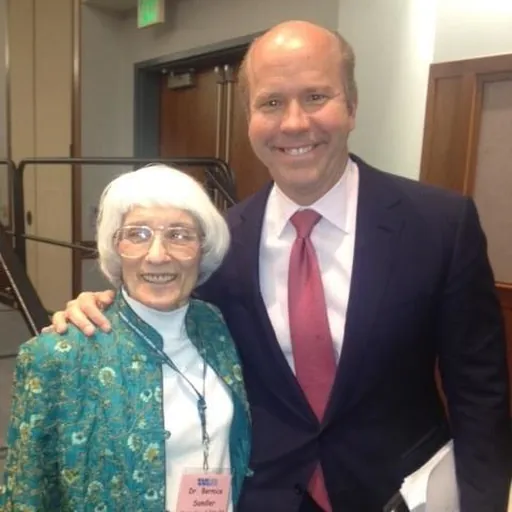
About Bernice Sandler
Lived 1928 – 2019 (aged 90). Bernice Sandler was an American women's rights activist, known for Gender Equality, Title IX and Women's Rights.
Bernice Resnick Sandler (March 3, 1928 – January 5, 2019) was an American women's rights activist. She is best known for being instrumental in the creation of Title IX, a portion of the Education Amendments of 1972, in conjunction with representatives Edith Green and Patsy Mink and Senator Birch Bayh in the 1970s. She has been called "the Godmother of Title IX" by The New York Times. Sandler wrote extensively about sexual and peer harassment towards women on campus, coining the phrase "the chilly campus climate".
She received numerous awards and honors for her work on women's rights and was inducted into the Maryland Women's Hall of Fame in 2010, and the National Women's Hall of Fame in 2013. Some of her papers are held in the Arthur and Elizabeth Schlesinger Library on the History of Women in America, at the Radcliffe Institute, Harvard University.
Early life Sandler was born Bernice Resnick on March 3, 1928, in Brooklyn, New York City. She was the second daughter of Ida Ernst Resnick and Abraham Hyman, Jewish immigrants from Russia and Germany who owned a women's clothing store in Rockaway, New Jersey. She was intended to be named Beryl by her parents, but a doctor's error led to Bernice being written on her birth certificate instead. The nickname "Bunny" is derived from a Yiddish translation of Bernice, Bunya. At the time of its founding in 1930, Brooklyn College "was envisioned as a stepping stone for the sons and daughters of immigrants and working-class people toward a better life through a superb—and at the time, free—college education." Sandler received a masters of clinical and school psychology in 1950. The two divorced in 1978. While she was living in Bloomington, Indiana, she began working as a research assistant in psychology at Indiana University but she was rejected from the graduate program, due to a quota surrounding women graduate students. The couple moved to Washington, D.C. in 1964, where she applied for a graduate degree at the University of Maryland but was rejected due to her age. She was eventually admitted after comparing her situation to that of a returning veteran.
Activism with Women's Equity Action League Immediately following the completion of her Ed.D., Sandler applied to a variety of teaching positions for which she was qualified, but was continually turned down for a variety of reasons. In one interview she was told, "she came on too strong for a woman." As a result of her frustration, she joined the Women's Equity Action League (WEAL) as the Chair of the Action Committee for Federal Contract Compliance from 1969 to 1971. The WEAL was an organization active from 1968 to 1989, which was primarily focused on utilizing legal action and lobbying to enhance the status of women across the country. The now defunct organization is best known for its work overseeing the implementation of, "the contract compliance executive order as it applied to sex discrimination."
In between her time as Chair of the Action Committee at WEAL she was also hired as an Education Specialist for the Special Subcommittee on Education, Committee on Education and Labor for the U.S. House of Representatives. It was during her time on the Special Subcommittee on Education that Sandler helped to support hearings that had a direct focus on sex discrimination within education and employment matters. In 1967, Johnson amended the executive order through Executive Order 11375, which specifically added sex discrimination as a category protected by the previous Executive Order. This minor amendment by Johnson, paved the way forward for Sandler, providing her with the legal footing necessary to bring legal complaints against non-compliant higher education institutions.
Through this discovery, Sandler worked with the Director of the Office of Federal Contract Compliance at the Department of Labor, Vincent Macaluso, and through her position with the WEAL, she began to file class-action lawsuits against colleges and universities nationwide. The hearings held in June 1970 by the committee were successful in generating a wealth of materials to be used in supporting an effort to end sex discrimination in higher education. With the legislation passing with little notice by the media and educational institutions, Title IX of the Education Amendments of 1972 was passed by the 92nd Congress and was signed into law by President Richard Nixon. It had a dramatic effect on the higher education field to include a significant effect on collegiate athletics. Title IX has had a significant impact on female collegiate athletics throughout its 46-year history, dramatically increasing the number of women in college athletics, increasing minority representation and increasing overall equity and diversity within the NCAA. For her significant work on formulating and then executing a plan to address sex discrimination within higher education, Sandler has been described by many as "the Godmother of Title IX."
Later work After the passage of the landmark legislation, Sandler continued to address women's rights issues nationwide. Her work on women's rights issues led to many 'firsts' in the field that continue to affect women nationwide. After a brief stint in the federal government, Sandler helped found the Project on the Status and Education of Women (PSEW) in 1971. The PSEW was an organization that focused on sexual equality issues within the education system. While serving as Director and later Executive Associate with the PSEW, Sandler was instrumental in shaping the organization's direction during her time there from 1971 through 1991. She led the creation of a monthly newsletter, On Campus with Women, to provide higher education administrators with the information needed to better understand the developments affecting women within higher education.
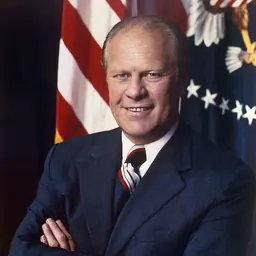
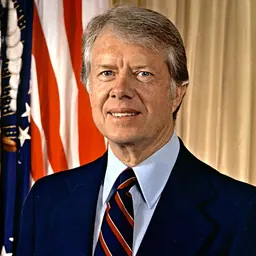
During her time at PSEW, Sandler also served in various capacities on the National Advisory Council on Women's Educational Programs. She was appointed to the council by both Presidents Gerald Ford and Jimmy Carter. Sandler served on the council from 1975 through 1982 and was Council Chair during her initial appointment from 1975 to 1977. WIFP is an American nonprofit publishing organization. The organization works to increase communication between women and connect the public with forms of women-based media.
In 1982, co-authoring a report with Roberta M. Hall, the two first created the term "chilly climate," which they defined as "an environment that dampens women's self-esteem, confidence, aspirations and their participation." Sandler also maintains a long list of 'firsts' within the field. A sample of her many 'firsts' include, "the first individual to write the first federal policy report on sex discrimination in education, the first paper about barriers faced by women of color and from other special population groups, the first report on campus gang rape and the first report on peer harassment." She was a senior fellow at the Women's Research & Education Institute where she focused on sexual harassment, the chilly classroom climate, and women's issues on campus. The Women's Research & Education Institute, founded in 1977, is a nonpartisan, non-profit, independent organization that works to, "identify issues affecting women in their roles in the family, workplace and public arena and to inform and help shape public policy."
Legacy Sandler and her role in implementing Title IX is highlighted in the documentary film Rise of the Wahine (2014), directed by Dean Kaneshiro. Rise of the Wahine highlights the individuals from Hawaii who were influential in changing women's collegiate athletic opportunities. Her work is also promoted in the 2015 documentary, An Unexpected Win: Title IX and the Pinckney Pirates, a documentary about the effect of Title IX in a Midwest town. Sandler also appeared on the TV series, Penn & Teller: Bullshit!, on an episode about Title IX.
As of 2013, Sandler was the recipient of over a dozen honorary doctorates for her work on women's issues. American Psychological Association Presidential Citation, 2012 National Women's Hall of Fame, Inductee, 2013
Books Sandler, Bernice R., Lisa A. Silverberg and Roberta M. Hall, The Chilly Classroom Climate: A Guide to Improve the Education of Women, Washington, DC: National Association for Women in Education, 1996. Co-editor, with Robert J. Shoop, Sexual Harassment on Campus: A Guide for Administrators, Faculty and Students. Boston: Allyn and Bacon, 1997. Educator's Guide to Controlling Sexual Harassment, Thompson Publishing Co., Washington, DC, 1993.
Don’t just read it —
keep it.
Full-length biographies made to live with: read them, listen on the way to work, watch them tonight.
- E-book
- Audio
- Video
Instant download · yours to keep · every purchase keeps this site free
Important facts
Family & relationships
People in Bernice Sandler's life
Named in this biography and alive at the same time



Related people
Same field, nearest in time




Contemporaries
People whose lives overlapped Bernice Sandler's




Frequently asked questions
Who was Bernice Sandler?
women's rights activist
When was Bernice Sandler born?
Bernice Sandler was born on 3 March 1928 in New York City.
When did Bernice Sandler die?
Bernice Sandler died on 5 January 2019 in Washington, D.C..
What was Bernice Sandler's occupation?
Bernice Sandler was a women's rights activist.
What was Bernice Sandler known for?
Bernice Sandler was known for Gender Equality, Title IX and Women's Rights.
What nationality was Bernice Sandler?
Bernice Sandler was American.
Sources & further reading
Cite this page
APA: Biography.guide. (2026). Bernice Sandler. https://biography.guide/bernice-sandler/
MLA: "Bernice Sandler." Biography.guide, https://biography.guide/bernice-sandler/.
Chicago: "Bernice Sandler." Biography.guide. https://biography.guide/bernice-sandler/.
Data last updated: 2026-09-22 · Spot an error? Report a correction.
Portrait: Wikimedia Commons · author & licence
Page generated 2026-09-27 05:04 UTC