
About Judith Murray
Born 1941. Judith Murray is an American artist and painter.
Judith Murray (born 1941) is an American abstract painter based in New York City. Active since the 1970s, she has produced a wide-ranging, independent body of work while strictly adhering to idiosyncratic, self-imposed constants within her practice. Since 1975, she has limited herself to a primary palette of red, yellow, black and white paints—from which she mixes an infinite range of hues—and a near-square, horizontal format offset by a vertical bar painted along the right edge of the canvas; the bar serves as a visual foil for the rest of the work and acknowledges each painting’s boundary and status as an abstract object. Critic Lilly Wei describes Murray's work as "an extended soliloquy on how sensation, sensibility, and digressions can still be conveyed through paint" and how by embracing the factual world the "abstract artist can construct a supreme and sustaining fiction." thumb Judith Murray, Once in the Morning, oil on linen, 72" x 151", 2014.
Murray has been recognized with a Guggenheim Fellowship and awards from the American Academy of Arts and Letters and National Endowment for the Arts. She has exhibited internationally, including solo shows at MoMA PS1, the Clocktower Gallery and Dallas Museum of Fine Arts, and group exhibitions at the Whitney Museum of American Art, Museo di Palazzo Grimani (Venice Biennale), Museo de Arte Moderno (Mexico City), and National Academy Museum. Murray lives and works in New York City and Sugarloaf Key, Florida with her husband, artist Robert Yasuda.
Early life and career Murray was born in New York City, in 1941 but spent much of her childhood near the coast of southern Florida. She began to paint and study painting in childhood, during a period of prolonged illness. She continued her studies at Pratt Institute in Brooklyn in 1958, earning a BFA in 1962. After attending Real Academia de Bellas Artes de San Fernando in Madrid, Spain in 1963, she returned to Pratt and completed an MFA (1964). During that decade, she was also featured in the Whitney Biennial (1979) and group shows at PS1, Hallwalls and the Weatherspoon Art Museum, as well as the exhibition, "Art in Our Time," which traveled to the Milwaukee Art Museum, Contemporary Arts Center, and the High Museum of Art. Since then, she has had solo and two-person shows at MoMA PS1 (2001), Sundaram Tagore Gallery (New York, Beverly Hills and Singapore, 2002–18), and FiveMyles Gallery (2019), among others.
Work and reception Critics describe Murray as "an ardent, if non-doctrinaire, modernist" and colorist, whose "inclusive, open-ended formalism" her colors and compositions are also informed by places, art and culture she has encountered in travels to India and Asia, South America, and the tropics. She works primarily in oil on linen canvases, producing paintings noted most for their luminous color, sense of light, and varied, tactile surfaces and markmaking; They featured irregular geometric forms in reds, opaque whites and yellows floating on sensuous black fields and explored problems of balance and stability without relying on symmetry (e.g., her "Ballast" series, 1976). Los Angeles Times critic Kristine McKenna described them as "anthropomorphic abstractions" built around "Jungian shapes freighted with inexplicable meaning" that coursed with energy and suggestions of the struggle toward consciousness. These more dispersed compositions emphasize texture, atmosphere and a sense of pulsating light through vigorous, feathered gestures that create mosaic-like surfaces (e.g., Madurai, 1994 or Mars, 1997).
Later painting (2007– ) Judith Murray, American Academy of Arts and Letters installation (2005), pictured works: (left) First Light, oil on canvas, 96" x 108", 2004; (right) La Forza de Destino, oil on canvas, 96" x 108", 2004. Critic Barbara MacAdam writes that Murray's later work assumes "a daring position … steadfastly sticking to abstract gestural work." Whitney Museum, The Library of Congress, New York Public Library, British Museum, Brooklyn Museum, Carnegie Institute, Honolulu Museum of Art, MIT List Visual Arts Center, Museum of Fine Arts, Houston, National Museum of Art (Poland), Philadelphia Museum of Art, Smithsonian American Art Museum, U.S. Department of State, Walker Art Center, and Yale University Art Gallery, among other public and private collections.
She has been recognized with fellowships from the John Simon Guggenheim Memorial Foundation (2002) and National Endowment for the Arts (1983) and an American Academy of Arts and Letters Award (2005). She has also been commissioned Lincoln Center to create artwork for posters and prints for several Mozart Festival events.
Don’t just read it —
keep it.
Full-length biographies made to live with: read them, listen on the way to work, watch them tonight.
- E-book
- Audio
- Video
Instant download · yours to keep · every purchase keeps this site free
Important facts
Family & relationships
People in Judith Murray's life
Named in this biography and alive at the same time

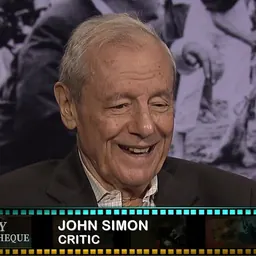

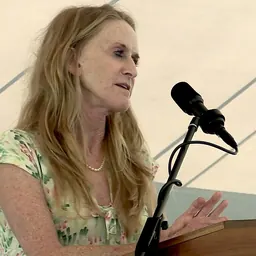

Related people
Same field, nearest in time
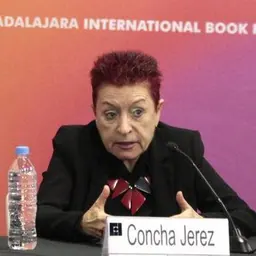



Contemporaries
People whose lives overlapped Judith Murray's



Frequently asked questions
Who is Judith Murray?
American artist (born 1941)
When was Judith Murray born?
Judith Murray was born in 1941 in New York City.
What is Judith Murray's occupation?
Judith Murray is an artist and painter.
What nationality is Judith Murray?
Judith Murray is American.
Sources & further reading
· DBpedia: Judith Murray (artist)
Cite this page
APA: Biography.guide. (2026). Judith Murray. https://biography.guide/judith-murray/
MLA: "Judith Murray." Biography.guide, https://biography.guide/judith-murray/.
Chicago: "Judith Murray." Biography.guide. https://biography.guide/judith-murray/.
Data last updated: 2026-09-20 · Spot an error? Report a correction.
Page generated 2026-09-27 05:26 UTC