
About Judah Leib Ben Zeev
Lived 1764 – 1811 (aged 46). Judah Leib Ben Zeev was a Polish linguist, grammarian and lexicographer.
Judah Leib Ben-Ze'ev (, ; 18 August 176412 March 1811) was a Galician Jewish philologist, lexicographer, and Biblical scholar. He was a member of the Me'assefim group of Hebrew writers, and a "forceful proponent of revitalizing the Hebrew language".
Biography Judah Leib Ben-Ze'ev was born in the Galician town of Lelów and received a traditional Jewish education. He was married off at the age of 13 and settled in the home of his wife's parents in Kraków, where he spent his days studying Talmud and his nights clandestinely acquiring the knowledge of Hebrew philology and secular subjects. In 1787, he moved to Berlin, then the centre of the Haskalah. There, he supported himself by teaching Hebrew and began publishing poems and parables in the Hebrew press. Ben-Ze'ev became friends with the Me'assefim and contributed to their journal poems and fables signed "Y. L. K." (Yehuda Leib Krakow).
In 1790, Ben-Ze'ev took up residence in Breslau (now Wrocław), where he wrote and published his Hebrew grammar, Talmud lashon ʻIvri, in 1796. Two years later, he published his Hebrew translation from Syriac of the apocryphal Book of Sirach, called by Franz Delitzsch a "masterpiece of imitation of Biblical gnomic style", followed by a translation from the Koine Greek of the Book of Judith. Ben-Ze'ev returned from Breslau to Kraków and in 1799 legally divorced his wife, with whom he had one daughter. He settled in Vienna as a proofreader in the Hebrew presses of Joseph Hraszansky and Anton Edler von Schmid and remained there till his death.
Work
Prose Ben-Ze'ev is considered the first to systematize, in the Hebrew language itself, Hebrew grammar, to arrange it methodically and to introduce logic, syntax, and prosody as part of grammatical studies. His grammar Talmud lashon ʻIvri served as the main source for the study of Hebrew in Eastern Europe for a hundred years. The work is divided into five parts, each prefaced with a poem in praise of the Hebrew language, and includes a ma'amar on the difference between thought and speech. It was republished with additions, annotations, and commentaries no less than twenty times. Most notable is the Vilna edition of 1874, with the commentary "Yitron le-Adam" by Avraham Ber Lebensohn. The first part of a German revision of his Talmud by Salomon Jacob Cohen appeared in Berlin in 1802, and three parts in Dessau in 1807.
His second-most popular work was the Otzar ha-shorashim, a lexicon of Hebrew roots and Hebrew-German dictionary, inspired by the work of David Kimḥi. First published in Vienna between 1806 and 1808, the book went through six editions up to 1880. Ben-Ze'ev's Mesillat ha-limmud, a grammatical work for school-age children, was translated into Italian by Leon Romani (Vienna, 1825) and into Russian by Abraham Jacob Paperna (Warsaw, 1871).
Ben-Ze'ev released new editions and commentaries to the Saadia Gaon's The Book of Beliefs and Opinions (Berlin, 1789) and Yedidya ha-Penini's Beḥinat ha-'Olam (1789). His last major work was Mavo el mikraʼe kodesh (Vienna, 1810), an anthology of historical-critical introductions to each of the books of the Prophets and Hagiographa. The Mavo adopts some of the critical theories of Johann Gottfried Eichhorn.
Poetry Ben-Ze'ev was the author of Melitzah le-Purim, a collection of mock prayers and seliḥot for Purim, which was often published with Kalonymus ben Kalonymus' celebrated Talmudical parody Masekhet Purim. In 1810, he released a poem in honour of the marriage of Napoleon and Marie Louise, Duchess of Parma. Ben-Ze'ev also composed the earliest-known Hebrew erotic poems in the modern era, which circulated widely in manuscript form but were not published until the 20th century. These include Shir agavim, published by Getzel Kressel in 1977, and Derekh gever be-almah, a description of sexual intercourse using combinations of fractions of biblical verses.
Criticism While well regarded in Maskilic circles, Ben-Ze'ev was the subject of bitter denunciation from many traditionalists because of his heterodox Enlightenment activities. Rumours circulated of the writer having died on the toilet as divine punishment for editing the Talmud lashon ʻIvri on the Sabbath.
Partial bibliography
Don’t just read it —
keep it.
Full-length biographies made to live with: read them, listen on the way to work, watch them tonight.
- E-book
- Audio
- Video
Instant download · yours to keep · every purchase keeps this site free
Important facts
People in Judah Leib Ben Zeev's life
Named in this biography and alive at the same time
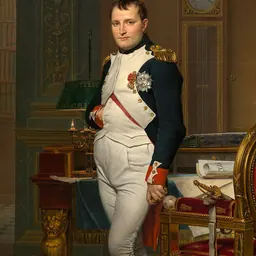
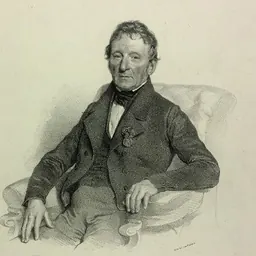
Related people
Same field, nearest in time

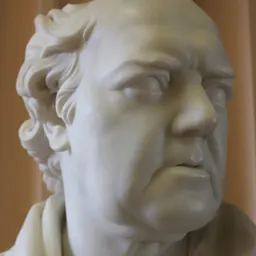



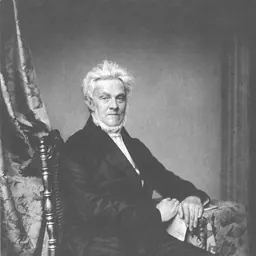
Contemporaries
People whose lives overlapped Judah Leib Ben Zeev's





Frequently asked questions
Who was Judah Leib Ben Zeev?
Galician Jewish scholar
When was Judah Leib Ben Zeev born?
Judah Leib Ben Zeev was born on 18 August 1764 in Lelów.
When did Judah Leib Ben Zeev die?
Judah Leib Ben Zeev died on 12 March 1811 in Vienna.
What was Judah Leib Ben Zeev's occupation?
Judah Leib Ben Zeev was a linguist, grammarian and lexicographer.
What nationality was Judah Leib Ben Zeev?
Judah Leib Ben Zeev was Polish.
Sources & further reading
· Wikipedia: Judah Leib Ben Zeev
· DBpedia: Judah Leib Ben-Ze'ev
Cite this page
APA: Biography.guide. (2026). Judah Leib Ben Zeev. https://biography.guide/judah-leib-ben-zeev/
MLA: "Judah Leib Ben Zeev." Biography.guide, https://biography.guide/judah-leib-ben-zeev/.
Chicago: "Judah Leib Ben Zeev." Biography.guide. https://biography.guide/judah-leib-ben-zeev/.
Data last updated: 2026-09-26 · Spot an error? Report a correction.
Page generated 2026-09-27 05:16 UTC