
About Juan Pascual-Leone
Born 1933. Juan Pascual-Leone is a scientist, known for Neo-Piagetian theories of cognitive development.
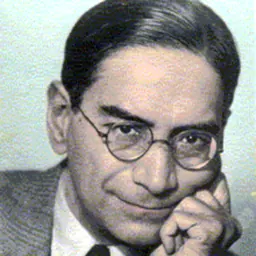
Juan Pascual-Leone (born 1933 in Spain) is a developmental psychologist and founder of the neo-Piagetian approach to cognitive development. He introduced this term into the literature and put forward key predictions about developmental growth of mental attention and working memory.
Pascual-Leone pioneered descriptions of developmental cognitive growth from an organismic perspective, i.e. "from within" the subjects' task processing. Using this method he clarified distinctions between learning (including the learning of executive functions), maturational-developmental processes, and working memory, studying their interrelationships from within the subject's processing.
The Theory of Constructive Operators (TCO), is his general causal model of cognitive development, framed in terms of organismic operators, schemes, and principles.
Education Pascual-Leone studied medicine at the University of Valencia and specialized in psychiatry and neurology in Santander, on the north coast of Spain, and in Paris. His background as a medical doctor and neuropsychiatrist, and his experience studying psychology with Jean Piaget, contributed to a sophisticated understanding of Piaget's theory. The TCO is an expansion and reformulation that integrates the ideas of, among others, his mentors Jean Piaget and Herman Witkin.
Under the Supervision of Piaget In 1963–69, Pascual-Leone studied psychology at the University of Geneva, Switzerland, where, in 1964, he obtained his M.A. (Licence) in Experimental Child Development, and in 1969, his Ph.D. in psychology. Here, he was under the direct supervision of Jean Piaget (1896–1980), at the peak of his fame as child psychologist and constructivist-development researcher, whom he refers to as "my intellectual father in Psychology". As one of the later graduate students of Piaget, he obtained first-hand knowledge of Piaget's theory, collaborating in Piaget's book on mental image. He was one of the first of Piaget's students to explicitly highlight shortcomings of the master's theory.
Under the Supervision of Witkin Pascual-Leone also studied under the American psychologist Herman Witkin (1916–1979). Witkin—a student of Max Wertheimer, a founder of Gestalt Psychology—conducted research on individual differences (cognitive styles) in cognitive and perceptional psychology as well as personality development; his focus was on psycho-social processes and cognitive differentiation. Witkin was an innovator who pioneered, from an organismic perspective, theories of cognitive styles, psychological differentiation, and learning styles.
Pascual-Leone defended his doctoral thesis in psychology and Pascual-Leone, is the maximum-capacity of mental/executive attention in adults (although adults may habitually apply about 5 units of this capacity). Pascual-Leone's mental-attention model was the first to quantify the effective complexity of processing stages in human development. Many of his ideas challenged the scientific establishment at the time. Commenting on this work, Barrouillet and Gaillard wrote: "Neo-Piagetian theories have the potential to account for most of the learning difficulties and developmental disorders by cumulating the strength of the functionalist and the structuralist approaches."
Quantifying levels of cognitive development Pascual-Leone analyzed developmental data investigating the tasks' processing complexity. He assessed complexity by modeling the number of essential operators, relations, or schemes that children must simultaneously hold in mind to produce performance. In 1963, he inferred with his analyses that there is a maximum mental demand that each child's age group can cope with – the characteristic mental (M-) power of each developmental stage-level. His theory has been validated in his laboratory and by independent researchers, who, often without explicit reference to Pascual-Leone, have supported his original predictions and subsequent results, either using his tasks or with methods that converge with his.
The impact of Pascual-Leone's work can be seen in three scholarly controversies: (1) the debate over Trabasso's critique of Pascual-Leone's 1970 paper; (2) the multi-author discussion of Kemps, De Rammelaere, and Desmet comparing Pascual-Leone's model of mental attention with Baddeley's model of working memory; and (3) the discussion of Demetriou, Spanoudis, and Shayer's study on speed of processing, working memory, and general intelligence.
With Janice M. Johnson, Pascual-Leone has written a book presenting his theory and data supporting it, as well as his method of mental task analysis. He has published numerous articles and chapters (some of which can be found in ResearchGate). In 2006, he received an honorary doctorate from the University of Cyprus and in 2018 was made a Fellow of the Association for Psychological Science.
Cognitive styles Pascual-Leone was among the earlier developmental researchers to emphasize the role of cognitive styles (e.g., field-dependence-independence, adaptive flexibility) and individual differences in cognitive development; and he was the first to quantify mental-attention capacity throughout development. His research on children's and adults' mental-attentional capacity and on cognitive styles (which affect the person's propensity to experience and cope with misleading/conflicting situations versus facilitating situations), as well as his metasubjective ("from within") analysis, has opened up new perspectives for understanding cognitive processes; and has helped to clarify causal-developmental relations between affect/motivation, cognition, individual differences, and complex/conceptual processes.
Pascual-Leone's work can be classified under four diverse categories: (1) Dialectical constructivist epistemology, the theory of constructive operators, a model for quantifying mental/executive attention, and process task analysis; (2) Educational domains: math, visuospatial, logic, language, science education, giftedness; (3) Individual differences, cognitive styles, developmental neuropsychology, and brain semantics; and (4) Mental health: psychotherapy, meditation, and human change.
Regarding his innovative work on individual differences as sources of difficulty/conflict in Piagetian tasks, Case and Edelstein have written:
"The nature of this conflict, Pascual-Leone asserted, is the same as the conflict elicited by Witkin's classic embedded figures test […] As a consequence, the pathways by which a subject must arrive at the solution to the two sorts of different tasks (field misleading and field facilitating) is different. For this reason Pascual-Leone predicted that field-dependent subjects would show a different developmental profile from field-independent subjects in any battery in which both types of developmental task are administered […] Pascual-Leone was able to predict the pattern of individual differences across a remarkably broad variety of Piagetian and psychometric tasks […] In the general theoretical system that he evolved, what was seen as universal about development was its inexorable move towards greater complexity, as a result of biennial increases in mental power (M power). What was seen as individual about development were the particular situations to which different children were sensitive, and the particular styles or strategies that they evolved for dealing with these situations. Field independence was just one of the styles Pascual-Leone studied."
The Theory of Constructive Operators (TCO) Pascual-Leone proposed the Theory of Constructive Operators (TCO) – an organismic cognitive-developmental theory that is neuropsychologically interpretable in terms of brain processes.
This theory explains human psychological functioning as the product of the dynamic combination of schemes (the brain's "software" – information/action bearing processes, embodied by cell assemblies or networks) and "hidden hardware" operators of the brain. Hidden operators acting on schemes generate thoughts, actions, and learning. They are brain-resource mechanisms that regulate functioning of (and can change) schemes. Piaget left these resources unexplained and often referred to them as principles like "regulations", "accommodation", and "equilibration". Operators intervene in all neuropsychological processes that are emergent and not automatized or overlearned. They include M-operator (mental-attention capacity, which explains the innate-developmental basis of working memory); I-operator (inhibition mechanism causing attentional interruption); L-operator (i.e., logical- structural learning capability); C-learning (content-learning capability); F-operator (i.e., the neo-Gestaltist "field effects", or "minimum principle", or "S-R compatibility"); etc. Table 1 shows different operators of the TCO and some of their key brain regions.
M-capacity is the key maturational causal factor of working memory. Working memory refers to all the schemes in a person's repertoire that are sufficiently activated (irrespective of the cause) to co-determine the ongoing process of representation or performance. There are other causes of scheme activation (including affects/emotions, overlearning/automatization, field factors); for this reason the size of working memory is often larger than the size of M-centration. A recently completed book gives an overview of the TCO and its applications.
Don’t just read it —
keep it.
Full-length biographies made to live with: read them, listen on the way to work, watch them tonight.
- E-book
- Audio
- Video
Instant download · yours to keep · every purchase keeps this site free
Important facts
People in Juan Pascual-Leone's life
Named in this biography and alive at the same time



Related people
Same field, nearest in time


Contemporaries
People whose lives overlapped Juan Pascual-Leone's




Frequently asked questions
Who is Juan Pascual-Leone?
developmental psychologist
When was Juan Pascual-Leone born?
Juan Pascual-Leone was born in 1933 in Spain.
What is Juan Pascual-Leone's occupation?
Juan Pascual-Leone is a scientist.
What is Juan Pascual-Leone known for?
Juan Pascual-Leone is known for Neo-Piagetian theories of cognitive development.
Sources & further reading
· Wikipedia: Juan Pascual-Leone
Cite this page
APA: Biography.guide. (2026). Juan Pascual-Leone. https://biography.guide/juan-pascual-leone/
MLA: "Juan Pascual-Leone." Biography.guide, https://biography.guide/juan-pascual-leone/.
Chicago: "Juan Pascual-Leone." Biography.guide. https://biography.guide/juan-pascual-leone/.
Data last updated: 2026-09-20 · Spot an error? Report a correction.
Page generated 2026-09-27 05:26 UTC