
Juan Downey
Chilean kinetic videomaker, painter, printmaker, architect
About Juan Downey
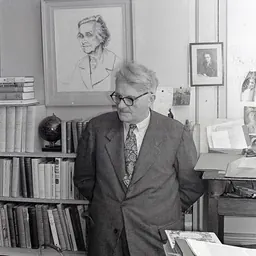
Lived 1940 – 1993 (aged 53). Juan Downey was a Chilean film director, university teacher, kinetic artist, painter, printmaker and architect.
Juan Downey (May 11, 1940 – June 9, 1993) was a Chilean artist who was a pioneer in the fields of video art and interactive art.
Early life and education Downey was born in Santiago, Chile. His father, David Downey V., was a distinguished architect in Chile, and following in his father's footsteps, Juan Downey studied to complete a Bachelor of Architecture in 1964 from the Pontificia Universidad Católica of Chile. In 1961, to further his studies and develop his artistic practice, Downey traveled to Europe. He spent a few months in Barcelona and Madrid, followed by Paris,
In 1965, Downey traveled to Washington, D.C., at the invitation of the Organization of American States to present a solo show of his work. It was there that Downey would meet his future wife, Marilys Belt. Downey stayed in Washington for a couple of years before moving with his family to New York in 1969.
Career In New York, Downey would become involved with the groups Radical Software and Raindance collective, both of them early proponents of using video for artistic and political means.
Downey is recognized as a pioneer and early adopter of video art, but during his artistic career, he created an extensive body of work that also includes electronic and video sculptures, photography, painting, drawing, printmaking, performance, installation, and writing. All of his major works were accompanied by drawings. They reflect not only his “sureness of hand,” as curators David Ross and James Harithas noted, but also his compelling ideas and visions, and they reveal a sustained practice of drawing over a lifetime.
The early period of Juan Downey's artistic practice consisted of painting, drawing, writing, and printmaking. After moving to the United States in 1965, he began to experiment with numerous forms of art that included creating interactive electronic sculptures, performances, happenings, and, in the late 1960s, video art. He wrote: “The universe is not an assemblage of independent parts, but an overlapping, interrelated system of energy. All my work relates to this vision.” These media permitted Downey to investigate ideas about invisible energy as well as to invite active participation by viewers of his work.
Two seminal series in Downey's career were Video Trans Americas, begun in 1971, and The Thinking Eye, begun in the mid-1970s. Video Trans Americas (VTA.) is often divided into two groups: the first group was developed from 1973 to 1976, and the second from 1976 to 1977. The two series stress Downey's preoccupation with political discourse, the self, the history of art, Western civilization, and Latin American identity.
Exhibitions Solo exhibitions Solo exhibitions featuring Juan Downey's work include: Juan Downey: Audio-Kinetic Electronic Sculptures, The Corcoran Gallery of Art in Washington DC, (1969); With Energy Beyond These Walls, Howard Wise Gallery, New York, NY, (1970); Video Trans Americas, Contemporary Art Museum, Houston, TX, (1976); Juan Downey: Video Trans Americas, Whitney Museum of American Art, New York, NY, (1976); Video Trans Americas, Everson Museum of Art, Syracuse, NY (1977); Juan Downey: New American Filmmaker Series, Whitney Museum of American Art, New York, NY (1978); Juan Downey, Matrix/Berkeley 16, University Art Museum, Berkeley, CA (1978); Une Forêt 'Videoformes': Retrospective Juan Downey, Festival de la Création Vidéo, Clermont-Ferrand, France (1993); Juan Downey: Instalaciones, Dibujos y Videos, Museo Nacional de Bellas Artes, Santiago (1995), Chile; Juan Downey: Con energía más allá de estos muros, Institut Valencià d'Art Modern, Centre del Carme, Valencia, Spain (1997–98); Retrospectiva de Video Arte de Juan Downey, Museo de Arte Moderno de Chiloé, Castro, Chiloé, Chile (2000); Plateau of Humankind, Honorable Mention: “Excellence in Art Science and Technology,” 49th Venice Biennale Chilean Pavilion, Venice, Italy (2001); Juan Downey: El ojo pensante, Sala de Arte Fundación Telefónica, Santiago, Chile (2010); Mexico City (2013)
Group exhibitions Downey's work was included in numerous group exhibitions as follows. Some More Beginnings: An Exhibition of Submitted Works Involving Technical Materials and Processes, organized by Experiments in Art and Technology, in collaboration with the Brooklyn Museum, Brookly, NY and The Museum of Modern Art, New York, NY (1968); Kinesthetics, Howard Wise Gallery, New York, 1969-70; New Learning Spaces & Places, Walker Art Center, Minneapolis, MN (1974); Whitney Biennial Exhibition, Whitney Museum of American Art, New York, NY (1975, Documenta 6, Kassel, Germany, (1977); Venice Biennale, US Pavilion, Venice, Italy, (1980); II Bienal de La Habana, Havana, Cuba, (1986); The Thinking Eye, International Center for Photography, New York, NY, (1987); Passages de l’image, Musée national d'Art moderne- Centre Georges Pompidou, Paris, France, (1990); Video Art: The First 25 Years, The Museum of Modern Art, and The American Federation of Arts, New York, NY, (1995); Info Art ’95, Kwangju Biennale, Kwangju, Korea, (1995); Electronic Highways, The Museum of Modern Art, New York, NY, (1997); Rational/Irrational, Haus der Kulturen der Welt, Berlin, Germany, (2008-2009) The Looking Glass: Artist Immigrants of Washington, American University Art Museum, Washington, DC (2016) VIVA ART VIVA, Venice Biennale, Venice, Italy, (2017);
Selected works Interactive art Against Shadows, 1968, is an interactive artwork that uses a grid of photo sensors to translate shadow thrown by the human body to a matching grid of wall-mounted lightbulbs. In Invisible Energy Dictates a Dance Concert, 1969-1970, readings taken by geiger counters are sent by walkie-talkies to dancers in different rooms of the gallery. Three-Way Communication by Light, 1972, used video, super 8 film and laser beams to join the actions of three performers painted in whiteface. Plato Now, 1973 Energy Fields, 1972 Monument to the Charles River, b/w, 27 min., 2 channels, 1973 The first complete screening of the VTA video-installation was in the exhibition Landscape Studies in Video curated by David Ross at the Long Beach Museum of Art in 1975. More Than Two, 1978 (installation) The Abandoned Shabono, 1979 The Laughing Alligator, 1979 Chiloe, color, 18 min., 1981 Venus and Her Mirror, 1980 (video-installation) The Looking Glass, 1981 Information Withheld, 1983 Shifters, 1984 J.S. Bach, 1986 Hard Times and Culture: Part One, Vienna fin-de-siecle, 1990
Collections Downey’s work can be found in private collections and in the collections of major museums. Selected museum collections include: The Tate Modern, London, UK; The Museum of Modern Art, New York, NY; Museo Nacional Centro de Arte Reina Sofía, Madrid, Spain; The Smithsonian American Art Museum, Washington, DC, and Museo Nacional de Bellas Artes, Santiago, Chile, among others.
Awards Downey was a Guggenheim fellow in the area of fine arts in 1971.
Selected bibliography Valerie Smith, ed. Juan Downey: The Invisible Architect. Leipzig: MIT List Visual Art Center & The Bronx Museum, 2011. González, Julieta, Nicolás Guagnini, Carla Macchiavello, and Valerie Smith. Juan Downey: el ojo pensante. Santiago: Fundación Telefónica, 2010. Arévalo, Antonio, Marilys Belt de Downey, Juan Downey, José Goñi Carrasco, and Luisa Ulibarri Lorenzini. Juan Downey: La Biennale di Venezia, 49 Esposizione Internazionale d’Arte. Milan: Rodrigo Figueroa Schirmer, 2001. Bonet, Eugeni, Douglas Davis, Juan Downey, Nuria Enguita, Coco Fusco, Juan Guardiola, John G. Hanhardt, James Harithas, and David Ross. Juan Downey: With Energy Beyond These Walls (Con energía más allá de estos muros). Valencia: Institut Valencià d’Art Modern and Centre del Carme, 1997-98. Hanhardt, John G., and Ann D. Hoy. Juan Downey of Dream Into Study. Santiago: Editorial Lord Cochrane, 1987.
Don’t just read it —
keep it.
Full-length biographies made to live with: read them, listen on the way to work, watch them tonight.
- E-book
- Audio
- Video
Instant download · yours to keep · every purchase keeps this site free
Important facts
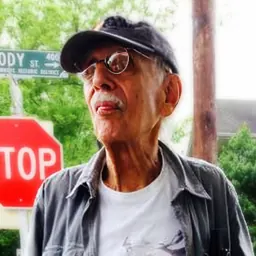
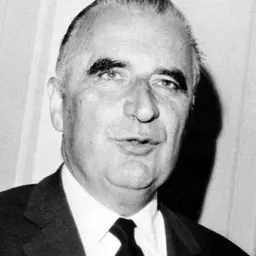
People in Juan Downey's life
Named in this biography and alive at the same time






Related people
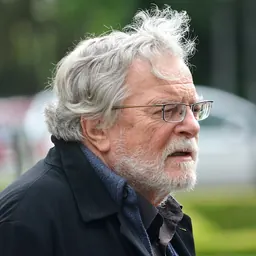
Same field, nearest in time


Contemporaries
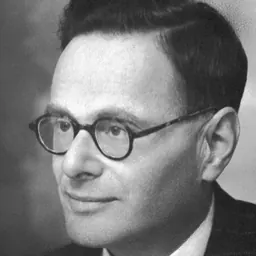
People whose lives overlapped Juan Downey's




Frequently asked questions
Who was Juan Downey?
Chilean kinetic videomaker, painter, printmaker, architect (1940-1993)
When was Juan Downey born?
Juan Downey was born on 11 May 1940 in Santiago.
When did Juan Downey die?
Juan Downey died on 9 June 1993 in New York City.
What was Juan Downey's occupation?
Juan Downey was a film director, university teacher, kinetic artist, painter, printmaker and architect.
What nationality was Juan Downey?
Juan Downey was Chilean.
Sources & further reading
Cite this page
APA: Biography.guide. (2026). Juan Downey. https://biography.guide/juan-downey/
MLA: "Juan Downey." Biography.guide, https://biography.guide/juan-downey/.
Chicago: "Juan Downey." Biography.guide. https://biography.guide/juan-downey/.
Data last updated: 2026-09-20 · Spot an error? Report a correction.
Page generated 2026-09-27 05:06 UTC