
Juan de la Cierva
Spanish aeronautical engineer and pilot; inventor of the autogyro
About Juan de la Cierva
Lived 1895 – 1936 (aged 41). Juan de la Cierva was a Spanish inventor, engineer, politician, aviator and civil engineer, known for Autogyro.
Juan de la Cierva y Codorníu, 1st Count of la Cierva (; 21 September 1895 – 9 December 1936), was a Spanish civil engineer, pilot and a self-taught aeronautical engineer. His most famous accomplishment was the invention in 1920 of a rotorcraft called Autogiro, a single-rotor type of aircraft that came to be called autogyro in the English language. In 1923, after four years of experimentation, De la Cierva developed the articulated rotor, which resulted in the world's first successful flight of a stable rotary-wing aircraft, with his C.4 prototype.
Early life Juan de la Cierva was born to a wealthy, aristocratic Spanish family, and for a time his father was the war minister. At the age of eight he was spending his pocket money with his friends on experiments with gliders in one of his father's work sheds. In their teens they constructed an aeroplane from the wreckage they had bought from a French aviator who had crashed the plane. The final aeroplane used wood from a Spanish bar counter for the propeller. Development of cyclic pitch variation was also influenced by the Dutch helicopter pioneer Albert Gillis von Baumhauer, who adopted swashplate principle in his designs and probably influenced Cierva in their meeting in 1928.
The introduction of jump take-off was another major improvement in capability. The rotor was accelerated in no-lift pitch until the rotor speed required for flight was achieved, and then declutched. The loss of torque caused the blades to swing forward on angled drag hinges with a resultant increase in collective pitch, causing the aircraft to leap into the air. With all the engine power now applied to the forward thrusting propeller, it was now possible to continue in forward flight with the rotor in autorotation.
The C.40 was the first production jump takeoff autogyro.
Autogyros were built in many countries under De la Cierva licences, including France, Germany, Japan, Russia and the United States.
De la Cierva's motivation was to produce an aircraft that would not stall but near the end of his life he accepted the advantages offered by the helicopter and began the initial work towards that end. In 1936, the Cierva Autogiro Company, Ltd. responded to a British Air Ministry specification for a Royal Navy helicopter with the gyrodyne.
Death
On the morning of 9 December 1936, he boarded a Dutch DC-2 of KLM at Croydon Airfield, bound for Amsterdam. After delay caused by heavy fog, the airliner took off at about 10:30 am but drifted slightly off course after takeoff and exploded after flying into a house on gently rising terrain to the south of the airport, killing 15 people, among them de la Cierva.
Legacy Juan de la Cierva's work on rotor-wing dynamics made possible the modern helicopter, whose development as a practical means of flight had been prevented by a lack of understanding of these matters. The understanding that he established is applicable to all rotor-winged aircraft; though lacking true vertical flight capability, work on the autogyro forms the basis for helicopter analysis.
De la Cierva's death in an aeroplane crash in December 1936 prevented him from fulfilling his recent decision to build a useful and reliable aircraft capable of true vertical flight for the Royal Navy, but it was his work on the autogyro that was used to achieve this goal. Technology developed for the autogyro was used in the development of the experimental Fw 61 helicopter, which was flown in 1936 by Cierva Autogiro Company licensee Focke-Achgelis. His pioneering work also led to the development of a third type of rotorcraft, the gyrodyne, a concept of his former technical assistant and successor as chief technical officer of the Cierva Autogyro Company, Dr. James Allan Jamieson Bennett.
In 1966, Juan de la Cierva was inducted into the International Aerospace Hall of Fame for his innovation in rotor blade technology, using them to generate lift and to control the aircraft's attitude with precision. The Juan de la Cierva scholarship from the Spanish Ministry of Science is named after him.
Don’t just read it —
keep it.
Full-length biographies made to live with: read them, listen on the way to work, watch them tonight.
- E-book
- Audio
- Video
Instant download · yours to keep · every purchase keeps this site free
Important facts
People in Juan de la Cierva's life
Named in this biography and alive at the same time


Related people
Same field, nearest in time

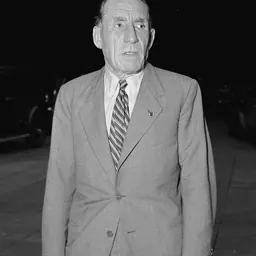
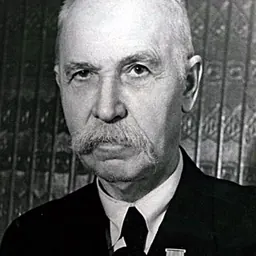
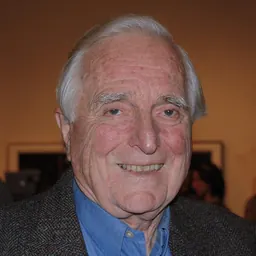
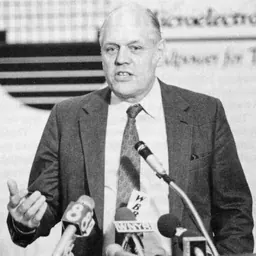
Contemporaries
People whose lives overlapped Juan de la Cierva's

Frequently asked questions
Who was Juan de la Cierva?
Spanish aeronautical engineer and pilot; inventor of the autogyro (1895-1936)
When was Juan de la Cierva born?
Juan de la Cierva was born on 21 September 1895 in Murcia.
When did Juan de la Cierva die?
Juan de la Cierva died on 9 December 1936 in Croydon Airport.
What was Juan de la Cierva's occupation?
Juan de la Cierva was an inventor, engineer, politician, aviator and civil engineer.
What was Juan de la Cierva known for?
Juan de la Cierva was known for Autogyro.
What nationality was Juan de la Cierva?
Juan de la Cierva was Spanish.
Sources & further reading
· Wikipedia: Juan de la Cierva
Cite this page
APA: Biography.guide. (2026). Juan de la Cierva. https://biography.guide/juan-de-la-cierva/
MLA: "Juan de la Cierva." Biography.guide, https://biography.guide/juan-de-la-cierva/.
Chicago: "Juan de la Cierva." Biography.guide. https://biography.guide/juan-de-la-cierva/.
Data last updated: 2026-09-22 · Spot an error? Report a correction.
Page generated 2026-09-27 05:31 UTC