
About Juan Ariza
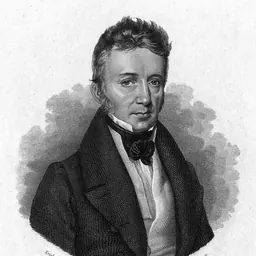
Lived 1816 – 1876 (aged 59). Juan Ariza was a Spanish writer and poet.
Juan de Ariza was born in Motril, Granada, Spain on December 11, 1816, and died in Havana, Cuba on July 20, 1876. He was a Spanish novelist, poet, and playwright whose work falls largely into the literary tradition of Romanticism. He is listed in the "Spanish Authors Collection".
Biography Juan Ariza was the son of a wealthy family. His father died when Juan was four years old and his uncle, Juan Fernando de Ariza, took charge of the youngster's education. At age thirty-seven, Juan Ariza worked at the Teatro Liceo de Motril. At age forty, he moved to Madrid where he wrote for various newspapers and magazines. In 1843, his first known work appears, A la heroica Granada. From 1845 he became known first for his historical novels and then stories inspired by popular traditions. One of his novels, Un viaje al infierno (a trip to hell), is a satire of contemporary Madrid and its people. The most important of his historical novels was El Dos de Mayo (1846). While in Madrid he befriended Ventura de la Vega and Juan Martínez Villergas. His most fruitful period was from 1848 to 1854, with more than twenty literary works, as well as collaborations with Rubí y Ventura de la Vega in the 1850 comedy Un clavo saca otro clavo (a hair of the dog). That same year he premiered his tragedy Remismunda, perhaps the best of his plays that mixes classicism and romanticism. In 1853 saw the premiere of four of his works in Madrid, including La flor del valle with music by Luis Arche. His last plays were represented in 1854, the year he was appointed Director General of the Colonies. In 1856 he came to Cuba as a senior government official. There he served as Secretary and Minister of the Court of Auditors and also held Vice President of the Spanish Casino de la Habana. In 1867 he was appointed Director of Diario de la Marina in Havana, a post he held until his death, that is, for nine years. He witnessed the outbreak of the first of the wars in Cuba. He passionately defended the interests of colonial Spain.
Works
Novels Un viaje al infierno (A trip to hell), Madrid, 1848–1851 Don Juan de Austria o Las guerras de Flandes, Madrid, 1847. Reprinted in Madrid: Lecturas para Todos, 1933 and again in Madrid: Apostolado de la Prensa, 1961 Las tres Navidades (The three Christmas), Madrid, 1846 Los dos Reyes: novela histórica (The two kings: a historical novel), Madrid, 1845, reprinted in 1848 El dos de mayo: novela histórica (The Second of May: a historical novel), Madrid: Hortelano y Compañía, 1846, reprinted in 1849 Antes y después (Before and after), Habana:Imprenta del Diario de la Marina, 1859
Poetry Las ruinas de Sancho el Diablo. Tradición popular, Madrid, 1848
Theatre Antonio de Leiva, Madrid, 1849, reprinted in 1855 and in Salamanca in 1870 Un clavo saca a otro clavo. Comedia., co-authored with Tomás Rodríguez y Díaz Rubí and Ventura de la Vega, Madrid, 1850 Mocedades de Pulgar, Madrid, 1847. El primer Girón, Madrid, 1850, reprinted in 1868. Don Alonso de Ercilla, Madrid: José de Santiago, 1848 Dios, mi brazo y mi derecho, Madrid, 1853, reprinted in 1867. La Flor del valle: zarzuela; música de Luis Arche Madrid: Círculo Literario Comercial, 1853 La fuerza de voluntad, Madrid: Círculo Literario Comercial, 1852 Un loco hace ciento. Comedia, Madrid: Círculo Literario Comercial, 1853 La mano de Dios. Drama histórico, Madrid: Círculo Literario Comercial, 1854 El oro y el oropel. Comedia, Madrid, 1853 (reprinted in Salamanca in 1863) Obras líricas y dramáticas, México: Boix y compañía, 1851 Pedro Navarro, Madrid: Círculo Literario Comercial, 1854 El ramo de rosas, Madrid: Círculo Literario Comercial, 1851 Remismunda. Tragedia, Madrid: Círculo Literario Comercial, 1854 Comedias Introducción y notas, Francisco Ayudarte Granados. Motril: Auskaría Mediterránea, 1996
Don’t just read it —
keep it.
Full-length biographies made to live with: read them, listen on the way to work, watch them tonight.
- E-book
- Audio
- Video
Instant download · yours to keep · every purchase keeps this site free
Important facts
People in Juan Ariza's life
Named in this biography and alive at the same time
Related people
Same field, nearest in time

Contemporaries
People whose lives overlapped Juan Ariza's




Frequently asked questions
Who was Juan Ariza?
Spanish writer (1816-1876)
When was Juan Ariza born?
Juan Ariza was born on 11 December 1816 in Motril.
When did Juan Ariza die?
Juan Ariza died on 20 July 1876 in Havana.
What was Juan Ariza's occupation?
Juan Ariza was a writer and poet.
What nationality was Juan Ariza?
Juan Ariza was Spanish.
Sources & further reading
Cite this page
APA: Biography.guide. (2026). Juan Ariza. https://biography.guide/juan-ariza/
MLA: "Juan Ariza." Biography.guide, https://biography.guide/juan-ariza/.
Chicago: "Juan Ariza." Biography.guide. https://biography.guide/juan-ariza/.
Data last updated: 2026-09-20 · Spot an error? Report a correction.
Page generated 2026-09-27 05:16 UTC