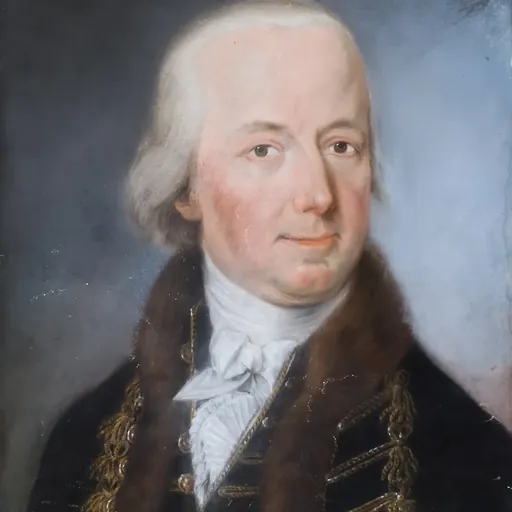
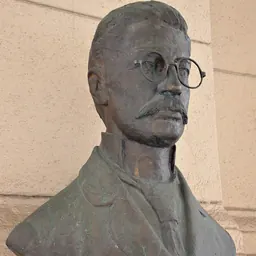
József Kiss
Hungarian engineer
About József Kiss
Lived 1748 – 1813 (aged 64). József Kiss was a Hungarian hydraulic engineer and military engineer, known for Great Bačka Canal.
József Kiss de Kissáros (Hungarian: kissárosi Kiss József; ; 19 March 1748 – 13 March 1813) was a Hungarian hydrotechnical engineer. He is best known for his work as the architect of the Great Bačka Canal/Ferenc-csatorna, an important hydrotechnical and transport structure in the Bačka/Bácska region of modern-day Serbia and Hungary. Architects built upon his ideas and incorporated the canal into the Danube-Tisa-Danube Canal system.
Early life József Kiss de Kissáros was born on 19 March 1748 in Buda (modern-day Budapest), Hungary, into a family with a strong military heritage. His family was ennobled in 1691 by Holy Roman Emperor Leopold I in Turóc County, adopting the nobiliary particle “de Kissáros” (Hungarian: kissárosi). He was the son of Johann Kiss de Kissáros, a military officer, and Maria Tuczentaller, a noblewoman. Although born in Buda, his mother’s family was based in Prešov, where his father also resided when not abroad with the military. All of his siblings were born in Prešov, and he spent much of his early life there, raised in a household with a strong military tradition. He had two brothers, István (born 22 August 1751) and Gabriel (born 21 November 1752), as well as three other siblings who died in infancy. His father, serving as a lieutenant colonel, participated in the Seven Years’ War and was fatally wounded at the Battle of Hochkirch in 1758.
After their father’s death in battle, József and Gábor were entitled to state-financed education in Wiener Neustadt, where they both enrolled at the Theresian Military Academy. Upon completing his military training, József pursued further studies in engineering. In 1768, he was awarded an imperial scholarship from Co-Emperor Joseph II to study hydraulic engineering in the Netherlands and Great Britain.
Career Returning to Habsburg Hungary, he was appointed as a military engineer. Soon after, in the 1770s, he abandoned military service to become a civil engineer working for the Hofkammer, the main financial institution of the Habsburg monarchy. His first duty was regulating the water level of the Danube near Pressburg. He later transferred to the outskirts of Vienna. Records mention him as a clerk of the Hofkammer around 1780. In 1782, Joseph II initiated a migration from the southeastern regions of Germany to the area surrounding the Podunavlje, hoping to provide a stable economic situation for the migrating German population. At the same time, Kiss first arrived in Bácska.
Challenges arose during the first year of work on the Monostorszeg lock. The high water pressure of the Danube caused water to flow in the working pit and create sludge. Freshly built slopes frequently collapsed, and substantial groundwater flow into the work pits caused further problems.
However, the work continued, and after four years, the waterway became navigable to the point of Sztapár.
In 1796, an anonymous tip informed the association that the canal was behind schedule and over budget. Despite Kiss’ explanations, he was expelled from the association and stripped of all authority. Kiss and his brother had invested heavily in the project, and his expulsion led to his and his brother’s financial ruin.
Stanislav Hepe was appointed to replace Kiss, and continued the project from 1797 to 1801.
When finished in 1802, the Danube - Tisza channel had reached the length of 110 kilometers. This length is cited on all maps published after the completion of the channel. As a result, the voyage from Bezdán to the Tisza was shortened by 258 kilometers. This saved about 10 days on a downstream journey, and 20 on an upstream journey.
The stimulus that commerce, manufacturing and navigation received influenced the increased development of nearby settlements such as Apatin, Czoborszentmihály, Cservenka, Kúla, Verbász, Bácsszenttamás and Óbecse. An important function of the channel was also melioration, especially east of Verbász, as much of the wide, marshy terrain around the banks of the canal was drained and turned into fertile soil.
Epilogue
Stripped of all functions in the association, Kiss returned to his job as the leading engineer for Bačka. When he finally retired after 42 years of work, he received only a quarter of his pension from the Hofkammer, which was about 312 forints annually. The other three quarters were garnished in order to repay debts that he incurred after his expulsion from the association. He built a summer house near Vrbas, which he called Josephsruhe (English: “József's peace”). He spent the rest of his life there, until his death on 13 March 1813, and was buried nearby.
Kiss’ notebook, titled Stammbuch and written in German and Latin contains entries about his family and work, along with sketches of famous historical figures such as Maria Theresia, Joseph II, and Napoleon Bonaparte. On the last page, he had sketched a desired gravestone and epitaph which reads:
Legacy
As the creator of one of the first major hydrotechnical works in the area surrounding the Podunavlje, Kiss laid the foundations for an expansion of hydrotechnical construction in the hydrographically complex region of Bačka.
Don’t just read it —
keep it.
Full-length biographies made to live with: read them, listen on the way to work, watch them tonight.
- E-book
- Audio
- Video
Instant download · yours to keep · every purchase keeps this site free
Important facts
People in József Kiss's life
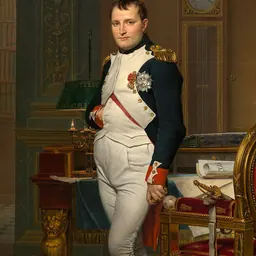
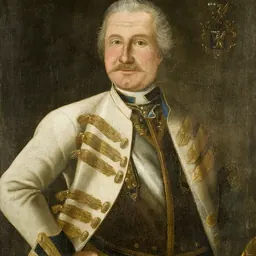
Named in this biography and alive at the same time
Related people
Same field, nearest in time



Contemporaries
People whose lives overlapped József Kiss's






Frequently asked questions
Who was József Kiss?
Hungarian engineer (1748-1813)
When was József Kiss born?
József Kiss was born on 18 March 1748 in Buda.
When did József Kiss die?
József Kiss died on 13 March 1813 in Sombor.
What was József Kiss's occupation?
József Kiss was a hydraulic engineer and military engineer.
What was József Kiss known for?
József Kiss was known for Great Bačka Canal.
What nationality was József Kiss?
József Kiss was Hungarian.
Sources & further reading
· DBpedia: József Kiss (engineer)
Cite this page
APA: Biography.guide. (2026). József Kiss. https://biography.guide/jozsef-kiss-hydraulic-engineer/
MLA: "József Kiss." Biography.guide, https://biography.guide/jozsef-kiss-hydraulic-engineer/.
Chicago: "József Kiss." Biography.guide. https://biography.guide/jozsef-kiss-hydraulic-engineer/.
Data last updated: 2026-09-23 · Spot an error? Report a correction.
Portrait: Wikimedia Commons · author & licence
Page generated 2026-09-27 05:06 UTC