
Józef Napoleon Hutten-Czapski
Polish activist and insurgent
About Józef Napoleon Hutten-Czapski
Lived 1797 – 1852 (aged 55).
Józef Napoleon Hutten-Czapski (1797-1852), from the Polish noble Leliwa family, was an insurgent during the November Uprising and an independence activist. He was the father of Bogdan Hutten-Czapski.
Biography Youth Józef Napoleon was born on 25 March 1797, in then Bromberg. He was the son of Kornelia née Plewińska and Józef Hutten-Czapski (1760-1810), a count and general in the Crown Army. He received his first education in Bromberg, then studied at the Piarists college in Warsaw, from where he graduated in 1815.
Designated in his father's will as the sole heir, at the latter's death in 1810, he felt into a dispute with his uncle Mikołaj Hutten-Czapski, who denied his rights to the inheritance. According to Józef's biography in the Polish Biographical Dictionary, certain indications could hint that Napoleon Hutten-Czapski was an illegitimate son recognized later by his father. As a result of the contention, Józef wound up as receiving only one of his father's farms ( or folwark) in Orłów near the then-Prussian city of Soldau. Furthermore, the Prussian authorities did not want to recognize his noble origins nor grant him the title of count. As a consequence, Józef Napoleon decided to sell his newly acquired folwark and moved back to the area of Bromberg. He ostentatiously called himself a "peasant" and from that moment on only used his confirmation name as a first name, i.e. Napoleon .
Between 1818 and 1821, Józef attended lectures at the Breslau (today's Wrocław) university and structured the very large Polish community into an academic corporation called "Polonia", modeled on the German Burschenschaft. Likewise, he established contacts with liberal German youth movements and with the secret anti-Russian organizations in the Congress Poland. These actions were noticed by the police who sentenced him to two months in prison, expelling him from the university.
Once released, Napoleon transferred to the Russian Poland where he purchased the Osówki estate (Masovian Voivodeship). At first the Russian authorities confirmed his noble title. However, Nikolay Novosiltsev, the local chief of the secret police, assessed him as a leader of the internationalist revolutionary youth movement, present all over Europe: accordingly, Konstantin Romanov then Governor of the Kingdom of Poland, ordered the decision to be rescinded.
In the following years, Józef Napoleon traveled extensively. For a while (1830), he stayed in Prussian Bromberg where he co-organized and co-led a patriotic conspiracy. Tracked by the Prussian authorities, one of the conspirators was found to have an important stock of weapons, ammunitions and medicines shipped by Hutten-Czapski from Paris.
November uprising The outbreak of the November Uprising (end of 1830) found Józef Napoleon Czapski in Paris. There, he was giving speeches in honor of Poland and Polish brotherhood, dragging attention for Polish uprising in France. He arrived in Poland in January 1831 on a false French passport. In April, he served in the "Poznań volunteer cavalry regiment" and fought in various battles and skirmishes (near Minsk, Ostrołęka, Łysobyki, Potycz and Nieborów). For his combat actions during the expedition to Siedlce, he was awarded the Golden Cross of the Virtuti Militari. From May to August, he was the Aide-de-camp to Jan Zygmunt Skrzynecki, the commander-in-chief of the uprising. On 11 May 1831, he was promoted to the rank of second lieutenant, and on 31 July to lieutenant.
Józef Napoleon was present as well during the siege of Warsaw, where he arrived against orders as his regiment was not taking part in the defense of the city. Despite the looming failure of the uprising, he gave invigorating speeches, demanding the head of the generals. Such a stance put him before a military court: arrested by general Henryk Dembiński, he was released by general Jan Krukowiecki. On 24 September 1831, he was handed out a passport for scientific travel to France, England and other European countries, but he could no longer use it.
After the end of the revolt, Napoleon, under a changed name, made his way across the Kingdom of Prussia. The Prussian authorities labelled him the Robespierre of the uprising and tracked him with an arrest warrant. Denounced while staying in Gdańsk, Hutten-Czapski was arrested and detained for two weeks.
Exile On 14 December 1831 Józef Napoleon boarded an English ship and sailed to Ireland: he reached Belfast at the end of January 1832. Before long, he arrived to Dublin where he was received with an ovation. At many meetings with Daniel O'Connell's supporters, he made patriotic speeches quoted by Irish newspapers, which draw the attention of the police.
Hutten-Czapski was fined £60 for revolutionary activities and illegal stay in Great Britain. The majority of the Irish population sided with him: a street collection and public lectures were organized to pay the fine and grant him the permission to reside in England, where he moved in April 1832 and stayed for almost a year. On his way to London, he stopped in Birmingham and attended a large rally advocating political reforms. In addition, on 23 May, he accompanied a political delegation coming from Birmingham to be received by the Lord Mayor of London. In early 1833, masonic friends obtained for him a French passport under the alias of Joseph Chapman.
From 1833 to 1837, Józef Napoleon was constantly on the move, especially between Paris and Switzerland. Indeed, together with other young revolutionaries and Carbonari, he had founded there the "Young Europe" union on 15 April 1834. This movement gathered the following organizations: "Young Italy", "Young Germany" and "Young Poland" . He also traveled to Italy, Algeria, Spain and to London, where he met Giuseppe Mazzini then in exile.
In 1841, he went to Germany (Munich, Augsburg, Frankfurt) with a false passport under the identity of O'Brien, an Irishman. in 1806, he served in the 3rd infantry regiment in Poznań and was appointed colonel; in 1807, he fought with his regiment near Tczew and entered Gdańsk captured by French troops. In 1808, his regiment was appointed to the Free City of Gdańsk; in 1809, Mielżyński distinguished himself in the defense of Toruń against Austrian forces. He received the Order of Virtuti Militari for his bravery; on 20 March 1810, he was promoted to brigadier general; in 1812, he accompanied Dąbrowski's division in Napoleon's Russian campaign; in 1813, he fought in the defense of Gdańsk against Bernadotte's Swedes and Prussians forces.
In 1815, after exile of Napoleon Bonaparte, Mielżyński managed his estates in Greater Poland (Pawłowice, Kąkolewo, Poniec, Smogulec, Gołańcz) which moved back under Prussian rule.
Countess Eleonora Laura Mielżyńska Eleonora was first married to Karol Czarnecki (1804-1888), a poet who took refuge near Smogulec after the end of the November uprising. She was at the time a wealthy countess, owner of the Smogulec estate. The union occurred in 1834. In 1836, they had a daughter Maria Eleonora Anna Czarnecka (1836-1920). Thanks to his wife's connections, the Prussian authorities extended the residence permit of Czarnecki (then a Russian subject) every year. In 1839, he was even allowed to purchase the Chwaliszewo estate near Schubin; a year later, on the occasion of Frederick William IV's accession to the throne, he was granted Prussian serfdom and a recognized nobility. Karol was very active in the field of arts, sponsoring exhibitions and publications.
Accused of a crime of indecency, Czarnecki had to flee from Prussia and remained abroad until 1850. In between, Eleonora fell in love with Józef Napoleon, then administrator of her estate. Tomasz Franciszek (1675–1733), bishop of Chełmno; Jan Chrysostom (1656–1716), castellan of Elbląg; Piotr Aleksander (1660-1717), castellan of Chełmno.
Jan Chryzostom Czapski (1656-1716) He married Ludwika Rudnicka. Jan took part in the Battle of Vienna (1683). and at the ordinary Pacification sejm of 1735.
He held the office of Gdańsk of castellan from 1737 to 1746. He was married to Teofila Konopacka (1680-1733), the daughter of Stanisław Aleksander Konopacki, then castellan of Chełmno.
Józef Hutten-Czapski (1722-1765) He was a general of the Crown Army, castellan of Elbląg (1758-1765) and Pomeranian chamberlain (from 1757). He was rewarded the Order of the White Eagle for his services.
His first weeding (with Marianna Karłowska) did not give any issue. His second wife, Elżbieta Hutten-Czapska, was the great-granddaughter of Sebastian Czapski (?-1699), then castellan of Chełmno and a distant relative of Józef. They had 3 children, Brygida (1758–1801) and Teofilia (1760-?) and Ignacy. chamberlain of Chełmno (1762–1792) and commissioner of knighthood in the Military Commission of the Crown (1765–1770).
He was decorated with the Order of Saint Stanislaus (1766) and was married to Kandyda Rozalia Lipska (1721-?), the daughter of Józef Lipski, castellan of Bełsk and Łęczyca. Under the authority of Prince Józef Poniatowski, he commanded a brigade of cavalry and infantry. After accepting Polish citizenship (1791), he joined the Friends of the Constitution and few months later (February 1792), he surrendered his command and moved to Warsaw.
He did not accept the Targowica Confederation but did not resign: eventually in 1794 he was deprived of his general functions and the related salaries. At the outbreak of the Kościuszko Uprising, he was in Warsaw but had to leave in August 1794 to Wrocław to treat an illness.
From 1795 onwards, Mikołaj permanently resided in a palace in Bromberg from where he was administering the family estate in Bukowiec, co-owned with his brother Józef. On 27 September 1804, together with Józef, he obtained the Prussian title of count, leading to the addition of a "von Hutten" to his name. In 1807, during the Duchy of Warsaw, he was vice-president of the Administrative Chamber of the Bydgoszcz Department, but he soon resigned from this position. He died on 13 June 1833 in Bydgoszcz.
In 1777, he served as a captain under his brother Mikołaj's command in the cavalry regiment stationed in Radom.
In 1783, after his father's resignation, he was promoted to colonel, while his brother took over the command of the regiment. In 1790, he was promoted to brigadier general and commanded a Cavalry Brigade of Greater Poland. During the Polish–Russian War of 1792, Józef was a member of the General Staff of the Polish Army. In 1794, he momentarily joined the Kościuszko Uprising, but soon lost enthusiasm for it and took refuge under an assumed name with his mother in Bydgoszcz while his regiment was virtually wiped out in the battle of Maciejowice and during the Russian assault on Warsaw. He died in 1844 in his property of Kiejdany.
Stanisław was married to Zofia née Obuchowicza, they had three sons: Marian Hutten-Czapski (1816-1875), who joined the January Uprising, supporting the insurgents financially. After the defeat of the revolt in 1864, he was sentenced to hard labor in Siberia and spent three years in exile in Tomsk, while the Kiejdany estate was confiscated by the tsarist government; In 1840, he built a palace with a park on his estate of Berżany.
Karol Józef Hutten-Czapski (1777-1836) He held the position of royal chamberlain at the court of Stanisław August Poniatowski and was the marshal of the Minsk district. Karol married Fabianna Obuchowicza (1787-1876). Jerzy was a wealthy noble, owning estates in the area of Minsk and Volhynia. He graduated from the Imperial University of Dorpat with a diploma of doctor of Law. Furthermore, he co-financed the construction of the Church of Saints Simon and Helena in Minsk. During WWI, Jerzy served as a representative of the International Committee of the Red Cross headquarters in Minsk.
In the summer of 1920, before the offensive of the Red Army, he left definitively his estate of Przyłuki,
After Józef Piłsudski's coup (May 1920), Jerzy condemned the move, but supported the marshal's candidacy for President of the Republic of Poland.
On 7 August 1886, he had married Józefa (1867-1903), Thun und Hohenstein countess, in the Děčín Castle. They had eight children: Leopoldyna (1887–1969), mother of Ludwik Maria Łubieński and grandmother of Rula Lenska, a Brithish actress; Elizabeth (1888–1972): Karolina (1891–1967); Maria (1894–1981), a Polish writer; Józefa (1896–1993), a Polish painter and author; Stanisław (1898–1959); Róża (1901–1986), great grandmother of Róża Thun (b. 1954), a Polish politician and :fr:Henryk Woźniakowski a Polish editor and translator. Teresa (1903).
Don’t just read it —
keep it.
Full-length biographies made to live with: read them, listen on the way to work, watch them tonight.
- E-book
- Audio
- Video
Instant download · yours to keep · every purchase keeps this site free
Important facts
People in Józef Napoleon Hutten-Czapski's life
Named in this biography and alive at the same time
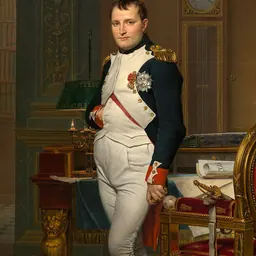
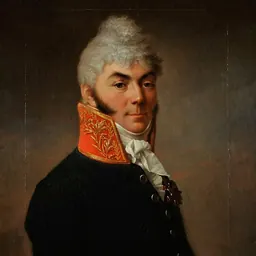

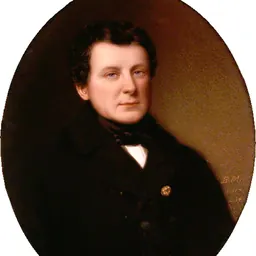

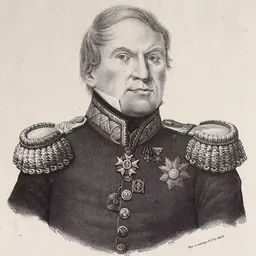

Contemporaries
People whose lives overlapped Józef Napoleon Hutten-Czapski's






Frequently asked questions
Who was Józef Napoleon Hutten-Czapski?
Polish activist and insurgent (1797–1852)
When was Józef Napoleon Hutten-Czapski born?
Józef Napoleon Hutten-Czapski was born on 25 March 1797 in Bydgoszcz.
When did Józef Napoleon Hutten-Czapski die?
Józef Napoleon Hutten-Czapski died on 17 September 1852 in Smogulec.
Sources & further reading
· Wikipedia: Józef Napoleon Hutten-Czapski
· DBpedia: Józef Napoleon Hutten-Czapski
Cite this page
APA: Biography.guide. (2026). Józef Napoleon Hutten-Czapski. https://biography.guide/jozef-napoleon-hutten-czapski/
MLA: "Józef Napoleon Hutten-Czapski." Biography.guide, https://biography.guide/jozef-napoleon-hutten-czapski/.
Chicago: "Józef Napoleon Hutten-Czapski." Biography.guide. https://biography.guide/jozef-napoleon-hutten-czapski/.
Data last updated: 2026-09-20 · Spot an error? Report a correction.
Page generated 2026-09-27 05:21 UTC