
About Josip Belušić
Lived 1847 – 1905 (aged 57). Josip Belušić was an Austrian inventor and teacher, known for Speedometer.
Josip Belušić (; 12 March 1847 – 8 January 1905)
Belušić exhibited his invention at the 1889 Exposition Universell in Paris, renaming it Controllore automatico per vetture. In the same year, the Municipality of Paris announced a public competition, and over 120 patents were registered to compete. His design won as the most precise and reliable and was accepted in June 1890.
Belušić's invention was also the first monitoring device in history, a forerunner of measuring monitoring devices used today in trucks, buses and taxis. Thus, Belušić is also credited as the father of monitoring and surveillance devices.
Early life and education Little is known about Belušić's early life. He was born to Croatian Marin Belušić and Katarina Ružić, Serbian. Belušić spent his childhood in Županići, and was educated in nearby Pazin (5 miles northeast of Županići) and Koper (today Slovenia). In Pazin, the school's priests who tended to him were the first to notice his talent for the natural sciences.
The Koper high school had eight classes. The official languages of the institution were Italian and German. In the upper grades, there were also elective courses in the Slavic language. As a state grammar school, the institution was loyal to the Monarchy and the emperor. According to its curriculum, religious education, Italian, German, Latin and mathematics were studied in all eight grades. Elective courses included Slavic language, drawing and poetry, and starting from 1901 physical education. Slavonic as an elective course was introduced in the school programme in 1867.
In the school year 1865/66, Belušić completed the 6th grade. In that year, 161 students attended the grammar school, of which 149 were Italians and 12 were Slavs. According to the official census and the directory from that year, Josip Belušić was especially praised in the 6th grade, and his class finished with the best results in the class rank.
During his high school education, Belušić also earned himself a scholarship. He received 100 forints from the Province and 40 forints from the provincial governorship. His conduct, grades and attendance were assessed as impeccable throughout his higher education. His courses were Latin, Greek, Italian and German, geography and history, mathematics, physics. As elective courses he chose Slavic language and philosophy.
In 1875, having finished his studies, he was employed as a professor of physics and mathematics at the imperial teacher-training school of Koper, where he taught to the school's male students. Belušić taught both in German and Italian.
He then became the director of the Maritime School of Castelnuovo, near Trieste, and received the title of assistant professor in that institution. The same documentation also shows that in 1875, when he was employed at the Academy, he was a bachelor. Belušić later did marry. However, no further information about his family has been uncovered. It remains unclear where and how he died. For this reason, Belušić is also considered the father of monitoring and surveillance devices.
The original patent is kept in the State Archives of Vienna.
It is unclear what happened with Belušić's invention. The inventor probably had to invest more money to perfect his invention and then put it on the market, but could not finance it, so his work fell into oblivion. Belušić's witnesses for his patent were Edmund J. Ussen and Otto Schiffer. The Exposition attracted twenty-eight million visitors and over sixty-eight thousand exhibitors, including many of the world's noted inventors and artists of the day. Although the main attractions of the exposition were the premiere of the Eiffel Tower and the opening of the colossal pavilion built for the exhibition, the Galerie des machines (by far the largest vaulted building to have yet been built), Belušić's velocimeter also drew attention.
At the same time, the city council of Paris announced a public tender for monitoring the transportation service offered by city carriages. The council was determined to put an end to the constant doubts over the honesty of the coachmen. and three applicants were shortlisted, including Belušić. Field tests were scheduled for December 1889, and, in the end, Belušić's device was chosen because, in addition to measuring speed, it accurately reported the departure time of the carriage, how many times and for how long the carriage stopped.
Later life Little is known about Belušić's later life. He had become a professor of physics and mathematics at the teacher-training college of Koper, where he worked until 1900, and later the director of a maritime school in Italy. It remains unclear, however, where he spent his last years. Some speculate that the Croatian inventor sold his patent rights due to poverty. The Croatian Technical Encyclopedia reports that he died in Trieste.
Don’t just read it —
keep it.
Full-length biographies made to live with: read them, listen on the way to work, watch them tonight.
- E-book
- Audio
- Video
Instant download · yours to keep · every purchase keeps this site free
Important facts
Related people
Same field, nearest in time

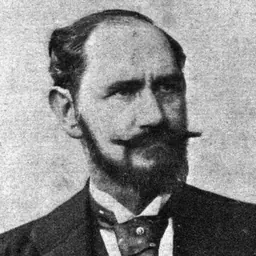

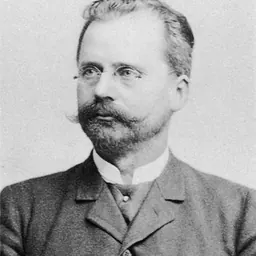

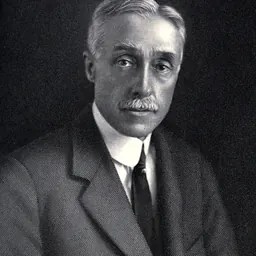
Contemporaries
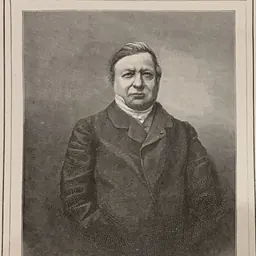
People whose lives overlapped Josip Belušić's





Frequently asked questions
Who was Josip Belušić?
Croatian inventor
When was Josip Belušić born?
Josip Belušić was born on 12 March 1847 in Županići.
When did Josip Belušić die?
Josip Belušić died on 8 January 1905 in Trieste.
What was Josip Belušić's occupation?
Josip Belušić was an inventor and teacher.
What was Josip Belušić known for?
Josip Belušić was known for Speedometer.
What nationality was Josip Belušić?
Josip Belušić was Austrian.
Sources & further reading
Cite this page
APA: Biography.guide. (2026). Josip Belušić. https://biography.guide/josip-belusic/
MLA: "Josip Belušić." Biography.guide, https://biography.guide/josip-belusic/.
Chicago: "Josip Belušić." Biography.guide. https://biography.guide/josip-belusic/.
Data last updated: 2026-09-22 · Spot an error? Report a correction.
Page generated 2026-09-27 05:32 UTC