
Joshua Rose
American engineer/engineering journalist/early American writer on management
About Joshua Rose
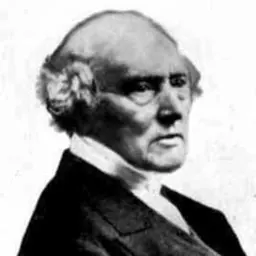
Lived 1845 – 1910 (aged 64–65). Joshua Rose was an American mechanical engineer, inventor, journalist and writer.
Joshua John Rose (1838 – 14 November 1898) was an English-American mechanical engineer, inventor, engineering journalist and early American writer on management. Rose is known for his contributions to the professional literature of mechanical engineering, specifically on tools and machine shop methods and practice.
Life and work Rose was born in London in 1838, the son of engineer James Rose and his wife, Annette. He married Tryphena Sarah Hepburn on Christmas Day 1861 at Ashford, Kent. He became a naturalized citizen in 1872 while working in New York City as a machinist.
Rose filled his first patent for a rock drill on 1869. In the 1870s he started writing on mechanical engineering, publishing one of his first articles in Scientific American in 1875, entitled "Practical Mechanism."
In the late 1880s Rose moved to England, where he settled in Twickenham, 10 miles southwest of the centre of London. There he developed a useful improvement for steam-engine valves, which he patented in 1890. By the late 1890s Rose was back in New York, where in 1898 he wrote the preface of the third edition of his Modern machine-shop practice.
In A History of the American Society of Mechanical Engineers from 1880 to 1915 (1915), Frederick Remsen Hutton recognized Joshua Rose, Egbert P. Watson and Coleman Sellers as notable contributors to the professional literature of mechanical engineering with respect to tools and machine shop methods.
Work
Mechanical Drawing Self-Taught, 1883
In the 1883 preface of "Mechanical Drawing Self-Taught", Rose explained that, the object of the book is to enable the beginner to learn to make simple mechanical drawings without the aid of an instructor, and to create an interest in the subject by giving examples such as the machinist meets with in his every-day workshop practice.
The plan of representing in many examples the pencil lines, and numbering the order in which they are marked, Rose believed to possess great advantages for the learner, since it is the producing of the pencil lines that really proves the study, the inking in being merely a curtailed repetition of the pencilling. Similarly when the drawing of a piece, such, for example, as a fully developed screw thread, is shown fully developed from end to end, even though the pencil lines were all shown, yet the process of construction will be less clear than if the process of development be shown gradually along the drawing.
The word elevation, as applied to mechanical drawing, means simply a view; hence a side elevation is a side view, or an end elevation is an end view.
The circumference of this circle we divide into any number of equidistant divisions, as from 1 to 24. The pitch A B of the spiral or thread is then divided off also into 24 equidistant divisions, as marked on the left hand of the figure; vertical lines are then drawn from the points of division on the circle to the points correspondingly numbered on the lines dividing the pitch; and where line 1 on the circle intersects line 1 on the pitch is one point in the curve. Similarly, where point 2 on the circle intersects line 2 on the pitch is another point in the curve, and so on for the whole 24 divisions on the circle and on the pitch. In this view, however, the path of the spiral from line 7 to line 19 lies on the other side of the cylinder, and is marked in dotted lines, because it is hidden by the cylinder. In the right-hand view, however, a different portion of the spiral or thread is hidden, namely from lines 1 to 13 inclusive, being an equal proportion to that hidden in the left-hand view.
Selected publications Joshua Rose. The Complete Practical Machinist: Embracing Lathe Work, Vise Work, Drills, etc., Philadelphia: H.C. Baird & Co., 1876; 2nd ed. 1885. Joshua Rose. The pattern maker's assistant; embracing lathe work, branch work, core work, sweep work, and practical gear construction; the preparation and use of tools; together with a large collection of useful and valuable tables. New York: D. Van Nostrand Co., 1877. Joshua Rose. Key to Engines and Engine-running: A Practical Treatise Upon the Management of Steam Engines and Boilers..., New York: D. Van Nostrand Co., 1877.(1899) Joshua Rose. The slide valve practically explained. Embracing simple and complete practical demonstrations of the operation of each element in a slide-valve movement, and illustrating the effects of variations in their proportions, by examples carefully selected from the most recent and successful practice. 1880, 2nd ed. 1891. Matéaux, Clara L; Rose, Joshua, edJ. The wonderland of work. New York [etc.] Cassell Pub. Co, 1884. Joshua Rose. Mechanical drawing self-taught : comprising instructions in the selection and preparation of drawing instruments : elementary instruction in practical mechanical drawing : together with examples in simple geometry and elementary mechanism, including screw threads, gear wheels, mechanical motions, engines and boilers. 1883; 1889; 1891; (at gutenberg.org). Joshua Rose. Modern Steam Engines: An Elementary Treatise Upon the Steam Engine, Written in Plain Language; for Use in the Workshop as Well as in the Drawing, 1886; 2nd rev. ed. 1891. Joshua Rose. Modern machine-shop practice: operation, construction, and principles of shop machinery, steam engines, and electrical machinery, Volume I and II, Scribner's, 1887/88; 3rd ed. 1899.
Patents 1869. Patent US87974 for rock drill 1878. Patent US205578 for improvement in chromatic tempering-scales 1890. Patent US205578 for Steam Enginege Valve improvement
Don’t just read it —
keep it.
Full-length biographies made to live with: read them, listen on the way to work, watch them tonight.
- E-book
- Audio
- Video
Instant download · yours to keep · every purchase keeps this site free
Important facts
People in Joshua Rose's life
Named in this biography and alive at the same time


Related people
Same field, nearest in time
Contemporaries
People whose lives overlapped Joshua Rose's


Frequently asked questions
Who was Joshua Rose?
American engineer/engineering journalist/early American writer on management
When was Joshua Rose born?
Joshua Rose was born in 1845.
When did Joshua Rose die?
Joshua Rose died in 1910.
What was Joshua Rose's occupation?
Joshua Rose was a mechanical engineer, inventor, journalist and writer.
What nationality was Joshua Rose?
Joshua Rose was American.
Sources & further reading
· DBpedia: Joshua Rose (engineer)
Cite this page
APA: Biography.guide. (2026). Joshua Rose. https://biography.guide/joshua-rose/
MLA: "Joshua Rose." Biography.guide, https://biography.guide/joshua-rose/.
Chicago: "Joshua Rose." Biography.guide. https://biography.guide/joshua-rose/.
Data last updated: 2026-09-26 · Spot an error? Report a correction.
Page generated 2026-09-27 05:14 UTC