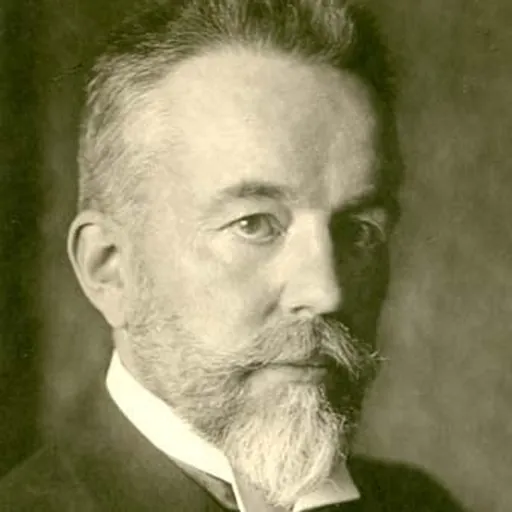
About Aurel Stodola
Lived 1859 – 1942 (aged 83). Aurel Stodola was an Austrian, Hungarian and Czech mechanical engineer, physicist, inventor, university teacher, mechanical technician and engineer, known for Centrifugal compressor, Ellipse Law and Gouy-Stodola theorem.
Aurel Boleslav Stodola (11 May 1859 – 25 December 1942) was a Slovak engineer, physicist, and inventor. He was a pioneer in the area of technical thermodynamics and its applications and published his book Die Dampfturbine (the steam turbine) in 1903. In addition to the thermodynamic issues involved in turbine design the book discussed aspects of fluid flow, vibration, stress analysis of plates, shells and rotating discs and stress concentrations at holes and fillets. Stodola was a professor of mechanical engineering at the Swiss Polytechnical Institute (now ETH) in Zurich. He maintained friendly contact with Albert Einstein.
Education He attended a local primary school in Vrbica, Liptovský Mikuláš. After his first four years, he went to a town called Stráže pod Tatrami (now Poprad) in order to improve his German. There was a strong German speaking community and this practice was very common. He attended secondary education in Levoča, Kežmarok and Košice, where he completed his secondary schooling. He studied on his own as well, especially classics and languages.
In 1876, he moved to Budapest, where he studied two semesters at the Royal Jeseph University in Budapest. He was acknowledged as gifted student and he received a grant. In 1876, he transferred to the Eidgenössische Polytechnische Schule (Federal Polytechnic School), known today as the ETH Zurich. In 1881, he completed his degree in mechanical engineering. After graduation, he went to work in a factory in Budapest for seven months. In 1882/1883, he attended the Technische Hochschule in Charlottenburg (now Technische Universität Berlin).
After this, he volunteered in a technical studio in Paris. He wanted to improve his skills and French, as well. It was important for his future career in Switzerland. After this trip, he began to work in Prague as engineer. He improved his practical engineering and soon became a main engineer.
In 1924 he endowed a foundation with the stated aim "to promote the development of mechanical and electro-technical science in the ETH". This foundation still exists today. was cited by Soviet rocket scientist Fridrikh Tsander in the 1920s. Published in English in 1927 and reprinted many times up to 1945, it was a basic reference for engineers working on the first generation of jet propulsion engines in the United States. Stodola worked closely with industries on the development of the first practical gas turbines, in particular Brown, Boveri & Cie, who built the first gas turbine-powered electric generator in 1939.
Medical equipment
In 1915–1916 Stodola collaborated with German surgeon Ferdinand Sauerbruch to develop an advanced mechanically driven prosthetic arm. This collaboration marked one of the first documented examples of a surgeon and engineer merging efforts. Sauerbruch said, "Henceforth, surgeon, physiologist, and technician (prosthetist/engineer) will have to work together."
Honors
1905 – Honorary degree from Leibniz University Hannover 1908 – Grashof medal from Verein Deutscher Ingenieure Honorary degree from German Technical University in Brno 1929 – Honorary degree from Charles University of Prague 1941 – James Watt International Medal 1941 - Honorary member of the American Society of Mechanical Engineers
Corresponding member of French Academy of Sciences.
Don’t just read it —
keep it.
Full-length biographies made to live with: read them, listen on the way to work, watch them tonight.
- E-book
- Audio
- Video
Instant download · yours to keep · every purchase keeps this site free
Important facts
People in Aurel Stodola's life
Named in this biography and alive at the same time

Related people
Same field, nearest in time


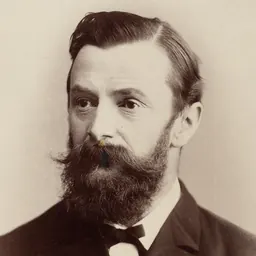
Contemporaries
People whose lives overlapped Aurel Stodola's

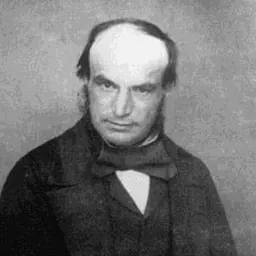
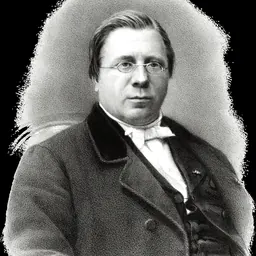
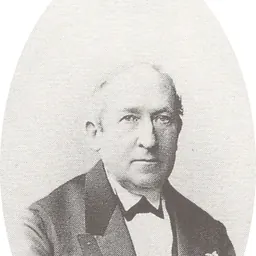

Frequently asked questions
Who was Aurel Stodola?
Slovak scientist (1859–1942)
When was Aurel Stodola born?
Aurel Stodola was born on 10 May 1859 in Liptovský Mikuláš.
When did Aurel Stodola die?
Aurel Stodola died on 25 December 1942 in Zurich.
What was Aurel Stodola's occupation?
Aurel Stodola was a mechanical engineer, physicist, inventor, university teacher, mechanical technician and engineer.
What was Aurel Stodola known for?
Aurel Stodola was known for Centrifugal compressor, Ellipse Law, Gouy-Stodola theorem and Steam turbine.
What nationality was Aurel Stodola?
Aurel Stodola was Austrian, Hungarian and Czech.
Sources & further reading
Cite this page
APA: Biography.guide. (2026). Aurel Stodola. https://biography.guide/aurel-stodola/
MLA: "Aurel Stodola." Biography.guide, https://biography.guide/aurel-stodola/.
Chicago: "Aurel Stodola." Biography.guide. https://biography.guide/aurel-stodola/.
Data last updated: 2026-09-22 · Spot an error? Report a correction.
Portrait: Wikimedia Commons · author & licence
Page generated 2026-09-27 05:02 UTC