
About Joshua Brookes
Lived 1761 – 1833 (aged 71). Joshua Brookes was a British anatomist, zoologist and natural history, known for Fellow of the Royal Society.
Joshua Brookes (24 November 1761 – 10 January 1833) was an English anatomist, surgeon and naturalist. He was a teacher of anatomy in London and the founder of the Brookesian Museum, a large collection of anatomical and zoological specimens regarded as second only to that of John Hunter. He was particularly known for his work in comparative osteology and zoological nomenclature, and was elected a Fellow of the Royal Society in 1819.
Early life
Brookes was born on 24 November 1761, to Joshua Brookes (–1803), a London dealer in birds and exotic animals who operated several menageries, and his first wife, Frances Paul (1737/8–1787). He was their second son and one of twelve children.
Several of Brookes's brothers were involved in the family's animal-dealing business. His brother John Brookes (baptised 1762), known as "Wild Beast Brookes", jointly managed their father's menagerie and later kept a menagerie at the Exeter Exchange. He also supplied Joshua with many of the animal subjects used in his anatomical work.
Education and training
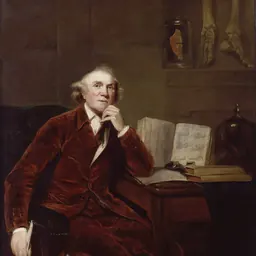
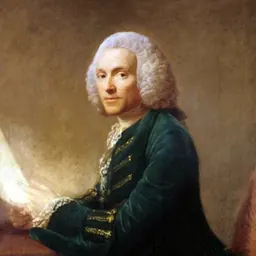
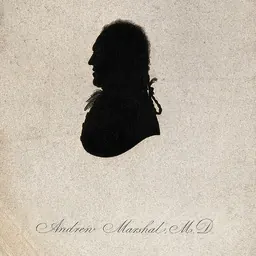
He received a classical education and began his professional studies at the age of sixteen under Magnus Falconer. He subsequently attended lectures on anatomy and surgery in London delivered by Andrew Marshal, William Hewson, John Sheldon and William Hunter. Surviving school exercises dated about 1783 and 1786 identify Brookes as a student at Mr Trubey's Academy in Red Lion Court, Bermondsey Street, London.
Brookes was also a pupil of John Hunter and assisted him in the dissection of an immature female northern bottlenose whale caught in the River Thames in 1783.
After attending the practice of surgeons at London's principal hospitals and public institutions, Brookes received his diploma as a surgeon from the Company of Surgeons.
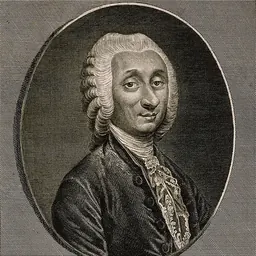
He then went to Paris to improve his knowledge of practical anatomy and surgery, where he attended the practice of Antoine Portal and other surgeons at the Hôtel-Dieu de Paris. He became known as an accurate anatomist and excellent dissector.
Brookes's school declined during the 1820s as the Royal College of Surgeons of England increasingly restricted the certificates it would recognise for candidates seeking its diploma. The College's regulations disadvantaged private anatomy schools, including Brookes's, and contributed to the decline of independent anatomical teaching in London. By the end of the decade, Brookes's school had lost much of its former position, marking the decline of his career as an independent anatomical teacher.
Brookesian Museum
Brookes devoted much of his career to forming the Brookesian Museum, a major private collection of anatomical and zoological specimens closely integrated with his teaching. It served as both a teaching collection and a centre for comparative anatomical study. In his 1828 auction catalogue, Brookes stated that the collection had taken about thirty years to form and had cost £30,000 to establish. The catalogue listed more than 6,000 preparations and recorded their provenance and methods of preparation, particularly for specimens illustrating pathological and comparative anatomy.
The museum occupied the upper two floors of Brookes's house in Blenheim Street. It contained more than 3,000 human specimens, representing both healthy and diseased states and preserved in spirits in jars, including heads, limbs and organs.
Brookes attempted to sell the museum as a complete collection, but the proposed sale failed. A major auction began at his Theatre of Anatomy on 14 July 1828, dispersing part of the collection. The Royal College of Surgeons of England acquired specimens from the sale, while other portions went to medical and university collections. University College London acquired part of the collection in 1828, and the University of Cambridge purchased a considerable part in 1830; Cambridge's osteological specimens were subsequently identified as the "Brookes collection".
The remainder of the museum was offered for sale in 1830. Brookes's Museum Brookesianum, published that year, described this portion as comprising nearly half of the original collection and announced its sale at the Theatre of Anatomy in Blenheim Street, beginning on 1 March 1830 and continuing for 22 evenings, with Saturdays and Sundays excepted. The remaining specimens were dispersed by auction.
Scientific work
Brookes was elected a Fellow of the Royal Society on 18 November 1819. His election certificate described him as distinguished in the osteological branch of comparative anatomy. Furthermore, he was a Fellow of the Zoological Society of London
Brookes's zoological work included the description and naming of animals, particularly in his museum catalogues. In his 1828 catalogue, Brookes introduced the generic names Acinonyx for the cheetah and Mammuthus for the mammoth.
He also used the names Megalocerus for the giant deer and Didermocerus for the Sumatran rhinoceros. The ICZN subsequently corrected the spelling of Megalocerus Brookes, 1828 to Megaloceros and suppressed Didermocerus; Dicerorhinus therefore is the valid name for the latter genus.
In 1828, Brookes introduced the generic name Lagostomus for the animal previously described by Nicolas Desmarest as Dipus maximus, proposing the new specific name Lagostomus trichodactylus. He first presented the name in a paper read to the Zoological Club of the Linnean Society of London on 27 May 1828. A brief synopsis was published later that year in the Zoological Journal. A fuller account appeared in the Transactions of the Linnean Society of London in 1829.
Personal life
Brookes married Mary Wood at Stepney on 29 May 1791; they had no children and later separated. He subsequently had a son, Joshua Brookes (1806–1841), with Elizabeth Sheen. The younger Joshua later became a surgeon in the Royal Navy.
Brookes continued teaching until 1826, when, according to the Dictionary of National Biography, ill health, arising largely from his constant exposure to the atmosphere of the dissecting room, forced him to retire. His pupils and friends subsequently held a dinner in his honour, and his pupils subscribed to a marble bust of him by Robert William Sievier, a former pupil who had studied anatomy under Brookes. The bust was presented to him by the Duke of Sussex.
Death
Brookes died suddenly on 10 January 1833 at Great Portland Street, London. He was buried at St James's Church, Piccadilly.
Legacy
The genus Brookesia was named in honour of Brookes by the zoologist John Edward Gray in 1864.
Brookes's school and museum formed part of the tradition of private anatomical teaching in Georgian and early 19th-century London. His museum catalogues provide evidence of the specimens used in the teaching and study of human and comparative anatomy in the period. Catalogue of the Anatomical and Zoological Museum (1828); Address to the Zoological Club (1828); On a New Genus of the Order Rodentia (1829); Museum Brookesianum (1830); Thoughts on Lessening the Progress of Cholera (1831).
Don’t just read it —
keep it.
Full-length biographies made to live with: read them, listen on the way to work, watch them tonight.
- E-book
- Audio
- Video
Instant download · yours to keep · every purchase keeps this site free
Important facts
People in Joshua Brookes's life
Named in this biography and alive at the same time


Related people
Same field, nearest in time


Contemporaries
People whose lives overlapped Joshua Brookes's





Frequently asked questions
Who was Joshua Brookes?
British scientist
When was Joshua Brookes born?
Joshua Brookes was born on 24 November 1761.
When did Joshua Brookes die?
Joshua Brookes died on 10 January 1833 in London.
What was Joshua Brookes's occupation?
Joshua Brookes was an anatomist, zoologist and natural history.
What was Joshua Brookes known for?
Joshua Brookes was known for Fellow of the Royal Society.
What nationality was Joshua Brookes?
Joshua Brookes was British.
Sources & further reading
Cite this page
APA: Biography.guide. (2026). Joshua Brookes. https://biography.guide/joshua-brookes-anatomist/
MLA: "Joshua Brookes." Biography.guide, https://biography.guide/joshua-brookes-anatomist/.
Chicago: "Joshua Brookes." Biography.guide. https://biography.guide/joshua-brookes-anatomist/.
Data last updated: 2026-09-22 · Spot an error? Report a correction.
Page generated 2026-09-27 05:18 UTC