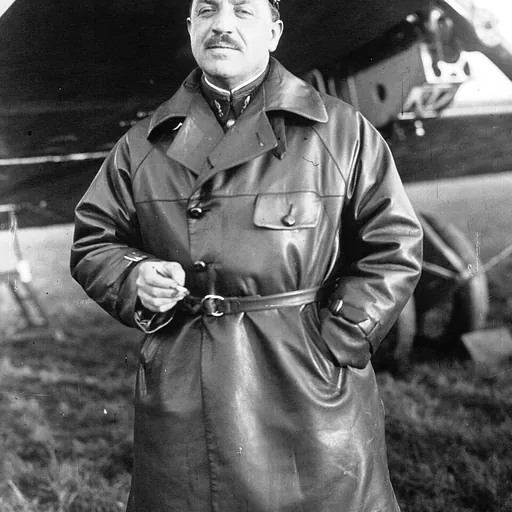
About Joseph Vuillemin
Lived 1883 – 1963 (aged 80). Joseph Vuillemin was a French military personnel and aircraft pilot.
General Joseph Vuillemin (14 March 1883 – 23 July 1963) was a French professional soldier whose early interest in aviation led him into increasingly responsible leadership positions in the Aeronautique Militaire during World War I. Ending the war with extensive decorations, including an unusual double award of the Legion d'honneur, as well as seven aerial victories, he became a dynamic leader of an aerial expedition to Africa in 1933. His climb through the ranks continued until World War II, when he became Chief of Staff of the French Air Force during the first year of World War II.
Early life and entry into military Joseph Vuillemin was born in Bordeaux, France, on 14 March 1883. He began his mandatory military service in November 1904 as an artilleryman. Remaining past his prescribed term of service, he became an Aspirant on 1 October 1909, and was commissioned Sous lieutenant exactly a year later. On 1 October 1912, he was promoted to Lieutenant. He was detached from his regimental duties to attend aviation training on 1 July 1913. On 28 November 1913, he received his Military Pilot's Brevet, and was returned to his regiment. Vuillemin became a flying instructor at Reims; when World War I began, he was sent to Escadrille C.11 as a Caudron bomber pilot.
First World War
On 14 September 1914, Vuillemin was appointed to the Legion d'honneur as a Chevalier, following his participation in the First Battle of the Marne.
The Aeronautique Militaire was aggregating its squadrons into wings dubbed Groupes de Combat or Groupes de Bombardement, these wings usually consisting of four escadrilles; these groups were also being accumulated by fours into Escadres. On 20 February 1918, Commandant Vuillemin was jumped to the command of Escadre 12.
By the time of the ceasefire on 11 November 1918, Joseph Vuillemin's military career was exemplary. Besides the unusual wartime double award of France's highest honor, the Legion d'honneur, he had earned the Croix de Guerre with 10 palmes, three etoiles de vermeil, and two etoiles de argent. Along the way, he had accounted for seven German airplanes shot down. Escadre 12, which he had led from its inception, was twice Mentioned in dispatches and was entitled to wear the Fourragere of the Croix de guerre.
Between 1935 and 1936, he commanded the ‘1er corps aérien’ (1st Air Corps) and, in July 1937, became a member of the ‘Conseil supérieur de l’air’ (Supreme Air Council) before being promoted to ‘général de division aérienne’ (equivalent of air vice-marshal in the RAF) in October of the same year.
Vuillemin (left) with Édouard Daladier and General Victor Bourret on 12 November 1939. At the same time as his appointment to Chief of Staff of the French air force on 18 February 1938, General Vuillemin became ‘vice-président du Conseil supérieur de l’air’ (Vice Chairman of the Supreme Air Council) and Inspector General of Home Air Defence. He was further promoted to the rank of ‘general d’armée aérienne’ (equivalent of air chief marshal in the RAF).
Second World War At the outbreak of the Second World War, he became Chief of the Air Staff, a post he would hold until the Armistice with France (Second Compiègne) in June 1940. During the Battle of France, General Vuillemin repeatedly called for more British squadrons to come to the aid of French forces which were under severe attack from the German Luftwaffe. Commenting to General Edward Spears on 30 May 1940, the British Air Attaché in Paris, Air Commodore Douglas Colyer, criticised certain senior French officers saying that, while they had been very brave pilots in the last war, they were not sufficiently educated to command important formations now. In Colyer's view, included among these was General Vuillemin.
On 12 June 1940, at a meeting of the Anglo French Supreme War Council at Briare, it was reported that a bombing raid by the RAF against Italy the previous day had been thwarted by General Vuillemin, who had ordered lorries to be driven onto the airfield as the bombers were preparing for take-off. He feared that such raids would provoke Italian reprisals, the consequences of which would be disastrous, as the French Air Force was not present in the south. Vuillemin requested that no raids be launched against targets in northern Italy unless these were carried out in response to attacks by the Italians. General Spears, who was present at the conference in his capacity of Winston Churchill's personal representative to the French Prime Minister, wondered why 'if he had bombers to bomb back in retaliation, why not use them now?'
On 24 June 1940, Vuillemin was named Inspector General of the Air Force and given responsibility for the co-ordination of air defence operations. In November 1940, at his own request, he was removed from the active list of serving air force officers.
He died in Lyon on 23 July 1963.
Ranks (approximate British equivalents) 8 March 1933 : Général de Brigade 1 April 1933 : Général de Brigade Aérienne (Air Commodore) 14 October 1936 : Général de Division Aérienne (Air Vice Marshal) 15 October 1936 : Rank and prerogatives of Regional Air Commander (Air Marshal) 24 June 1939 : Général d'Armée Aérienne (Air Chief Marshal) (retrospective effect from 1 July 1937) 24 June 1939 : Commander in Chief of the Air Force (retrospective effect from 22 February 1938)
Decorations
French decorations Légion d'honneur Chevalier - 8 September 1914 Officier - 28 October 1916 Commandeur - 1 May 1920 Grand Officier - 2 July 1931 Grand-Croix - 13 January 1934 Médaille militaire - 17 July 1940 Croix de Guerre 1914–1918 (France) Croix de Guerre des théâtres d'opérations extérieures avec 1 palme Médaille Interalliée de la Victoire Médaille commémorative de la guerre 1914–1918 Médaille Coloniale with « Sahara » « Afrique " bars
Significant foreign decorations Morocco: Commandeur du Ouissam Alaouite Chérifien United Kingdom: Distinguished Service Order, Royal Victorian Order Tunisia: Grand Officier du Nicham iftikhar
The above is largely a translation of the article in the French Wikipedia :fr:Joseph Vuillemin
Endnotes
Don’t just read it —
keep it.
Full-length biographies made to live with: read them, listen on the way to work, watch them tonight.
- E-book
- Audio
- Video
Instant download · yours to keep · every purchase keeps this site free
Important facts
People in Joseph Vuillemin's life
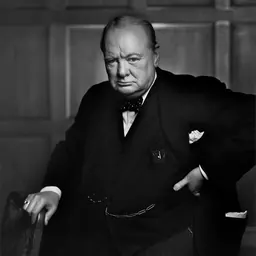
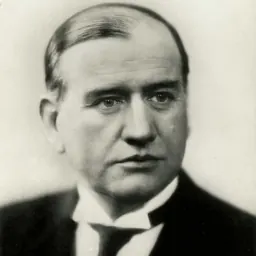
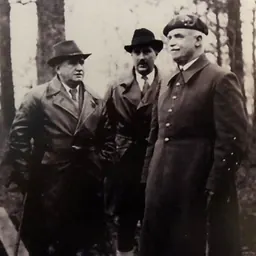
Named in this biography and alive at the same time

Related people
Same field, nearest in time





Contemporaries
People whose lives overlapped Joseph Vuillemin's



Frequently asked questions
Who was Joseph Vuillemin?
French air force general (1883–1963)
When was Joseph Vuillemin born?
Joseph Vuillemin was born on 14 March 1883 in Bordeaux.
When did Joseph Vuillemin die?
Joseph Vuillemin died on 23 July 1963 in 3rd arrondissement of Lyon.
What was Joseph Vuillemin's occupation?
Joseph Vuillemin was a military personnel and aircraft pilot.
What nationality was Joseph Vuillemin?
Joseph Vuillemin was French.
Sources & further reading
Cite this page
APA: Biography.guide. (2026). Joseph Vuillemin. https://biography.guide/joseph-vuillemin/
MLA: "Joseph Vuillemin." Biography.guide, https://biography.guide/joseph-vuillemin/.
Chicago: "Joseph Vuillemin." Biography.guide. https://biography.guide/joseph-vuillemin/.
Data last updated: 2026-09-23 · Spot an error? Report a correction.
Portrait: Wikimedia Commons · author & licence
Page generated 2026-09-27 05:07 UTC