
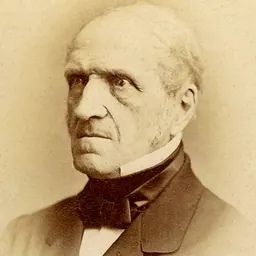
Joseph Taylor
Folk singer from Saxby-All-Saints, North Lincolnshire, England, who became known due to the attention of Percy Grainger
About Joseph Taylor
Lived 1832 – 1910 (aged 77–78). Joseph Taylor was a British singer and bailiff.
Joseph Taylor (10 September 18334 May 1910), was a folk singer from Saxby-All-Saints, Lincolnshire, England, who became the first English folk singer to be commercially recorded
He popularised obscure and unique songs including "Brigg Fair", "Rufford Park Poachers" and "The White Hare", and sang influential versions of well-known songs and ballads such as "Lord Bateman" and "The Sprig of Thyme". His songs were arranged by classical composers including Grainger and Frederick Delius, and recorded by folk revival musicians beginning in the British folk revival of the 1960s.
His singing was recorded by Grainger onto wax cylinders, which have been digitised and made available online by the British Library Sound Archive as part of the Percy Grainger Collection.
Life and family
Early life Taylor was born in the village of Binbrook, Lincolnshire, to James Taylor (1806-1857) from Fotherby, Lincolnshire and Mary Ann Smith (1811-1898) from Barnoldby le Beck, Lincolnshire. He studied arboriculture, and eventually was in charge of a large estate comprising two villages, several farms and some woods.
Marriage and family Taylor married Eliza Hill (1827-1909), who came from the village of Huttoft, and had seven children: James (1858-1915); Betsy (1860-1929); John (1864-1947); Joseph (1864-1880), who drowned in the River Ancholme at the age of 15; Anne (1867-1937); Frederick (1869-?); and Mary (1871-1967). Mary was interviewed about her father's singing by Peter Kennedy in 1953. The recording is kept by the British Library and is available online.
Percy Grainger
Percy Grainger first came into contact with Joseph Taylor when he saw him perform in the North Lincolnshire Musical Competition in 1905, which he had entered reluctantly and won with his version of ‘Creeping Jane’. Grainger first noted down ‘Brigg Fair’ from Taylor when he and Frank Kidson were collecting songs from the competitors after the competition. Grainger visited Taylor the following year when he won the competition again, singing ‘Brigg Fair’ and ‘William Taylor’. In July 1906, Grainger invited Taylor to Brigg so he could record him with the phonograph. Grainger returned again in 1908 and Taylor was again recorded. In 1908, Grainger was instrumental in the Gramophone Company inviting Taylor to London, where a dozen of his songs were recorded, with nine subsequently being released on a series of seven gramophone discs, on the His Master's Voice label, In the accompanying booklet, Grainger wrote: although his daughter Mary stated that he simply hummed along rather than sang out loud.
Don’t just read it —
keep it.
Full-length biographies made to live with: read them, listen on the way to work, watch them tonight.
- E-book
- Audio
- Video
Instant download · yours to keep · every purchase keeps this site free
Important facts
People in Joseph Taylor's life
Named in this biography and alive at the same time
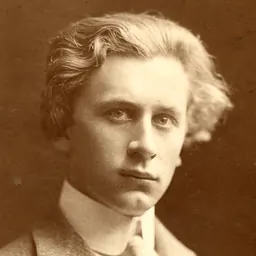

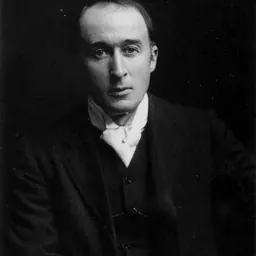
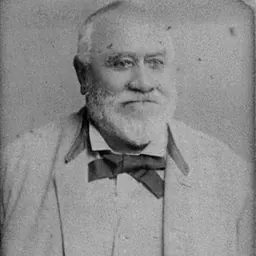
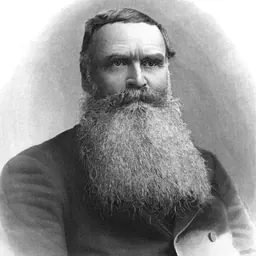
Related people
Same field, nearest in time

Contemporaries
People whose lives overlapped Joseph Taylor's



Frequently asked questions
Who was Joseph Taylor?
folk singer from Saxby-All-Saints, North Lincolnshire, England, who became known due to the attention of Percy Grainger
When was Joseph Taylor born?
Joseph Taylor was born in 1832 in North Lincolnshire.
When did Joseph Taylor die?
Joseph Taylor died on 4 May 1910 in Lincolnshire.
What was Joseph Taylor's occupation?
Joseph Taylor was a singer and bailiff.
What nationality was Joseph Taylor?
Joseph Taylor was British.
Sources & further reading
· DBpedia: Joseph Taylor (folk singer)
Cite this page
APA: Biography.guide. (2026). Joseph Taylor. https://biography.guide/joseph-taylor-singer/
MLA: "Joseph Taylor." Biography.guide, https://biography.guide/joseph-taylor-singer/.
Chicago: "Joseph Taylor." Biography.guide. https://biography.guide/joseph-taylor-singer/.
Data last updated: 2026-09-20 · Spot an error? Report a correction.
Page generated 2026-09-27 05:23 UTC