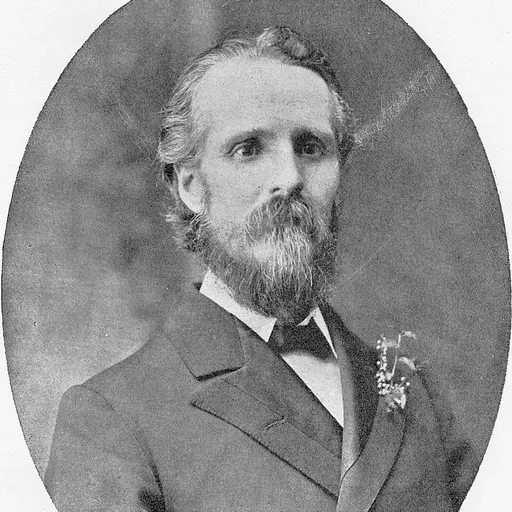
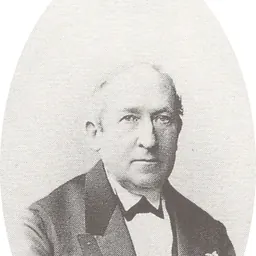
Joseph Taylor
British mining engineer
About Joseph Taylor
Lived 1858 – 1942 (aged 84). Joseph Taylor was a mining engineer.
Joseph Taylor (3 May 1858 – 24 July 1942) was an English-born mining engineer and Unitarian minister. After emigrating to New Zealand in 1894, he discovered a coal field and established a coal mine at Pūponga in Golden Bay. In 1902, he was sentenced to two years' imprisonment for fraudulently altering his mining company's books of account.
Early life
Taylor was born in Audley, Staffordshire, England, in 1858, the son of George Taylor and Martha Dodd. His father was a coal miner who later became a farmer. As a youth, Joseph Taylor worked in the coal mine where his father was foreman. they would go on to have four sons and two daughters.
Taylor was trained as a minister of the United Methodist Free Church but converted to Unitarianism in 1882. He served as minister of the Unitarian churches in Barnard Castle, Durham (1882–1884) and in South St. Mungo Street, Glasgow (1884–1885). He did not find favour with either congregation, and in 1885 the Glasgow church passed a resolution that Taylor's services be dispensed with. His career as a Unitarian minister ended shortly afterwards, and he and his family returned to Audley in Staffordshire. Taylor appears to have reverted to theism soon afterwards. He also developed a philosophy which he called "Absolutism" or "Absolute Philosophy", which he regarded as his life's most important work.
Taylor returned to the study of mining engineering and geology, and by 1892 was lecturing on the subject. In 1893 he was described as a certified teacher of mining, and a mining lecturer under the Staffordshire County Council. He read a newspaper account of coal production in New Zealand, which may have influenced his decision to emigrate there. Taylor soon discovered a coal field in the settlement of Pūponga, and established the Puponga Coal & Gold Mining Company.
In 1902, by which time Taylor and his family had moved to Nelson, he was prosecuted on several charges of fraudulently altering his mining company's books of account. Although his defence was that the problems were due to disorganised bookkeeping practices rather than dishonesty, he was found guilty on one charge and was sentenced to two years' imprisonment with hard labour. A petition seeking early remission of his prison sentence attracted several hundred signatures from Nelson residents, but was unsuccessful. He built onto his house in Nelson a hall which he called the "Universal Institute", where he gave lectures on these topics. He also patented a design for an airship that was never built.
Death Taylor died in Wellington on 24 July 1942, aged 84.
Don’t just read it —
keep it.
Full-length biographies made to live with: read them, listen on the way to work, watch them tonight.
- E-book
- Audio
- Video
Instant download · yours to keep · every purchase keeps this site free
Important facts
People in Joseph Taylor's life
Named in this biography and alive at the same time
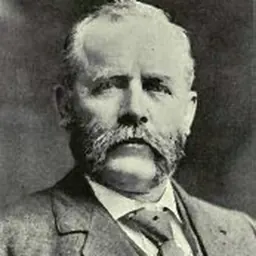

Related people
Same field, nearest in time
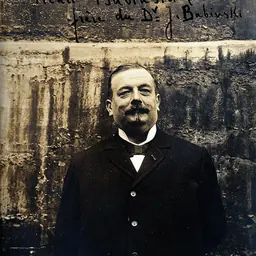
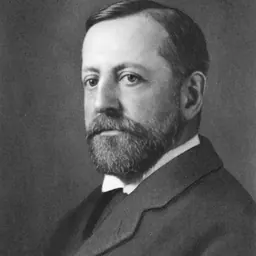

Contemporaries
People whose lives overlapped Joseph Taylor's


Frequently asked questions
Who was Joseph Taylor?
British mining engineer (1858–1942)
When was Joseph Taylor born?
Joseph Taylor was born on 3 May 1858.
When did Joseph Taylor die?
Joseph Taylor died on 24 July 1942.
What was Joseph Taylor's occupation?
Joseph Taylor was a mining engineer.
Sources & further reading
· DBpedia: Joseph Taylor (mining engineer)
Cite this page
APA: Biography.guide. (2026). Joseph Taylor. https://biography.guide/joseph-taylor-mining-engineer/
MLA: "Joseph Taylor." Biography.guide, https://biography.guide/joseph-taylor-mining-engineer/.
Chicago: "Joseph Taylor." Biography.guide. https://biography.guide/joseph-taylor-mining-engineer/.
Data last updated: 2026-09-20 · Spot an error? Report a correction.
Page generated 2026-09-27 05:10 UTC