
Joseph Radetzky von Radetz
Czech nobleman and Austrian general
About Joseph Radetzky von Radetz
Lived 1766 – 1858 (aged 91). Joseph Radetzky von Radetz was an Austrian military personnel, military officer, military leader, politician and general field marshal.
Johann Josef Wenzel Anton Franz Karl, Graf Radetzky von Radetz (2 November 1766 – 5 January 1858) was a Czech nobleman and Austrian field marshal. He served as chief of the general staff in the Habsburg monarchy during the later period of the Napoleonic Wars and contributed to the Trachenberg Plan and the Leipzig Campaign, which led to the Battle of Leipzig. Afterwards, he embarked on military reforms of the Austrian army. He was known among his troops by the sobriquet 'Vater Radetzky' (Father Radetzky). He commanded the Austrian forces at the Battle of Custoza in 1848 and the Battle of Novara in 1849 during the First Italian War of Independence. Johann Strauss I's Radetzky March was commissioned to commemorate Radetzky's victory at the Battle of Custoza.
Early years
Radetzky, a titled Graf ('Count'), was born into a noble Bohemian military family of Czech origin at Chateau Třebnice near Sedlčany in Bohemia (now part of the town). His father, Count Peter Eusebius Radetzky von Radetz (1732–1766) died shortly after his birth, while his mother, Baroness Marie Venantia Anna Barbara Josepha (1738–1772), died while he was still a child. Orphaned at an early age Radetzky was educated by his grandfather, and after the latter's death, he continued at the Theresa Academy in Vienna. The academy was dissolved during his first year's residence in 1785, and Radetzky became a cadet in the Austrian Army. The following year he became an officer, and in 1787 was promoted to first lieutenant in a cuirassier regiment. He served as an adjutant to both Count von Lacy and Field Marshal von Laudon during the Austro-Turkish War of 1787–1791 where he was present at the Siege of Belgrade, and in the Austrian Netherlands from 1792 to 1795.
In 1798, he married Countess Franziska von Strassoldo-Grafenberg from Tržič, Carniola (now in Slovenia). On her mother's side, she was a descendant of the Austrian House of Auersperg, which ruled one of the hereditary Habsburg duchies in what is now Slovenia. They had five sons and three daughters, only two of whom outlived their father. Radetzky also had a longstanding romantic relationship with his Italian mistress, Giuditta Meregalli of Sesto San Giovanni. She was 40 years his junior and bore him four children, all of whom took his name and were recognized by Radetzky. Meregalli received extensive letters from him, written during his battles. He was a devout lifelong Roman Catholic.
Napoleonic wars The Declaration of Victory After the Battle of Leipzig by Johann Peter Krafft. Aftermath of the Battle of Leipzig
In 1795 Radetzky fought on the Rhine. The following year he served with Johann Beaulieu against Napoleon in Italy, but disliked the indecisive "cordon" system of warfare which Count von Lacy had instituted and other Austrian generals imitated. His personal courage was conspicuous. At the Battle of Fleurus (1794) he led a party of cavalry through the French lines to discover the fate of Charleroi, at the Battle of Voltri he was in the thick of the action and roused the troops to victory and at Valeggio sul Mincio in 1796, with a few hussars, he rescued Beaulieu from the enemy. Promoted to major, Radetzky was made head of the pioneer corps, a unit responsible for road and bridge building which he transformed into one of the most elite units in the army. He took part in Dagobert Wurmser's Siege of Mantua campaign, which ended in the fall of that fortress. During the four and a half month siege, Radetzky impressed everyone with his determination and defensive tactics, leading sorties and erecting defensive fortifications at San Giorgio and in front of the Tore Ceresa. As lieutenant-colonel and colonel, his unit was expanded and he displayed bravery and skill in the battles of Trebbia and Novi (1799), winning praise from his superiors for his leadership during attacks at Trebbia and Novi (1799), for which he received praise from his superiors. At the Battle of Marengo, as colonel on the staff of Melas, he was hit by five bullets, after endeavouring on the previous evening to bring about modifications in the plan suggested by the "scientific" Anton von Zach. He was then transferred to take command of a regiment in Germany where he distinguished himself at the Battle of Hohenlinden. In 1801 Radetzky was made a Knight of the Military Order of Maria Theresa.
In 1805, on the march to Ulm, he received news of his promotion to major-general and his assignment to a command in Italy under the Archduke Charles of Austria. He thus took part in the failed Battle of Caldiero and was highly critical of the way in which the campaign had been conducted (1805). Peace provided a short respite, which he spent in studying and teaching the art of war. In 1809 he distinguished himself in rearguard actions at Abensberg and led a brigade in V Corps during the Battle of Eckmühl. Promoted lieutenant field marshal, he commanded a division in IV Corps at the Battle of Wagram. In 1810 he was created a Commander of the Order of Maria Theresa and became Inhaber of the 5th Radetzky Hussars. and masking their action as "repression of banditry," there was little danger of it acquiring international resonance. From 1849, Radetzky introduced public caning as a form of punishment, the death penalty for armed uprising and life sentences for plotting revolutionary activities. The Belfiore martyrs, Luigi Dottesio and Amatore Sciesa were among the many who were executed for treason.
Death
Josef Wenzel Graf Radetzky of Radetz died from pneumonia on 5 January 1858 in Milan. The Emperor wished him to be buried in the Capuchin crypt (the Imperial Crypt in Vienna); however, Radetzky had bequeathed his earthly remains, and the right to bury him, to Joseph Gottfried Pargfrieder, an army supplies merchant and land owner, who decades earlier had settled his debts.
On 19 January 1858, Radetzky was buried at the Heldenberg Memorial site (Gedenkstätte Heldenberg) in Lower Austria, an open-air pantheon with warrior statues celebrating the heroes of Austrian military history from Middle Ages to the 19th century (Heldenberg literally translates as "Heroes Mountain"). Radetzky lies buried in a crypt under a monumental obelisk in the central part of the pantheon, together with Field Marshal Maximilian von Wimpffen and Pargfrieder himself.
Legacy In military history Radetzky is highly regarded as a brilliant field marshal, while some social historians consider his role as a viceroy as the point of no return in the troubled relationship between Austria and the Italian population. Radetzky was the namesake of several Austrian and Austro-Hungarian Navy warships, including the screw frigate SMS Radetzky, which fought Italy in the Third Italian War of Independence, and the SMS Radetzky, the lead ship of the Radetzky-class of pre-dreadnought battleships.
The Radetzky March (German: Radetzkymarsch) is a military march composed by Johann Strauss (senior) that was first performed on August 31, 1848, to celebrate the victory of the Austrian Empire under Field Marshal Radetzky von Radetz over Italian forces at the Battle of Custoza.
Honours He received the following orders and decorations:
Ancestry
Works Joseph Radetzky von Radetz: Denkschriften militärisch-politischen Inhalts aus dem handschriftlichen Nachlass des k.k. österreichischen Feldmarschalls Grafen Radetzky. Stuttgart: J. G. Cotta, 1858
Correspondence Joseph Radetzky von Radetz: Briefe des Feldmarschalls Radetzky an seine Tochter Friederike 1847–1857; aus dem Archiv der freiherrlichen Familie Walterskirchen hrsg. von Bernhard Duhr: Festschrift der Leo-Gesellschaft zur feierlichen Enthüllung des Radetzsky-Denkmals in Wien. Wien: J. Roller, 1892. These are Radetzky's letters to his daughter Friederike Radetzky von Radetz, Gräfin Wenckheim, published to celebrate the unveiling of the Radetzky monument in Vienna.
Don’t just read it —
keep it.
Full-length biographies made to live with: read them, listen on the way to work, watch them tonight.
- E-book
- Audio
- Video
Instant download · yours to keep · every purchase keeps this site free
Important facts
People in Joseph Radetzky von Radetz's life
Named in this biography and alive at the same time
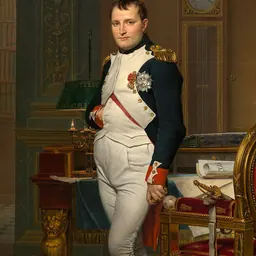

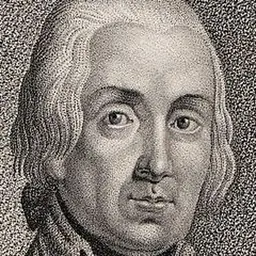

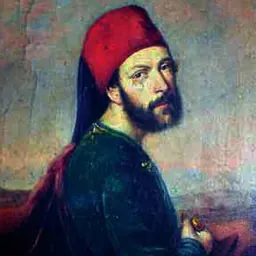
Related people
Same field, nearest in time
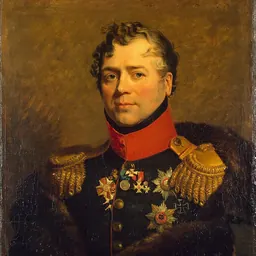


Contemporaries
People whose lives overlapped Joseph Radetzky von Radetz's




Frequently asked questions
Who was Joseph Radetzky von Radetz?
Czech nobleman and Austrian general (1766-1858)
When was Joseph Radetzky von Radetz born?
Joseph Radetzky von Radetz was born on 2 November 1766 in Třebnice.
When did Joseph Radetzky von Radetz die?
Joseph Radetzky von Radetz died on 5 January 1858 in Milan.
What was Joseph Radetzky von Radetz's occupation?
Joseph Radetzky von Radetz was a military personnel, military officer, military leader, politician and general field marshal.
What nationality was Joseph Radetzky von Radetz?
Joseph Radetzky von Radetz was Austrian.
Sources & further reading
· Wikipedia: Joseph Radetzky von Radetz
· DBpedia: Joseph Radetzky von Radetz
Cite this page
APA: Biography.guide. (2026). Joseph Radetzky von Radetz. https://biography.guide/joseph-radetzky-von-radetz/
MLA: "Joseph Radetzky von Radetz." Biography.guide, https://biography.guide/joseph-radetzky-von-radetz/.
Chicago: "Joseph Radetzky von Radetz." Biography.guide. https://biography.guide/joseph-radetzky-von-radetz/.
Data last updated: 2026-09-26 · Spot an error? Report a correction.
Page generated 2026-09-27 05:14 UTC