
About Joseph Potter
Lived 1756 – 1842 (aged 85–86). Joseph Potter was a British architect.
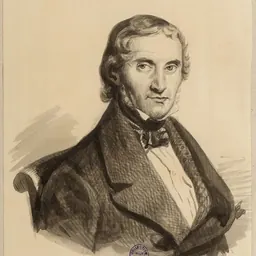
Joseph Potter (1756–1842) was an English architect and builder from Lichfield, Staffordshire in the United Kingdom. Potter had a considerable practice in Staffordshire and its neighbouring counties in the late eighteenth and early nineteenth centuries. Potter lived in Pipehill, south-west of Lichfield, and had his office in St John's Street. Joseph Potter's son, Joseph Potter Jnr, took over his father's practice after his death and went on to design many of his buildings in the late nineteenth century.
Biography
Early in Joseph Potter's career as an architect, he was employed by James Wyatt (a prominent architect at the time) to supervise the alterations to Lichfield Cathedral in 1788–93 and Hereford Cathedral in 1790–93. In this period, he also worked under Wyatt in the repair to St Michael's Church, Coventry (now St Michael's Cathedral) in 1794 and the rebuilding of Plas Newydd, Anglesey for the 1st Marquess of Anglesey. At Plas Newydd, it is thought Potter is solely responsible for the design and build of the Gothic chapel.
Potter became the established architect at Lichfield Cathedral, overseeing repairs to the south-west spire in 1794, the restoration of the vaults in the north transept in 1795–97 and the restoration of the west face of the cathedral in 1820–22. Potter was the county surveyor of Staffordshire for 45 years until he died in 1842. Potter was also an engineer for the Grand Trunk Canal Company. 1802 – Judge's House, County Buildings, Stafford 1816 – Causeway Bridge, Bird Street, Lichfield 1818 – School House, Market Place, Penkridge 1818 – St Michael's Church (now Cathedral), Coventry (restoration) 1818 – Staffordshire General Lunatic Asylum, Stafford 1819–20 – Christ Church, Burntwood 1820–22 – Lichfield Cathedral (restoration to west front) 1822 – Caernarfon Baths & Assembly Rooms (now part of Bangor University) 1824 – Chetwynd Bridge, Alrewas 1826–27 – Freeford Hall, nr Lichfield, (enlarged for William Dyott) 1826–29 – St Mary's Church, Bramall Lane, Sheffield 1826–31 – Beaudesert House (alterations to gothic hall) 1829–30 – High Bridge, Mavesyn Ridware 1829–30 – St John Baptist Church, Tamworth 1832 – Sts Peter & Paul Church, Newport 1833–34 – Wadsley Church, Sheffield 1835 – Holy Cross Church, Lichfield 1835–38 – St Mary's RC College, New Oscott
Gallery
Don’t just read it —
keep it.
Full-length biographies made to live with: read them, listen on the way to work, watch them tonight.
- E-book
- Audio
- Video
Instant download · yours to keep · every purchase keeps this site free
Important facts
People in Joseph Potter's life
Named in this biography and alive at the same time


Related people
Same field, nearest in time


Contemporaries
People whose lives overlapped Joseph Potter's





Frequently asked questions
Who was Joseph Potter?
British architect
When was Joseph Potter born?
Joseph Potter was born in 1756.
When did Joseph Potter die?
Joseph Potter died on 18 August 1842 in Lichfield.
What was Joseph Potter's occupation?
Joseph Potter was an architect.
What nationality was Joseph Potter?
Joseph Potter was British.
Sources & further reading
· DBpedia: Joseph Potter (architect)
Cite this page
APA: Biography.guide. (2026). Joseph Potter. https://biography.guide/joseph-potter/
MLA: "Joseph Potter." Biography.guide, https://biography.guide/joseph-potter/.
Chicago: "Joseph Potter." Biography.guide. https://biography.guide/joseph-potter/.
Data last updated: 2026-09-20 · Spot an error? Report a correction.
Page generated 2026-09-27 05:33 UTC