
About Joseph Parrish Thompson
Lived 1819 – 1879 (aged 60). Joseph Parrish Thompson was an American writer, theologian, pastor, editor and congregationalist, known for Broadway Tabernacle.
Joseph Parrish Thompson (1819–1879) was an American abolitionist and Congregationalist minister. He was pastor of the Broadway Tabernacle Church in New York from 1845 to 1871, (also known as Broadway United Church of Christ and Second Free Presbyterian Church). His major life accomplishments include founding The Independent, an anti-slavery religious weekly started in 1848, contributing and managing The New Englander (later re-named the Yale Review), being a member of the committee to create the New York Metropolitan Museum of Art, played a major role in the development of 20 Congregational churches in Manhattan and Brooklyn. and assisted the Treaty of Berlin with the religious liberty clause.
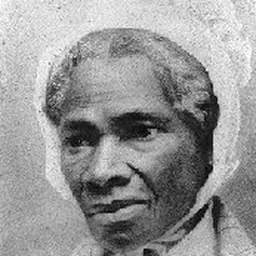
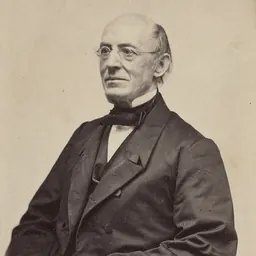
He was called to the pastoral charge of the Broadway Tabernacle church, at one time the largest building in New York City, in 1845. He served there as pastor from 15 April of that year until 1871. Dr. Thompson preached the church's anti-slavery beliefs, supporting women's suffrage (voting) and promoting the abolition of alcoholic drinks. He frequently preached to a congregation of 2,500 parishioners. Black pastors were invited as guest preachers. William Lloyd Garrison, Frederick Douglass, and Sojourner Truth spoke at the church. Rioters tried to burn the church and Dr. Thompson's home in 1863, but they were stopped by members of the congregation. A Confederate sympathizer attempted to shoot Dr. Thompson during a worship service because of his deep loyalty to the Union. During his time at the Broadway Tabernacle, he also played a major role in the development of 20 Congregational churches in Manhattan and Brooklyn. Dr. Thompson convened the first national meeting of Congregational churches in Albany in 1852. About 500 ministers and delegates from 17 different states attended this historical gathering. Thompson supported mission activities around the world. The church carried out educational and religious activities in poor neighborhoods of New York City, including Hell's Kitchen, where it established the Bethany Mission in 1868. He also served as manager of the American Congregational Union and of the American Home Missionary Society.
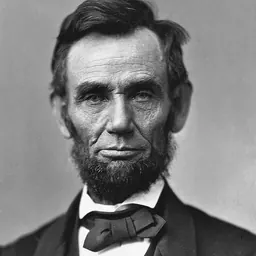
Dr. Thompson often traveled to Washington, DC, where he spoke with President Abraham Lincoln about issues related to the Civil War. Thompson collaborated further with President Lincoln through his work as president of the Christian Union Commission (also known as the American Union Commission). Doctor Thompson's address "Revolution Against Free Government, Not A Right, But A Crime" about the rights of man and the principles of free government, delivered before the Union League Club in 1884 is considered instrumental to the club's goal of supporting the Union and abolition. The Union Leagues were a group of men's clubs established during the American Civil War to promote loyalty to the Union, the Republican Party, and the policies of Abraham Lincoln. The founders aimed to win the political governing elite over to support of the Union and abolition. They also believed that a centralized government was essential to their prosperity. Members of The Union League Club were instrumental in establishing The Metropolitan Museum of Art in 1870, Dr. Thompson was a member of the committee and founder of the museum. He was one of the speakers at the initial meeting held to discuss its foundation.
His son, Sgt John Hanson Thompson died during the civil war. He was a member of the Union Army Co. A; 106th Regiment, New York Infantry (Sergeant). Dr. Thompson wrote a book of him entitled The Sergeant's Memorial, by his Father. His son was 21 when he died.
After President Lincoln's assassination, Mary Todd Lincoln gave Dr. Thompson one of the president's canes. He, in turn, left it to the New York Historical Society. This walking cane had been the property of Henry Clay of Kentucky. He had received it from Judge William H. Robinson of Missouri, Robinson had gifted it to Mr. Cassius M. Clay of Kentucky, and Mr. Clay had given it to President Lincoln. The president's widow gave it to Rev. Dr. Thompson, "as a friend who her husband greatly honored." He also delivered a notable eulogy for the President before the Union League Club. He spoke French and German very well, and frequently had occasion to lecture in those languages in the public addresses which he delivered in Europe.
In 1878, influenced by Dr. Thompson, the Berlin Congress inserted a religious liberty clause in the Treaty of Berlin, based on An Essay Toward Principles of International law to Govern the Intercourse of Christian with Non-Christian Peoples. This essay was presented at the Conference of the "Association for the Reform and Codification of the Law of Nations", at Bremen in September 1876.
From 1873 until his death in 1879 he lived in Berlin.
American Union Commission (Christian Union Commission) The American Union Commission was formed in 1864 by Reverend Joseph P. Thompson, D.D., and Reverend William I. Buddington, D.D. when they visited Tennessee as delegates of the Christian Commission. During the visit, both witnessed the terrible conditions of the country, and saw the great necessity of forming an organization to aid in rebuilding the places hurt by war, as well as the need of help to those who had suffered from it. They consulted with Andrew Johnson, then military Governor of Tennessee, who agreed with them on its importance. The reverends then returned to New York to form a partial plan and discussed it with leading citizens of the city. After the plan was set forth, they met with President Lincoln personally who approved the plan enthusiastically and participated in the proposed constitution. The War Department then gave the commission the same facilities of transportation it had awarded to the Sanitary and Christian Commissions. After the death of President Lincoln, Andrew Johnson succeeded as President of the United States, and continued supporting the commission.
Works Joseph Parrish Thompson was the author of a number of works, including:
The Right and Necessity of Inflicting the Punishment of Death for Murder (1842) The Fugitive Slave Law: Tried by the Old and New Testaments (1850) Photographic Views of Egypt, Past and Present (1856) The Christian Graces (1859) Constitution of the African Civilization Society: Together With the Testimony of Forty Distinguished Citizens of New York and Brooklyn (1861) The Sergeant's Memorial (1863) The Psalter and the Sword (1863) Christianity and Emancipation, Or, The Teachings and the Influence of the Bible Against Slavery (1863) Revolution Against Free Government - Not a Right But a Crime (1864) Bryant Gray (1864) The Holy Comforter: His Person and His Work (1866) Man in Genesis and Geology (1870), a work addressing issues of science and faith in the light of Darwinism The Theology of Christ: From His Own Words (1871) Church and state in the United States: with an appendix on the German population (1873) Lucretius or Paul: Materialism and Theism Tested by the Nature and the Needs of Man (1875) Let the Cannon Blaze Away (1876), six lectures that were given in five leading cities in Europe on the United States' centennial The Workman: His False Friends and His True Friends (1879) "No slavery in Nebraska. The voice of God against national crime" (1854)
Don’t just read it —
keep it.
Full-length biographies made to live with: read them, listen on the way to work, watch them tonight.
- E-book
- Audio
- Video
Instant download · yours to keep · every purchase keeps this site free
Important facts
Family & relationships
People in Joseph Parrish Thompson's life
Named in this biography and alive at the same time





Related people
Same field, nearest in time
Contemporaries
People whose lives overlapped Joseph Parrish Thompson's




Frequently asked questions
Who was Joseph Parrish Thompson?
Congregationalist minister (1819-1879)
When was Joseph Parrish Thompson born?
Joseph Parrish Thompson was born on 7 August 1819 in Philadelphia.
When did Joseph Parrish Thompson die?
Joseph Parrish Thompson died on 20 September 1879 in Berlin.
What was Joseph Parrish Thompson's occupation?
Joseph Parrish Thompson was a writer, theologian, pastor, editor and congregationalist.
What was Joseph Parrish Thompson known for?
Joseph Parrish Thompson was known for Broadway Tabernacle.
What nationality was Joseph Parrish Thompson?
Joseph Parrish Thompson was American.
Sources & further reading
· Wikipedia: Joseph Parrish Thompson
· DBpedia: Joseph Parrish Thompson
Cite this page
APA: Biography.guide. (2026). Joseph Parrish Thompson. https://biography.guide/joseph-parrish-thompson/
MLA: "Joseph Parrish Thompson." Biography.guide, https://biography.guide/joseph-parrish-thompson/.
Chicago: "Joseph Parrish Thompson." Biography.guide. https://biography.guide/joseph-parrish-thompson/.
Data last updated: 2026-09-22 · Spot an error? Report a correction.
Page generated 2026-09-27 05:19 UTC