
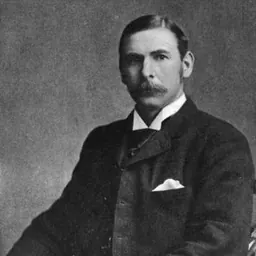
Joseph Lonardo
Sicilian emigrant to the United States who became the first crime boss of the Cleveland crime family, which he structured from a competing number of organized crime gangs
About Joseph Lonardo
Lived 1884 – 1927 (aged 42). Joseph Lonardo was an Italian crime boss.
Joseph Lonardo (; October 20, 1884 – October 13, 1927), also known as "Big Joe", was an Italian mobster in the United States, who became the first crime boss of the Cleveland crime family, which he structured from a number of competing organized crime gangs. When national Prohibition began in 1920, Lonardo became a dealer in corn sugar, an essential ingredient in the manufacture of corn whiskey. Lonardo became a "sugar baron" by driving other legitimate corn sugar merchants out of business, encouraging home distillation, and using intimidation, murder, and theft to eliminate or drive his criminal competitors out of business.
Lonardo transformed his gang, the Mayfield Road Mob, into a powerful organized crime family. He had the support of the D'Aquila crime family of New York City, and engaged in widespread bribery of local judges, police, and politicians. His criminal organization's reliance on low-quality corn whiskey led to a drop in revenues when consumers began favoring better quality, illegally imported liquor. He began demanding unquestioning loyalty while taking little risk, alienating many bootleggers, home distillers, and organized crime figures.
Lonardo's control of the Cleveland mafia was usurped in 1927 by underboss Salvatore "Black Sam" Todaro and the Porrello brothers while Lonardo was out of the country. When Lonardo returned to Cleveland, he attempted to regain control of the Cleveland mafia. His bodyguards were arrested as suspects in the Yorkell and Brownstein murders, leaving Lonardo unprotected. On October 13, 1927, he was murdered in a Porrello barber shop, likely on the orders of "Black Sam" Todaro. His death sparked Cleveland's Corn Sugar War.
Early life Lonardo was born October 20, 1884, in Licata, Sicily, to Antonia ( Verdi) and Angelo Lonardo. He had three brothers, Dominic, Frank, and John, and a sister. Angelo Porrello operated a sulfur mine near Licata, and the four Lonardo sons worked alongside Porrello's seven sons in the mine.
Lonardo emigrated from Italy to the United States, entering the country on February 4, 1901. He settled in New York City's Little Italy neighborhood, and his three brothers and his sister emigrated to the United States soon thereafter.
Lonardo moved to Cleveland, Ohio, in 1905, living on La Grange Avenue in the Hough neighborhood, then at 923 Orange Avenue by 1916, and imprisoned for 22 months in the Ohio State Reformatory.Efn|Another source says he only spent a year in prison. but a grand jury declined to indict him. Police suspected he was involved in a number of robberies and nationally throughout the United States on January 16, 1920. Once stockpiles of alcohol were consumed, Corn sugar was key to the manufacture of corn whiskey. Corn whiskey was usually made with cornmeal or unground corn mixed with rye as the mash. Corn sugar could not only be substituted for grain as the mash ingredient but also permitted faster production of the final liquor. Control of the corn sugar industry as well as the distribution of illegal liquor was critical to anyone seeking to dominate the illegal liquor industry.
Lonardo essentially established a cottage industry in the production of illegal corn whiskey. He and his brothers used their profits from previous criminal activities to invest heavily in corn sugar manufacturing, a completely legal enterprise. They purchased a warehouse located at Woodland Avenue and E. 9th Street. Lonardo and his organization also began the widespread bribery of judges, police, and politicians.
The Mayfield Road Mob's influence was not limited to Cleveland. In Akron, a large industrial city to the south, Frank Bellini and Michael Corcelli controlled the imported illegal liquor and home distilling operations (but not corn sugar sales). The Akron mob owed its allegiance to Lonardo.
Boss of the Cleveland crime family The political economist Dennis M.P. McCarthy suggests that the Cleveland mafia went through three stages: An initial stage, where rival gangs and families contended with one another for power; a second stage, when these gangs sometimes cooperated and sometimes competed; and a third stage, where a powerful boss dominated all the gangs and families and the mafia acted more like a unitary organization. The Mayfield Road Mob under Lonardo, he concludes, is typical of the initial stage. The distinctiveness of the Mayfield Road Mob as a crime family is supported by mafioso Nicola Gentile, who called the group (dominance of those from Licata).
Lonardo and the Mayfield Road Mob had become so dominant in Cleveland that other mafia families began to take interest in what was happening in the city. Prohibition also encouraged the much more powerful New York City mafia organizations to seek alliances with crime families in other cities to ensure reliable and large supplies of illegal liquor. Among the many friends Lonardo made while living briefly in New York City were several who later became important mafioso, including Nicola "Uncle Cola" Gentile (a powerful mafia figure who played a major role in peacekeeping among crime families and helped create The Commission in 1931) and Salvatore "Toto" D'Aquila. D'Aquila, who was rapidly expanding his influence in New York City and was heavily involved in bootlegging, began supporting Lonardo in his efforts to establish himself as the sole boss in Cleveland. According to Gentile, Lonardo "worshipped" D'Aquila "like a god" and was one of D'Aquila's most avid supporters even though D'Aquila tended to murder any of his associates who grew too rich and powerful.
Through his domination of the corn sugar and corn whiskey industries and with the support of the D'Aquila crime family, Todaro, and the Porrello brothers, Lonardo became the first known boss of the Cleveland crime family. Lonardo was generally regarded as an effective boss. He overcame resistance to his criminal activities by maintaining good relationships with people in Little Italy (the area most affected by his bootlegging), helping to resolve their disputes and donating money to those in need. He was also aware of the precarious position he held. He had several bodyguards, including Charles Colletti Yorkell had once been a sideshow strongman, Brownstein had been a small-time robber and thief specializing in jewelry. Almost nothing was known about how the two met and/or where they had operated, except that they had engaged in blackmail in Buffalo, New York, before moving to Cleveland. Efn|Anthony Caruso, the only eyewitness who claimed he could positively identify the gunmen, was shot several times in the early hours of December 5, 1927, at the garage at 3680 E. 153rd Street where he kept his car. He died 36 hours later.
Aftermath Lonardo's death ignited what the press called the "Corn Sugar War", a series of power-grabs and retaliatory blood feuds that left another Lonardo and seven Porrellos dead before it ended. Police in 1927 believed Lonardo's death was only one in a series of five murders recently committed in the city. Salvatore "Black Sam" Todaro is widely believed to have taken over Lonardo's criminal enterprises, becoming the second boss of the Cleveland crime family.
Todaro was murdered in front of Ottavio Porrello's barber shop on June 11, 1929, by Angelo Lonardo (Joseph Lonardo's son) and Dominic Sospirato (Joseph Lonardo's nephew). Joseph Porrello then took over as boss of the Cleveland crime family.
Personal life Lonardo was nicknamed "Big Joe" because at in height and in weight he was taller and heavier than almost all his peers. For much of his adult life, Lonardo suffered from an unidentified disease in his right eye. At one point in the mid-1920s, he traveled to Boston, Massachusetts, to have surgery on the eye, recuperating afterward at a Massachusetts beach resort. The surgery proved ineffective in the long run, and by the end of his life Lonardo was blind in his right eye.
Once he achieved wealth, Lonardo became well known for being a flashy dresser. He wore expensive tailored suits, closed the cuffs with diamond-studded cufflinks, used a diamond-encrusted tie pin, and wore several diamond rings.
About 1925, cost $70,000 Sources differ as to how they became a couple. Some sources say Concetta accompanied Joseph to the United States in 1901. Concetta herself later claimed that she and Lonardo had lived together as man and wife since 1902 (although they never had a civil or religious ceremony). Angelo "Big Ange" Lonardo was later underboss of the Cleveland crime family from 1976 to 1983. Joseph and Concetta Lonardo separated about 1925, and Concetta died on January 24, 1943, in East Cleveland.
On September 8, 1925, Lonardo married 29-year-old Fannie (or Fanny) Lanzone in Sandusky, Ohio. They immediately began living together. Fannie had been widowed only 19 days earlier: Her husband, Angelo Lanzone, attacked her and her 15-year-old daughter, Angelina, with a hatchet. They survived the attack only when Fannie's mother, Frances Damanta, shot and killed Angelo. Efn|In 1927, Fannie claimed she was only 28 years old. (also known as Concettina Bulone) was Lonardo's mistress. Lonardo met her while in Sicily in 1926
Wealth Lonardo deeded most of his property to his heirs several months before his death. Concetta Lonardo was named administrator of the estate, and Lonardo's will distributed most of his remaining wealth and property to her and his five children.
Fannie Lanzone Lonardo sued to overturn the will, claiming that her 1925 civil marriage to Lonardo legally superseded Lonardo's common-law marriage to Concetta. The lawsuit tied up much of the estate, leaving Concetta Lonardo somewhat impoverished. By June 1929, her car had been legally repossessed, and her personal finances were so tight that she had to appeal to Salvatore Todaro for monetary assistance. By March 1930, the probate court had resolved the lawsuit in Concetta Lonardo's favor, although Fannie Lonardo appealed the court's decision. Joseph Metzel was appointed a guardian of the estate while the appeal was heard, and former Cleveland police detective Phil Mooney was appointed a guardian for Lonardo's minor-aged children. The value of the estate dwindled to just $149,000 ($ in dollars) by spring 1930, largely due to legal fees incurred by Concetta Lonardo as she defended herself against murder charges in the death of Salvatore Todaro and by Angelo Lonardo as he fought a concealed weapons charge. Fannie Lonardo's suit was finally dismissed by the United States Court of Appeals for the Sixth Circuit in 1932.
Don’t just read it —
keep it.
Full-length biographies made to live with: read them, listen on the way to work, watch them tonight.
- E-book
- Audio
- Video
Instant download · yours to keep · every purchase keeps this site free
Important facts
Family & relationships
People in Joseph Lonardo's life
Named in this biography and alive at the same time


Related people
Same field, nearest in time


Contemporaries
People whose lives overlapped Joseph Lonardo's

Frequently asked questions
Who was Joseph Lonardo?
Sicilian emigrant to the United States who became the first crime boss of the Cleveland crime family, which he structured from a competing number of organized crime gangs (1884-1927)
When was Joseph Lonardo born?
Joseph Lonardo was born on 20 October 1884 in Licata.
When did Joseph Lonardo die?
Joseph Lonardo died on 13 October 1927 in Cleveland.
What was Joseph Lonardo's occupation?
Joseph Lonardo was a crime boss.
What nationality was Joseph Lonardo?
Joseph Lonardo was Italian.
Sources & further reading
Cite this page
APA: Biography.guide. (2026). Joseph Lonardo. https://biography.guide/joseph-lonardo/
MLA: "Joseph Lonardo." Biography.guide, https://biography.guide/joseph-lonardo/.
Chicago: "Joseph Lonardo." Biography.guide. https://biography.guide/joseph-lonardo/.
Data last updated: 2026-09-20 · Spot an error? Report a correction.
Page generated 2026-09-27 05:31 UTC