
About Joseph-Ignace Guillotin
Lived 1738 – 1814 (aged 75). Joseph-Ignace Guillotin was a French physician and politician, known for Guillotine.
Joseph-Ignace Guillotin (28 May 1738 – 26 March 1814) was a French physician, politician, and freemason who proposed on 10 October 1789 the use of a device to carry out executions in France, as a less painful method of execution than existing methods. Although he did not invent the guillotine and opposed the death penalty, his name became an eponym for it. The actual inventor of the prototype was a French physician, Antoine Louis.
Early life and education Guillotin was born on 28 May 1738 in Saintes, France, the second son of Joseph-Alexandre Guillotin and Catherine Agatha Martin. Legend has it that he was born prematurely because his mother was in distress after hearing the screams of a man being tortured to death on the breaking wheel.
Guillotin's early education was by the Jesuits in Bordeaux and he earned a Master of Arts degree at the College of Aquitaine of the University of Bordeaux in December 1761. The essay that he wrote to earn the degree impressed the Jesuits so much that they invited him to become a professor of literature at the Irish College in Bordeaux. However, he left after a few years and travelled to Paris to study medicine, becoming a pupil of Antoine Petit. He gained a diploma from the faculty at Reims in 1768 and his doctorate at the School of Medicine in Paris in 1770, By 1775, he was concerned with issues of torture and death. That year, he wrote a memo proposing that criminals be used as subjects in medical experiments. Although he recognised that as cruel, he considered it preferable to being put to death. The commission declared Mesmer to be a fraud, and this put Guillotin in the public eye. At that time, beheading in France was typically by axe or sword, which did not always cause immediate death. Additionally, beheading was reserved for the nobility, while commoners were typically hanged, which could take a long time, as the techniques whereby the victim's neck was broken by the noose had not yet been invented. All punishments for the same class of crime shall be the same, regardless of the criminal (i.e., there would be no privilege for the nobility) When the death sentence is applied, it will be by decapitation, carried out by a machine The family of the guilty party will not suffer any legal discrimination It will be illegal to anyone to reproach the guilty party's family about his/her punishment The property of the convicted shall not be confiscated The bodies of those executed shall be returned to the family if so requested
Guillotin assumed that, if a fair system was established where the only method of capital punishment was by mechanical decapitation, then the public would feel more appreciative of their rights. Despite this proposal, Guillotin was opposed to the death penalty, and hoped that a more humane and less painful method of execution would be the first step towards total abolition. He also hoped that, as the decapitation machine would kill quickly without prolonged suffering, this would reduce the size and enthusiasm of crowds that often witnessed executions.
On 1 December 1789, Guillotin made a remark during a follow-up speech to the Assembly about capital punishment. He was quoted (or possibly misquoted However, by October 1791, Guillotin had already retired from the Assembly, returning to practise medicine. and for the remainder of his life, he deeply regretted that the machine was named after him. His continued efforts to abolish the death penalty were hampered by the widespread belief that as the very person who proposed using a decapitation machine he must surely be in favour of it. and in 1805 was the chairman of the Central Vaccination Committee in Paris.
Personal life Family The association with the guillotine so embarrassed Guillotin's family that they petitioned the French government to rename it; when the government refused, they instead changed their own family name. By coincidence, another person named Guillotin was indeed executed by the guillotinehe was J.M.V. Guillotin, a doctor of Lyon. This coincidence may have contributed to erroneous statements that J-I Guillotin was put to death on the machine that bears his name; however, in reality, Guillotin died at home in Paris in 1814 of natural causes, aged 75, and is now buried in the Père-Lachaise Cemetery in Paris. He was married to Louise Saugrain, sister of the physician and chemist Antoine Saugrain.
Freemasonry Joseph Guillotin was initiated into Freemasonry, in 1765 at "La Parfaite Union" lodge in Angoulême. Very active as a mason, he joined several other lodges. As a deputy of the Grand Lodge from 1772 he took part in the birth of the Grand Orient of France and attended all its conventions until 1790. In 1773, he became Worshipful Master of the lodge "La Concorde Fraternelle" in Paris. In 1776, he founded the "La Vérité" lodge and often attended Les Neuf Sœurs.
In modern fiction Guillotin features in Andrew Miller's Costa prize-winning novel Pure. He is also a primary character in the 1992 novel Dr Guillotine, written by the actor Herbert Lom. He is also the main character in the French drama series La Révolution.
Don’t just read it —
keep it.
Full-length biographies made to live with: read them, listen on the way to work, watch them tonight.
- E-book
- Audio
- Video
Instant download · yours to keep · every purchase keeps this site free
Important facts
People in Joseph-Ignace Guillotin's life
Named in this biography and alive at the same time

Related people
Same field, nearest in time

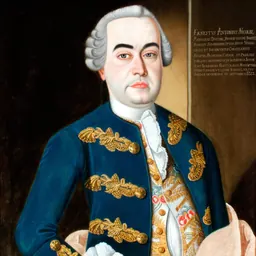


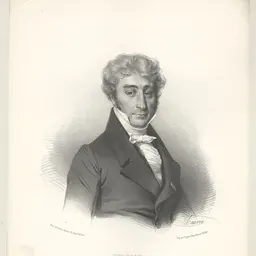
Contemporaries
People whose lives overlapped Joseph-Ignace Guillotin's






Frequently asked questions
Who was Joseph-Ignace Guillotin?
French physician (1738-1814)
When was Joseph-Ignace Guillotin born?
Joseph-Ignace Guillotin was born on 28 May 1738 in Saintes.
When did Joseph-Ignace Guillotin die?
Joseph-Ignace Guillotin died on 26 March 1814 in former 1st arrondissement of Paris.
What was Joseph-Ignace Guillotin's occupation?
Joseph-Ignace Guillotin was a physician and politician.
What was Joseph-Ignace Guillotin known for?
Joseph-Ignace Guillotin was known for Guillotine.
What nationality was Joseph-Ignace Guillotin?
Joseph-Ignace Guillotin was French.
Sources & further reading
· Wikipedia: Joseph-Ignace Guillotin
· DBpedia: Joseph-Ignace Guillotin
Cite this page
APA: Biography.guide. (2026). Joseph-Ignace Guillotin. https://biography.guide/joseph-ignace-guillotin/
MLA: "Joseph-Ignace Guillotin." Biography.guide, https://biography.guide/joseph-ignace-guillotin/.
Chicago: "Joseph-Ignace Guillotin." Biography.guide. https://biography.guide/joseph-ignace-guillotin/.
Data last updated: 2026-09-22 · Spot an error? Report a correction.
Page generated 2026-09-27 05:19 UTC