
About Joseph Holt
Lived 1807 – 1894 (aged 87). Joseph Holt was an American military officer, lawyer, judge, politician, jurist and jurisprudence.
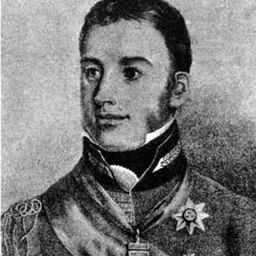
Joseph Holt (January 6, 1807 – August 1, 1894) was an American lawyer, soldier, and politician. As a leading member of the Buchanan administration, he succeeded in convincing Buchanan to oppose the secession of the South. He returned to Kentucky and successfully battled the secessionist element thereby helping to keep Kentucky in the Union. President Abraham Lincoln appointed him the Judge Advocate General of the United States Army. He served as Lincoln's chief arbiter and enforcer of military law, and supporter of emancipation. His most famous roles came in the Lincoln assassination trials.
Early life Joseph Holt was born in Breckinridge County, Kentucky, on January 6, 1807. He was educated at St. Joseph's College in Bardstown, Kentucky and Centre College in Danville, Kentucky. He settled in Elizabethtown, Kentucky, and set up a law office in town. He married Mary Harrison and moved to Louisville, Kentucky, in 1832. There, he became assistant editor of the Louisville Public Advertiser and the Commonwealth's Attorney from 1833 to 1835. Holt moved to Port Gibson, Mississippi, and practiced law there as well as in Natchez, Mississippi and Vicksburg, Mississippi. Holt and his wife contracted tuberculosis. Mary died of it, and Joseph returned to Louisville to recuperate.
Buchanan administration President Buchanan and his Cabinet, c. 1859 (left to right: Jacob Thompson, Lewis Cass, John B. Floyd, James Buchanan, Howell Cobb, Isaac Toucey, Joseph Holt and Jeremiah S. Black) Following Mary's death, Holt remarried, to Margaret Wickliffe. In 1857, Holt was appointed Commissioner of Patents by President Buchanan and moved to Washington D.C. He served until 1859 when Buchanan appointed him Postmaster General. The Buchanan administration was shaken in December 1860 and January 1861, when the Confederacy was formed and many cabinet members resigned, but Holt was both against slavery and strongly for the Union. Supported by his close ally Attorney General Edwin M. Stanton, he was appointed Secretary of War upon the resignation of John B. Floyd of Virginia, who joined the Confederacy. Stanton and Holt convinced President Buchanan he had to speak out against secession as an illegal act. Buchanan did so, but he also thought he had no power whatsoever to stop the secession. When Lincoln took office, Holt returned to Kentucky and worked successfully to keep the state out of the Confederacy. Kentucky was virtually neutral until Confederate units invaded in September 1861, and the Unionist element took control.
Judge Advocate General Holt joined the Army as a colonel in 1862 and was appointed by President Abraham Lincoln to be the Judge Advocate General of the Union Army. As Judge Advocate General of the Army, Holt oversaw the expansion of military law to include the military prosecutions of citizens who were not in the military service. He crafted the argument to the Supreme Court in Ex Parte Vallandigham, By the time he joined the Army, he believed that the only means to prevent treason from occurring again was to ensure that slavery was abolished for all time, and eventually equal treatment under the law enforced in the South.
In 1864, he was promoted to brigadier general. He was the first Judge Advocate General to hold a general's rank. He personally prosecuted the court-martial against Major General Fitz John Porter for crimes of disobedience of a lawful order and misbehavior in front of the enemy. Lincoln also offered Holt the position of Secretary of the Interior that same year and Attorney General later in 1864, but Holt declined both offices. For instance, Holt crafted legislation that stripped Union Army deserters of their citizenship. The Supreme Court overturned this legislation in Tropp v. Dulles in 1958. Holt's reasoning for this law was that Copperheads and other pro-slavery southern sympathizers encouraged desertions. Holt also used the Army's power to suppress newspapers as well as oversee the arrest and trial of Congressman Benjamin Gwinn Harris of Maryland who "uttered treasonous statements" in the House of Representatives. They were executed on July 7, 1865, making Surratt the first woman to be executed by the U.S. federal government.
Holt's public image was damaged by the trial and his prosecution of it, and many historians believe that the controversy surrounding it ended Holt's political career. In 1866, Holt issued a pamphlet, titled Vindication of Judge Advocate General Holt From the Foul Slanders of Traitors, Confessed Perjurers and Suborners, Acting in the Interest of Jefferson Davis, in which he attempted to defend himself against the various allegations and clear up some of the confusion stemming from the trial.
Later life Holt served as Judge Advocate General until he retired on December 1, 1875. He had a quiet retirement and died in Washington on August 1, 1894. His personal library was put up for auction by C.G. Sloan & Co. in Washington, D.C. in December 1894. He is buried in the Holt Family Cemetery in Addison, Kentucky. Holt County, Nebraska, is named after him, as is the hamlet of Holtsville, New York and the town of Holt, Michigan.
Don’t just read it —
keep it.
Full-length biographies made to live with: read them, listen on the way to work, watch them tonight.
- E-book
- Audio
- Video
Instant download · yours to keep · every purchase keeps this site free
Important facts
People in Joseph Holt's life
Named in this biography and alive at the same time


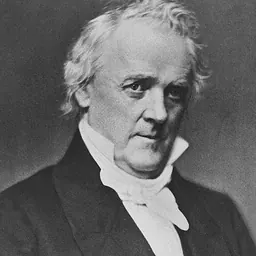

Related people
Same field, nearest in time

Contemporaries
People whose lives overlapped Joseph Holt's






Frequently asked questions
Who was Joseph Holt?
Union Army general (1807-1894)
When was Joseph Holt born?
Joseph Holt was born on 6 January 1807 in Breckinridge County.
When did Joseph Holt die?
Joseph Holt died on 1 August 1894 in Washington, D.C..
What was Joseph Holt's occupation?
Joseph Holt was a military officer, lawyer, judge, politician, jurist and jurisprudence.
What nationality was Joseph Holt?
Joseph Holt was American.
Sources & further reading
Cite this page
APA: Biography.guide. (2026). Joseph Holt. https://biography.guide/joseph-holt-military-officer/
MLA: "Joseph Holt." Biography.guide, https://biography.guide/joseph-holt-military-officer/.
Chicago: "Joseph Holt." Biography.guide. https://biography.guide/joseph-holt-military-officer/.
Data last updated: 2026-09-20 · Spot an error? Report a correction.
Page generated 2026-09-27 05:18 UTC