
About Joseph Heled
Lived 1961 – 2025 (aged 64). Joseph Heled was an Israeli researcher.
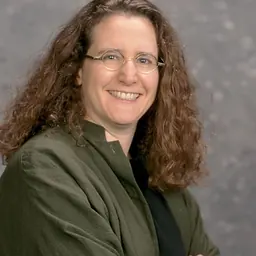
Joseph Heled (23 February 1961 – 18 March 2025) was an Israeli–New Zealand bioinformatician and computational biologist known for his work on Bayesian phylogenetics. He introduced, with Alexei Drummond, the first fully Bayesian method for jointly estimating species trees, gene trees and ancestral population sizes under the multispecies coalescent, implemented as *BEAST, and was a core developer of the BEAST 2 software platform.
Early life and education
Heled was born in Jerusalem, raised in Kibbutz Hukok in northern Israel and educated at Beit Yerach High School. He later settled in New Zealand, where he completed a PhD in the Computational Evolution Group at the University of Auckland under the supervision of Alexei Drummond. In 2011 his dissertation received the University of Auckland Vice-Chancellor's Prize for Best Doctoral Thesis.
Research
Species tree inference
Heled's best-known contribution is the *BEAST method, published with Drummond in Molecular Biology and Evolution in 2010. Earlier approaches inferred a species tree by first estimating gene trees for each locus and then reconciling them. *BEAST instead co-estimates the species tree, the gene trees and ancestral population sizes in a single Bayesian analysis under the multispecies coalescent, propagating the uncertainty in each through to the others. The method became one of the standard full-likelihood implementations of the multispecies coalescent and is surveyed as such in reviews of species tree inference. A 2021 review of the multispecies coalescent identified *BEAST and BPP as the two Bayesian programs implementing the model in common use. Heled also co-authored a 2016 study assessing the method's computational performance and statistical accuracy against competing approaches.
Related work extended the multispecies coalescent to gene tree simulation under time-dependent migration and derived analytical results for sequence diversity under a Yule process with constant population size.
Demographic inference and tree priors
With Drummond, Heled developed the extended Bayesian skyline plot, which infers population size history from multiple unlinked loci rather than a single gene. He also worked on the statistical treatment of fossil calibrations in molecular clock analyses, showing how calibration densities interact with the tree prior and proposing constructions that yield the intended marginal prior on calibrated divergence times.
Software
Heled was a core developer of BEAST 2, an open-source platform for Bayesian evolutionary analysis, and is second author on the paper describing it. He remained a contributor to the successor release, BEAST 2.5. With Remco Bouckaert he worked on methods for summarising and visualising sets of phylogenetic trees, including the problem of choosing a single summary tree from a posterior sample and the DensiTree 2 visualisation tool.
He also contributed to applied studies using these methods, including a multigene environmental DNA approach to biodiversity assessment in New Zealand.
Project HaMe’uvratim This project is a systematic, research‑driven digital archive dedicated to the documentation and analysis of Hebrew song adaptations. Initiated by Joseph Heled in 2015, the project sought to establish a reliable scholarly record of Israeli songs whose melodies originated abroad, but were integrated into local culture through new Hebrew lyrics. Its methodology combined comparative musicology, bibliographic reconstruction, and historical verification, aiming to correct decades of misattribution in which adapted songs were often labeled “folk” or “traditional.” By tracing each song’s lineage - from its original composer and lyricist, through its cultural migration, to its Hebrew reinterpretation - the project illuminated patterns of musical exchange and highlighted the role of translation and adaptation in shaping Israeli musical identity.
Following Heled’s death, the project’s continuation by a community of volunteers underscores its significance as a long‑term scholarly resource for the study of Israeli musical heritage and transnational cultural flows.
Impact
Heled's publications had been cited more than 21,000 times by 2026, sustaining continued use of his methods across evolutionary biology, epidemiology and population genetics. The 2010 *BEAST paper alone has been cited over 2,800 times and the BEAST 2 paper over 7,500 times. He published a Hebrew translation of Richard K. Morgan's novel Altered Carbon in 2018.
Death
Heled died on 18 March 2025 at the age of 64.
Selected publications
Don’t just read it —
keep it.
Full-length biographies made to live with: read them, listen on the way to work, watch them tonight.
- E-book
- Audio
- Video
Instant download · yours to keep · every purchase keeps this site free
Important facts
Related people
Same field, nearest in time




Contemporaries
People whose lives overlapped Joseph Heled's





Frequently asked questions
Who was Joseph Heled?
researcher
When was Joseph Heled born?
Joseph Heled was born on 23 February 1961 in Hukok.
When did Joseph Heled die?
Joseph Heled died on 18 March 2025.
What was Joseph Heled's occupation?
Joseph Heled was a researcher.
What nationality was Joseph Heled?
Joseph Heled was Israeli.
Sources & further reading
Cite this page
APA: Biography.guide. (2026). Joseph Heled. https://biography.guide/joseph-heled/
MLA: "Joseph Heled." Biography.guide, https://biography.guide/joseph-heled/.
Chicago: "Joseph Heled." Biography.guide. https://biography.guide/joseph-heled/.
Data last updated: 2026-09-20 · Spot an error? Report a correction.
Page generated 2026-09-27 04:57 UTC