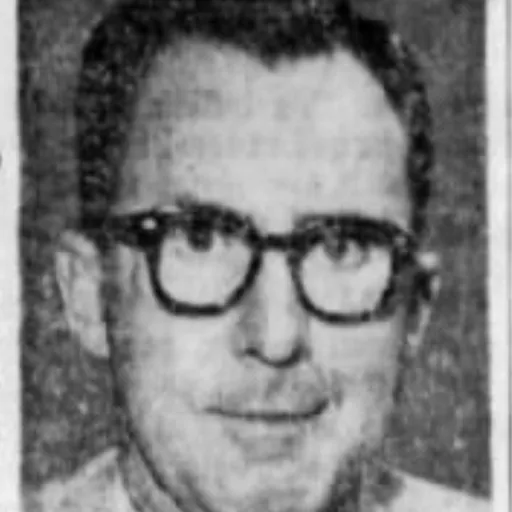
About Joseph Frank McLaughlin
Lived 1908 – 1962 (aged 54). Joseph Frank McLaughlin was a judge.
Joseph Francis McLaughlin (June 7, 1908 – October 25, 1962) was a United States district judge of the United States District Court for the District of Hawaii in the Territory of Hawaii.
Early life and education
Born in Leominster, Massachusetts, J. Frank McLaughlin grew up in Worcester, Massachusetts, graduating from Saint John's High School in 1926. He received a Bachelor of Arts from Dartmouth College in 1930, followed by a Juris Doctor from Harvard Law School in 1933.
Career
After graduating from a Harvard Law School, McLaughlin was in private practice in Whitinsville, Massachusetts from 1933 to 1935. He worked for a year in the United States Justice Department in Washington, D.C. and arrived in the Territory of Hawaii in 1936.
J. Frank served as the Assistant U.S. Attorney assigned to the United States District Court in Honolulu, Hawaii, where he worked with future Hawaii Governor Ingram M. Stainback.
This was later adjoined to the United States Supreme Court case, Duncan v. Kahanamoku.
Ex Parte Spurlock, 66 F. Supp. 997 (D. Haw. 1944)
Shortly after Pearl Harbor, Hawaii was put under martial law. There were two federal judges when Hawaii was a territory — Judge Delbert Metzger and J. Frank McLaughlin. Both judges upheld and defended the Writ of Habeas Corpus during this period. Fred L. Spurlock, an African American civilian, was arrested by Military Police and sentenced by a military provost judge.
A writ of Habeas Court was issued and Federal Judge J. Frank McLaughlin had Spurlock released. McLaughlin condemned the army’s sentence and trial in his written opinion.
Lt. General Robert C. Richardson Jr. threatened to jail both Judge Metzger and McLaughlin if they continued with these habeas corpus cases.
This case became a companion case to one of Judge Metzger’s cases that went to the U.S. Supreme Court. The Supreme Court, acknowledged the facts of the case, but ultimately it was determined that their ruling wouldn’t matter because the war had ended, along with martial law.
Alesna v. Rice, 74 F. Supp. 865 (D. Haw. 1947) Kaname Fujino v. Clark, 71 F. Supp. 1 (D. Haw. 1947) Miyuki Okihara v. Clark, 71 F. Supp. 319 (D. Haw. 1947) Duze v. Woolley, 72 F. Supp. 422 (D. Haw. 1947) Hawaiian Tuna Packers v. INTERNATIONAL L. AND W. UNION, 72 F. Supp. 562 (D. Haw. 1947) Hall v. Hawaiian Pineapple Co., 72 F. Supp. 533 (D. Haw. 1947) United States v. 257.654 ACRES OF LAND, ETC., 72 F. Supp. 903 (D. Haw. 1947) Hawaiian Airlines v. Trans-Pacific Airlines, 73 F. Supp. 68 (D. Haw. 1947) Oahu Ry. & Land Co. v. United States, 73 F. Supp. 707 (D. Haw. 1947) Alesna v. Rice, 74 F. Supp. 865 (D. Haw. 1947) Kam Koon Wan v. EE Black, Limited, 75 F. Supp. 553 (D. Haw. 1948) Wilscam v. United States, 76 F. Supp. 581 (D. Haw. 1948) Hawaiian Airlines v. Trans-Pacific Airlines, 78 F. Supp. 1 (D. Haw. 1948) United States v. Hughes Tool Co., 78 F. Supp. 409 (D. Haw. 1948) Ex Parte Mulvaney, 82 F. Supp. 743 (D. Haw. 1949) Ishikawa v. Acheson, 85 F. Supp. 1 (D. Haw. 1949) United States v. Inter-Island Steam Nav. Co., 87 F. Supp. 1010 (D. Haw. 1950)
Kotohira Jinsha v. McGrath, 90 F. Supp. 892 (D. Haw. 1950)
On June 1, 1948, U.S. Government officials raided and seized the Kotohira Jinsha Shrine under the Trading with the Enemy Act, and announced its sale the following year. Representatives for Kotohira Jinsha filed a lawsuit contending that the shrine had been wrongfully seized.
Senator J. Howard McGrath of Rhode Island was the Attorney General of the United States appointed by President Harry Truman in 1949. The lawsuit against the Attorney General's office became Kotohira Jinsha vs. McGrath.
The trial was held on May 17, 1950. Recent Harvard Law School graduate (Class of 1948) and future Hawaii Supreme Court Justice, Frank D. Padgett, argued his first case on behalf of the shrine.
The following day, Judge McLaughlin, citing the First Amendment, ruled in favor of the plaintiffs, Kotohira Jinsha. McLaughlin ordered that their property be returned to them, and rebuked the actions of Attorney General McGrath and the Federal Government.
In his opinion Judge McLaughlin stated, "The undisguised fact is that this plaintiff's property was vested taken away because what plaintiff believes in was disliked or suspected, and by taking away its base of operations, its fervor for its beliefs would tend to diminish and eventually vanish. Not until the evidence was concluded was I willing to even listen to argument on this point, for I could not believe it. I still do not believe the Attorney General really acted on such a basis even though such evidence as the Court was given might so indicate."
"We have not yet come to the point nor will we ever while "this Court [also] sits" where the Government can take away a person's property because it does not approve of what that person believes in or teaches by way of religion or philosophy of life. The First Amendment forbids."
In his initial opinion, Judge McLaughlin stated, “No constitutional question of freedom of religion is even remotely involved by an alien atheist seeking naturalization, and the sole question is whether the petitioner believes in all of the principles which delicately support our free government (Petition of Plywacki, 107 F. Supp. 593)
United States v. Fujimoto, 102 F. Supp. 890 (D. Haw. 1952) Kiyokuro Okimura v. Acheson, 111 F. Supp. 303 (D. Haw. 1953)
PETITION OF PLYWACKI, 115 F. Supp. 613 (D. Hawai'I 1953) Castle & Cooke Terminals v. LOCAL 137, ETC., 110 F. Supp. 247 (D. Haw. 1953) Kiyokuro Okimura v. Acheson, 111 F. Supp. 303 (D. Haw. 1953) Hernandez v. United States, 112 F. Supp. 369 (D. Haw. 1953) Waialua Agr. Co. v. United Sugar Workers, 114 F. Supp. 243 (D. Haw. 1953) Smith v. United States, 113 F. Supp. 702 (D. Haw. 1953) INTERNATIONAL LONGSHORE., ETC. v. Libby, McNeill & Libby, 114 F. Supp. 249 (D. Haw. 1953) Daves v. Hawaiian Dredging Co., 114 F. Supp. 643 (D. Haw. 1953) Cooke v. United States, 115 F. Supp. 830 (D. Haw. 1953)
United States v. Ushi Shiroma, 123 F. Supp. 145 (D. Haw. 1954) Terada v. Dulles, 121 F. Supp. 6 (D. Haw. 1954) Juneau Spruce Corp. v. INTERNATIONAL LONG. & W. UNION, 128 F. Supp. 697 (D. Haw. 1955) Richard Gladstein, Petitioner, v. Hon. J. Frank Mclaughlin, As Judge of the United States District Court for the District of Hawaii, Respondent, 230 F.2d 762 (9th Cir. 1955) This was a petition brought to the U.S. Court of Appeals for the Ninth Circuit on April 8, 1955, by labor attorney, Richard Gladstein against U.S. Judge J. Frank McLaughlin.
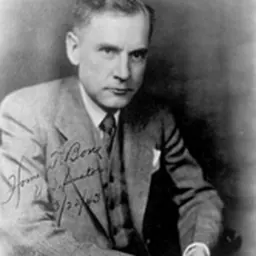
The petition for a writ of mandamus or prohibition was decided by Chief Judge William Denman, and Circuit Judges Homer Bone and Walter Lyndon Pope.
Judge McLaughlin ordered attorney Gladstein to show cause why the U.S. District Court in Honolulu should not disbar or suspend him from practice in that court when Gladstein had been jailed for contempt in the trial of United States vs. Dennis in the District Court of the Southern District of New York.
The court’s stated opinion was, “We do not agree that Gladstein should be put to the time and expense of such a proceeding.” The court noted the recent decision on disbarment in the case of In re Isserman, 348 U.S. 1, 75 S. Ct. 6, 99 L. Ed. 3, and that, “the respondent, upon consideration of the above, will refrain from further continuing in the disbarment proceeding.”
The petitioner claimed that the respondent had no jurisdiction to disbar, and that the judge had personal bias and prejudice against Gladstein, which in a hearing on its sufficiency, Judge McLaughlin held it as being insufficient.
In an affidavit of former United States District Judge Delbert Metzger, he wrote that Judge McLaughlin stated to him "that it was questionable if any American lawyer had a right to appear in any United States court and defend a person who was proved to be a member of the Communist Party which Party had been proved in the Dennis case to advocate and teach the overthrow of the government by force and violence; and that in making such an appearance, if the lawyer by misconduct or disrespect to the court was found to be in contempt of court, that lawyer should be disbarred from practice in every United States court of the land."
Scruggs v. Meredith, 134 F. Supp. 868 (D. Haw. 1955) Scruggs v. Meredith, 135 F. Supp. 376 (D. Haw. 1955)
Dyer v. Kazuhisa Abe, 138 F. Supp. 220 (D. Haw. 1956)
In Dyer v. Kazuhisa Abe, Judge McLaughlin ruled that in certain circumstances the courts should remedy legislative districting issues when the legislature doesn't do this itself. If the rights of the people are hindered or obstructed (actively or inactively) by the legislative body of elected representatives then the only available recourse for the individual is with the courts.
There were several defendants in elected office in the territory that were named in this case, including Daniel K. Inouye, the future U.S. Senator.
The issue arose because of the population shift from other Hawaiian islands to Oahu over the years, resulting in a legislative imbalance that favored rural areas over urban areas.
The Hawaiian Organic Act required periodic legislative reapportionment based on the population of a given area. Judge McLaughlin's ruling addressed the territorial situation under the act, which was brought to the federal court by an Oahu voter. He ruled in Dyer's favor and ordered elections to be held.
This ruling was later overturned by the ninth circuit court of appeals in San Francisco, resulting in the new elections being called off.
In 1962, in Baker v. Carr, the U.S. Supreme Court ruled similarly to Judge McLaughlin. In Justice Douglas's concurring opinion, he quoted Judge McLaughlin and Dyer v. Kazuhisha Abe.
From Baker v. Carr
MR. JUSTICE DOUGLAS, concurring.
As stated by Judge McLaughlin in Dyer v. Kazuhisa Abe, 138 F. Supp. 220, 236 (an apportionment case in Hawaii which was reversed and dismissed as moot, 256 F.2d 728):
"The whole thrust of today's legal climate is to end unconstitutional discrimination. It is ludicrous to preclude judicial relief when a mainspring of representative government is impaired. Legislators have no immunity from the Constitution. The legislatures of our land should be made as responsive to the Constitution of the United States as are the citizens who elect the legislators."
In 1964, the Supreme Court ruled additionally on the apportionment issue in Reynolds v. Sims.
Mitchell v. Rogers, 138 F. Supp. 214 (D. Haw. 1956) Aradanas v. Hogan, 155 F. Supp. 546 (D. Haw. 1957) Knox v. Anderson, 159 F. Supp. 795 (D. Haw. 1958)
UNITED STATES v. REYNOLDS, 169 F.Supp. 479 (1958)
In 1958, anti-nuclear peace activist Earl L. Reynolds sailed with his wife and children on the Phoenix of Hiroshima, into the American nuclear testing zone in the Pacific known as the Pacific Proving Grounds. He was tried by Chief Judge J. Frank McLaughlin and convicted by a jury in the U.S. District Court in Honolulu. He later appealed his sentence and had it overturned by the 9th Circuit Court of Appeals in San Francisco.
Svedlund v. Pepsi Cola Bottling Co. of Hawaii, 172 F. Supp. 597 (D. Haw. 1959)
Speeches
Judge McLaughlin delivered the 1944 commencement address titled, "The University for Hawaii," at the University of Hawaii in Manoa.
Judge McLaughlin delivered an address in San Francisco to the Circuit Conference of the Ninth Judicial Circuit on June 30, 1950, titled, “The Feudal Law of Hawaii and its Transition into the Common Law of New England.”
Don’t just read it —
keep it.
Full-length biographies made to live with: read them, listen on the way to work, watch them tonight.
- E-book
- Audio
- Video
Instant download · yours to keep · every purchase keeps this site free
Important facts
People in Joseph Frank McLaughlin's life
Named in this biography and alive at the same time





Related people
Same field, nearest in time


Contemporaries
People whose lives overlapped Joseph Frank McLaughlin's

Frequently asked questions
Who was Joseph Frank McLaughlin?
American judge
When was Joseph Frank McLaughlin born?
Joseph Frank McLaughlin was born on 7 June 1908 in Leominster.
When did Joseph Frank McLaughlin die?
Joseph Frank McLaughlin died on 24 October 1962.
What was Joseph Frank McLaughlin's occupation?
Joseph Frank McLaughlin was a judge.
Sources & further reading
· Wikipedia: Joseph Frank McLaughlin
· DBpedia: Joseph Frank McLaughlin
Cite this page
APA: Biography.guide. (2026). Joseph Frank McLaughlin. https://biography.guide/joseph-frank-mclaughlin/
MLA: "Joseph Frank McLaughlin." Biography.guide, https://biography.guide/joseph-frank-mclaughlin/.
Chicago: "Joseph Frank McLaughlin." Biography.guide. https://biography.guide/joseph-frank-mclaughlin/.
Data last updated: 2026-09-23 · Spot an error? Report a correction.
Portrait: Wikimedia Commons · author & licence
Page generated 2026-09-27 05:05 UTC