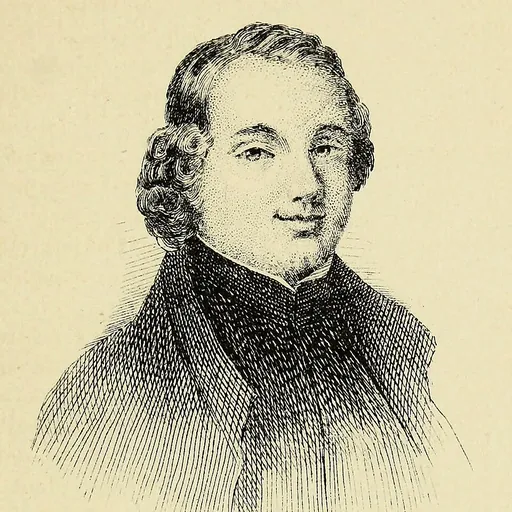
Joseph-François Lafitau
French missionary, ethnologist, naturalist
About Joseph-François Lafitau
Lived 1681 – 1746 (aged 65). Joseph-François Lafitau was a French anthropologist, botanist, missionary, catholic priest, ethnologist and writer, known for Ethnology and Natural science.
Joseph-François Lafitau (; May 31, 1681 – July 3, 1746) was a French Jesuit missionary, ethnologist, and naturalist who worked in Canada. He is best known for his use of the comparative method in the field of scientific anthropology, the discovery of American ginseng, and his writings on the Iroquois. Lafitau was the first of the Jesuit missionaries in Canada to have a scientific point of view. Francis Parkman praises Lafitau, stating, "none of the old writers are so satisfactory as Lafitau."
He is best known as the author of Customs of the American Indians Compared with the Customs of Primitive Times (1724).
He noticed the importance of women in Iroquois society, the universality of marriage as an institution, age grading, the classificatory system of relationship, and the pulse of Indian politics in the town council. Lafitau also contributed to existing scholarship on the Iroquois long-house; he details the rules of residence and social organization. Lafitau's observations provide a greater understanding of Iroquois kinship and exogamy.
Comparative methodology Lafitau is considered the first of the modern ethnographers and a precursor of scientific ethnology for his work on the Iroquois. He developed a model of studying peoples that involved describing existing cultures on their own terms—not in comparison to European society. He distinguished generic and specific traits, transforming the "generic savage" into specific tribal groups. He explained that "only from specific identities can genetic relations be inferred."
Presuppositions Lafitau's comparative method (method of reciprocal illumination) rests on his "system" which is a compendium of his theoretical presupposition. He believed that man was created equal by God and was given a set of divine moral principles. These principles were gradually violated due to the inherited sinfulness of man—a consequence of the penalty of Original Sin. All men originally shared one religion with one God but over time people migrated to separate margins of the earth where they then lost touch with the values and traditions of this one "true religion" and culture. Therefore, Lafitau believed in the "psychic unity of mankind" and the doctrine of primitive monotheism. Lafitau strove to find traces of this degenerated "true faith", of which Christianity was the highest form, among the Native Americans.
Lafitau's version of these theories differed from that of his predecessors and contemporaries. Pierre Daniel Huet, for example, believed that the pagan gods and goddesses dated back to Moses and Zipporah. Lafitau was aware of this and he mentions Huet in his work. Nevertheless, for Lafitau, this theory was flawed and vulnerable to the attacks of the atheists who claimed that religion was the invention of man and the work of politics. If Christianity originated from Moses, then all the peoples before this time would have had pagan religions, religions that were older than Christianity. This would further imply that there is no one underlining religion whose traces can be found in all the peoples of the world. This, which goes against Lafitau's "system", would make it possible for atheists to attack the Christianity's claim of being the "one true religion". Lafitau strove to find these traces of degenerated faith in a hope of proving his theory of unitary faith and unitary humanity.
Stages of development Lafitau believed that all cultures change over time, and that they will eventually reach the European level of civility. The Native Americans, according to him, were at a lower stage of development than the Europeans. They were at the same stage as the peoples of the Ancient Times, hence their customs could be juxtaposed with the disregard of time and place. This is the basis out of which his method emerges. What sets Lafitau apart from his predecessors and contemporaries, was the formulation of his method of reciprocal illumination. By juxtaposing one type of behavior, or a set of beliefs and customs, to those of other cultures who have reached the same level of developmental history, their similarities and differences would reveal information about both.
For example, Lafitau describes the process of making celts by Native Americans, i.e. crude axes, by rubbing flint and rock against abrasive sandstone. This empirical information can then be juxtaposed against the European belief that relics similar to those were "thunder stones" deposited by bolts of lightning. Based on the empirical knowledge it can be extrapolated that the "thunder stones" were not deposited by lightning, rather they were made and used by the Gallic hunters, much in the same way as Native Americans use Celts. In Lafitau's words:
Symbolic Theology According to Anthony Pagden, Lafitau argued for the possibility of translating all human behavior, especially religious, into a language which he called "Symbolic Theology", which would explain the universal cultural patterns such as marriage, government and religion. To achieve this, Lafitau emphasized the factual account of the evidence. By using field observations of the "savage" (Lafitau's contemporary "savage"), he would compare them to the historical sources, on the peoples from antiquity. In so doing, Lafitau strove to reveal an underlining cultural pattern; a universal human culture and universal human system of belief. In short, Lafitau wanted to establish the "science of manners and customs".
Comparing Native American customs to those of the Ancients was a rhetorical strategy that was used for centuries before Lafitau, and as late as the 19th century. The Ancients, as well as people from the Bible, served as a source of anthropological knowledge, and as a model of admirable humanity. It was used to create a more favorable image of alien peoples by comparing them to the "wise and enlightened" Ancients. The outlandish characteristics and customs of the Native Americans, when compared to similar, sometimes just as strange, costumes of the Ancients, would then become more acceptable. It would familiarize and elevate the image of the Native Americans by making them share in the qualities of the cultures that were still held in high esteem among the Europeans. For example, when describing Iroquois chieftains names, Lafitau warns that names such as Hoghouaho (the Great Wolf) or Hoskereouak (the Great Bear), might sound strange to his fellow Europeans, however, he points out that in antiquity people's names were names of divinities, and they, in turn, were names of animals as well. In short, the comparative method made the strange custom more familiar and the "savage" more human.
Importance of Lafitau's contribution Lafitau is remembered for applying the comparative method with a greater level of competency than any of his contemporaries. Through original field observations, he was able to critique the works of earlier writers on Primitive peoples. By using the Comparative Method, Lafitau rejected all theories of social and cultural change and instead used his study to demonstrate the similarities in customs, practices, and usages of the Native North Americans with diverse peoples from different continents and centuries.
Discovery of ginseng
His discovery of American ginseng in the forest bordering the St. Lawrence made Lafitau famous in the European academies. Ginseng was native to the New World as well as the Old and had long been known to the Iroquois for its medicinal properties. It was on his search for ginseng that Lafitau began to question Mohawk herbalists, gaining information of native customs and beliefs, which he hoped would benefit European knowledge of medicine.
First learning about the ginseng of Tartary (i.e. Northern China) from the writings of the Jesuit missionary Pierre Jartoux, Lafitau surmised that the conditions in North America would be favorable to the plant. He was determined to find the plant in the Iroquois culture so that he would have partial proof of their Asiatic origin. Encouraged by the Iroquois to continue his hunt, a Mohawk woman whom Lafitau had hired to find the plant recognized it as one of the common remedies of the Iroquois. Lafitau quickly sent for Jartoux's publication and description to identify the plant from the plate. In his discovery, Lafitau was the first to employ botanical plates in the field in order to gain information from Natives. His published report the Mémoire...concernant la précieuse plante du gin-seng in 1718 set off a hunt by market collectors who exported ginseng to China via France. As the son of a merchant, Lafitau was keen to describe the medical properties of ginseng in Galenic terms, which facilitated marketing the plant to European consumers across the world. Mémoire...concernant la précieuse plante du gin-seng has never been translated into English.
Don’t just read it —
keep it.
Full-length biographies made to live with: read them, listen on the way to work, watch them tonight.
- E-book
- Audio
- Video
Instant download · yours to keep · every purchase keeps this site free
Important facts
People in Joseph-François Lafitau's life
Named in this biography and alive at the same time

Related people
Same field, nearest in time




Contemporaries
People whose lives overlapped Joseph-François Lafitau's




Frequently asked questions
Who was Joseph-François Lafitau?
French missionary, ethnologist, naturalist (1681-1746)
When was Joseph-François Lafitau born?
Joseph-François Lafitau was born on 31 May 1681 in Bordeaux.
When did Joseph-François Lafitau die?
Joseph-François Lafitau died on 3 July 1746 in Bordeaux.
What was Joseph-François Lafitau's occupation?
Joseph-François Lafitau was an anthropologist, botanist, missionary, catholic priest, ethnologist and writer.
What was Joseph-François Lafitau known for?
Joseph-François Lafitau was known for Ethnology and Natural science.
What nationality was Joseph-François Lafitau?
Joseph-François Lafitau was French.
Sources & further reading
· Wikipedia: Joseph-François Lafitau
· DBpedia: Joseph-François Lafitau
Cite this page
APA: Biography.guide. (2026). Joseph-François Lafitau. https://biography.guide/joseph-francois-lafitau/
MLA: "Joseph-François Lafitau." Biography.guide, https://biography.guide/joseph-francois-lafitau/.
Chicago: "Joseph-François Lafitau." Biography.guide. https://biography.guide/joseph-francois-lafitau/.
Data last updated: 2026-09-22 · Spot an error? Report a correction.
Portrait: Wikimedia Commons · author & licence
Page generated 2026-09-27 05:03 UTC