
About Joseph Elzéar Morénas
Lived 1776 – 1830 (aged 54). Joseph Elzéar Morénas was a French botanist.
Joseph-Elzéar Morénas (August 28, 1776 – September 26, 1830) was a French naturalist, botanist, orientalist, spy, and anti-slavery advocate. His multifaceted career spanned from secret intelligence operations against British colonial expansion in India to pioneering anti-slavery activism during the Bourbon Restoration. Though historically enigmatic and sometimes contradictory, Morénas was notable for his scientific knowledge, linguistic skills, and evolving political convictions.
Early life and background Born in Saint-Christol-d'Albion in the papal enclave of Avignon (now Vaucluse, France) to Christol Morénas and Louise Mézard from in Apt, his family were Papal Jews . Morénas initially trained as a goldsmith. He apprenticed with his maternal uncle Rive, a jeweler in Apt and brother of the bibliographer Jean-Joseph Rive, before moving to Carpentras in 1793 and Nîmes in 1797 to perfect his skills in preparation for taking over the family business.
Career
Intelligence work in India (1804–1810) In 1798, Morénas broke with his traditional path by moving to Paris. There, through connections with Bordeaux merchants, generals Louis-Gabriel Suchet and César Fauchet, he met general Charles Decaen. Impressed by Morénas's talents and knowledge, Decaen secured him an administrative position in his planned expedition to the East Indies in 1802. and Tipu Sultan's successors. He argued that Indian sepoys would abandon the British if faced with a disciplined, ideologically committed French force, especially if bolstered by African soldiers, whom he praised for their resilience and martial capacity. and 1821 ) denouncing both slave traders and their official enablers within the French colonial administration. Morénas collaborated with the apostolic prefect of Senegal, Abbé Giudicelly and Henri Grégoire, and exposed that state officials themselves were complicit in the trade. His writings influenced later French legislative reform on slavery. However, this activism cost him his position. He later traveled to Haiti, which strengthened his anti-slavery convictions, before publishing an anti-slavery treatise in 1828 dedicated to Haitian President Jean-Pierre Boyer and three Martinican anti-racist activists, including Cyrille Bissette. Soon he was dispatched to the Caucasus by directive of the Russian imperial government, acting under the Minister of Finance Georg Ludwig Cancrin. His mission was to survey economic conditions and propose reforms to agriculture, industry, and trade in the newly conquered Transcaucasian territories. He was granted broad authority to travel, evaluate local conditions, and recommend improvements, particularly in sericulture, viticulture, and the cultivation of colonial crops.
Upon arrival in Caucasus, Morénas encountered systemic resistance to innovation. In official correspondence, he characterised the local population as disinterested in technical advancement, reliant on subsistence farming, and unwilling to participate in market-oriented reforms. He criticised both Armenian and Azerbaijani landowners for neglecting sustainable mulberry cultivation and for their poor rearing of silkworms. Despite this, he praised the raw quality of the cocoons, noting they yielded higher quantities of silk than European counterparts and were more durable in storage. He personally supervised the construction of a European-style reeling facility in Nukha (now Shaki), which produced silk three times more valuable than the local standard. He called for scaling up this model and for ending the destructive tithe levied on mulberry trees. lowlands, recommending extensive deforestation and improved drainage to combat endemic malaria. His proposals to clear underbrush rather than only large trees went against prevailing practices. He advised redirection of settlement and infrastructure to the Khobi and Tsivi rivers, favouring them over the unstable Rioni delta for agricultural development and riverine transport.
Morénas condemned the hierarchical and hereditary caste system as antithetical to natural law and human dignity. He viewed Brahminical dominance as socially corrosive and intellectually stagnant, describing Brahmins as both self-serving and complicit in the perpetuation of what he saw as oppressive customs. In particular, he denounced the ritual exclusion of so-called "impure" castes and the rigid exclusion of women from education and public life. He considered such practices evidence of a society in need of reform but not under European tutelage—instead, he believed moral regeneration should come through internal transformation encouraged by enlightened ideals rather than colonial imposition. His most sustained critique was directed at Hindu religious authority, which he saw as a fusion of superstition and social control. He likened Hindu temples to feudal institutions, with priests functioning as power brokers rather than spiritual guides. At the same time, Morénas admired certain aspects of indigenous moral philosophy and the intellectual traditions embedded in Sanskrit and Tamil literature, though he claimed these had been obscured by what he considered the degeneration of Hinduism over centuries.
Politically, Morénas was hostile to British instrumentalisation of caste divisions, which he believed were manipulated to solidify imperial control. He accused the British East India Company of reinforcing the most reactionary elements of Hindu society to maintain order and extract revenue. His writings criticised both British administrators and European missionaries for failing to understand the complexity of Hindu culture and for imposing Christian frameworks where local ethical traditions might have sufficed. Rather than promoting Christianisation, Morénas advocated for secular education and agrarian reform as tools to transform Hindu society. He championed the redistribution of land held by temples and Brahmin estates to cultivate a class of independent peasant-proprietors, whom he regarded as potential agents of modernisation. His vision aligned with certain proto-socialist ideas that later emerged in 19th-century French republican thought, though his proposals remained largely theoretical.
Written works
Essay on the Current State of India (, 1804) – unpublished intelligence report Hindustani Dictionary with Grammar and Indian Etymologies – unpublished manuscript Petition against the slave trade in Senegal (, 1820) On the castes of India, or Letters on the Hindus, on the occasion of the tragedy of the Pariah by M. Casimir Delavigne. Followed by notes on the words and customs of India, mentioned in this tragedy. Concluded by critical observations on the notes attached to the translation of Tone's journey among the Mahrattas, and published in the form of a glossary, by M. Langlès, professor of Persian, curator-administrator of oriental manuscripts in the King's library, member of the Institute, etc. (, 1822) Historical Summary of the Slave Trade and Colonial Slavery (, 1828), a 425-page indictment of colonial slavery, accompanied by illustrations and portraits of Martinican abolitionists sentenced to the galleys.
Don’t just read it —
keep it.
Full-length biographies made to live with: read them, listen on the way to work, watch them tonight.
- E-book
- Audio
- Video
Instant download · yours to keep · every purchase keeps this site free
Important facts
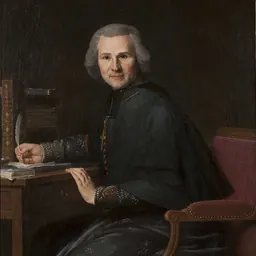
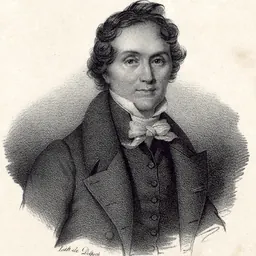
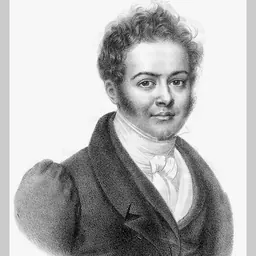
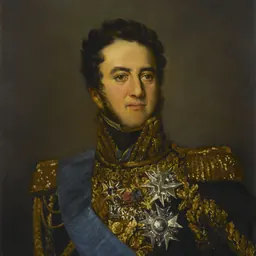
People in Joseph Elzéar Morénas's life
Named in this biography and alive at the same time


Related people
Same field, nearest in time





Contemporaries
People whose lives overlapped Joseph Elzéar Morénas's


Frequently asked questions
Who was Joseph Elzéar Morénas?
historien (1776-1830)
When was Joseph Elzéar Morénas born?
Joseph Elzéar Morénas was born on 28 August 1776 in Saint-Christol.
When did Joseph Elzéar Morénas die?
Joseph Elzéar Morénas died on 26 September 1830.
What was Joseph Elzéar Morénas's occupation?
Joseph Elzéar Morénas was a botanist.
What nationality was Joseph Elzéar Morénas?
Joseph Elzéar Morénas was French.
Sources & further reading
· Wikipedia: Joseph Elzéar Morénas
· DBpedia: Joseph-Elzéar Morenas
Cite this page
APA: Biography.guide. (2026). Joseph Elzéar Morénas. https://biography.guide/joseph-elzear-morenas/
MLA: "Joseph Elzéar Morénas." Biography.guide, https://biography.guide/joseph-elzear-morenas/.
Chicago: "Joseph Elzéar Morénas." Biography.guide. https://biography.guide/joseph-elzear-morenas/.
Data last updated: 2026-09-20 · Spot an error? Report a correction.
Page generated 2026-09-27 05:18 UTC