
About Joseph Bogen
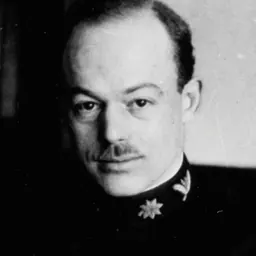
Lived 1926 – 2005 (aged 78). Joseph Bogen was an American neuroscientist and university teacher.
Joseph E. Bogen (July 13, 1926 – April 22, 2005)
He was raised in Ohio, moved to Southern California at 16 and graduated from Monrovia High School, Monrovia, California in 1943. He began undergraduate studies at Caltech in 1943, but left to join the United States Navy in 1944. He was deployed to the South Pacific and was honorably discharged in 1946. He completed his undergraduate education at Whittier College and received a B.A. in economics in 1949. He enrolled in the University of Cincinnati and UCLA, followed by the USC School of Medicine.
Bogen received his M.D. from the University of Southern California in 1956. From 1956 to 1957 he completed an internship in Surgery at the New York Hospital Cornell, from 1957 to 1958, he completed his residency in surgery at that institution.
Career From 1958 to 1959, he was a Fellow in Medical Sciences at the National Research Council. From 1959 to 1963, he was a Resident in Neurosurgery, at White Memorial Hospital. In 1966, he received his board certification and was a Diplomate, American Board of Neurological Surgery.
Split brain research Bogen was part of a research team at Caltech with Roger Sperry and H. G. Gordon which conducted the first split brain study. His early surgical interventions to control epilepsy laid the foundation for the development of modern ideas about the unique identities of the right and left brains. His work played a crucial role in the development of the split-brain experiments that won Caltech's Roger Sperry the 1981 Nobel Prize in physiology.
Theories of consciousness Bogen argued that consciousness is subjectivity, that looking for consciousness is like looking for the wind, you can only see its effects. Bogen suggested that scientists look for a center (a nucleus) that has distributivity (i.e. widespread inward and outward connectivity) as a site that produces subjectivity as consciousness.
At the time of his death, Bogen had been researching the site in the brain where consciousness is located and was preparing a book about his findings.
Bogen lent his expertise in Wernicke's area to American psychologist Julian Jaynes (1920–97), assisting Jaynes in the development of the bicameral mentality hypothesis in 1976.
Dr. Bogen died on April 22, 2005, in Pasadena, California, after a long illness.
Publications Lists of books and journal articles: 1954-1987 1988-2005
Don’t just read it —
keep it.
Full-length biographies made to live with: read them, listen on the way to work, watch them tonight.
- E-book
- Audio
- Video
Instant download · yours to keep · every purchase keeps this site free
Important facts
People in Joseph Bogen's life
Named in this biography and alive at the same time


Related people
Same field, nearest in time



Contemporaries
People whose lives overlapped Joseph Bogen's


Frequently asked questions
Who was Joseph Bogen?
American physician (1926-2005)
When was Joseph Bogen born?
Joseph Bogen was born on 13 July 1926 in Cincinnati.
When did Joseph Bogen die?
Joseph Bogen died on 22 April 2005.
What was Joseph Bogen's occupation?
Joseph Bogen was a neuroscientist and university teacher.
What nationality was Joseph Bogen?
Joseph Bogen was American.
Sources & further reading
Cite this page
APA: Biography.guide. (2026). Joseph Bogen. https://biography.guide/joseph-bogen/
MLA: "Joseph Bogen." Biography.guide, https://biography.guide/joseph-bogen/.
Chicago: "Joseph Bogen." Biography.guide. https://biography.guide/joseph-bogen/.
Data last updated: 2026-09-20 · Spot an error? Report a correction.
Page generated 2026-09-27 05:14 UTC