
About Joseph B. Ely
Lived 1881 – 1956 (aged 75). Joseph B. Ely was an American lawyer, politician and governor.
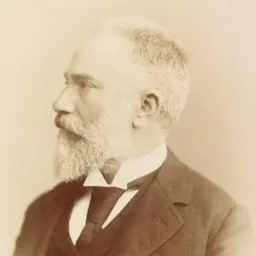
Joseph Buell Ely (February 22, 1881 – June 13, 1956) was an American lawyer and Democratic politician from Massachusetts. As a conservative Democrat, Ely was active in party politics from the late 1910s, helping to build, in conjunction with David I. Walsh, the Democratic coalition that would gain an enduring political ascendancy in the state. From 1931 to 1935, he served as the 52nd governor of Massachusetts. He was opposed to the federal expansion of the New Deal, and was a prominent intra-party voice in opposition to the policies of Franklin Delano Roosevelt. In 1944 he made a brief unsuccessful bid for the Democratic presidential nomination.
Early years Joseph Buell Ely was born in Westfield, Massachusetts, to Henry Wilson Ely and Sarah Naomi Buell Ely. His grandfather, Joseph Miner Ely, was one of the founders of Westfield's important whip industry, and his father, a lawyer, was active in Democratic party circles in heavily Republican western Massachusetts. Ely attended local schools, and then Williams College, where he helped organize student support for William Jennings Bryan in the 1900 presidential election. He graduated from Williams in 1902, and then received a law degree from Harvard Law School in 1905. He returned to Westfield, where he joined his father's law firm. In 1906 he married Harriet Zelda Dyson, a schoolteacher; they had one son.
Governor David I. Walsh appointed Ely to serve as District Attorney for the Western District of Massachusetts in 1915; he was elected in his own right to this position the next year, serving until 1920. Ely again supported Smith at the 1928 Democratic National Convention.
Ely was opposed in the general election by incumbent Governor Frank G. Allen. The Republicans were harmed politically by the 1929 Stock Market Crash and the start of the Great Depression, and were further divided over the issue of Prohibition. Ely ran on a platform emphasizing debt-financed public works projects. Highway construction in Massachusetts was accelerated by this work, which was also supported by the imposition of a gasoline tax.
Other policies advocated by Ely included substantial reductions in state salaries during the depression, which was met with overwhelming legislative resistance. In concert with the City of Boston, Ely established a permanent Boston Police Academy to increase the training of public safety officers.
Curley and Ely would again cross swords in the 1932 presidential election, when Curley supported Franklin Delano Roosevelt and Ely supported Smith. Ely and Walsh were successful in getting Curley and other Roosevelt supporters excluded from the state's delegation to the 1932 Democratic National Convention, although Curley attended the convention anyway as a delegate representing Puerto Rico. Ely gave the convention speech formally nominating Smith, but shifted to giving lukewarm support to Roosevelt after the latter won the party's nomination. He was afterward snubbed by Roosevelt on federal appointment matters because of his support for Smith. Ely comfortably won reelection in 1932, defeating Lieutenant Governor William S. Youngman. The divisive and at times acrimonious intra-party strife between Curley and the Ely-Walsh wing of the Democratic Party contributed to the state's difficulties in securing federal relief funds.
Later years Ely declined to run for reelection in 1934 and returned to law. He became a senior partner in the firm of Ely, Bradford, Thompson and Brown with future governor Robert F. Bradford and George E. Thompson. He remained active in state and national Democratic politics, continuing to oppose Roosevelt's New Deal policies, As legal representative to Boston real estate interests, he opposed the city's acquisition of land for New Deal projects, tieing up the Old Harbor Housing Project in litigation for over two years. In 1935, he joined the American Liberty League, and supported Republican Alf Landon in the 1936 presidential election.
Ely died at the age of 75 on June 13, 1956 at his home in Westfield. He is buried at Westfield's Pine Hill Cemetery.
Joseph Ely is well remembered in his hometown, where Westfield State University's Governor Joseph B. Ely Library is named in his honor.
Don’t just read it —
keep it.
Full-length biographies made to live with: read them, listen on the way to work, watch them tonight.
- E-book
- Audio
- Video
Instant download · yours to keep · every purchase keeps this site free
Important facts
People in Joseph B. Ely's life
Named in this biography and alive at the same time

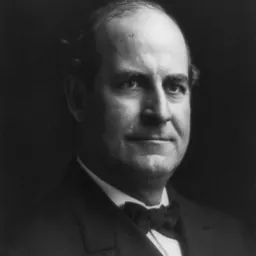



Related people
Same field, nearest in time
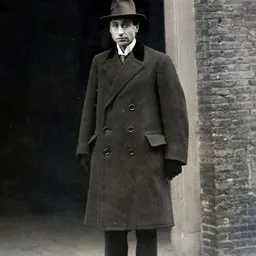
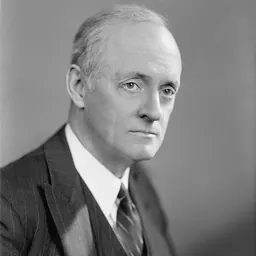
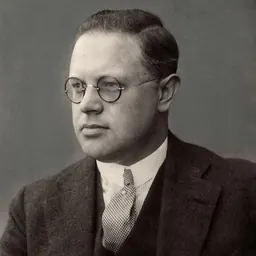
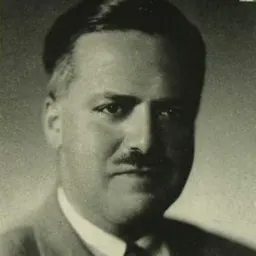
Contemporaries
People whose lives overlapped Joseph B. Ely's

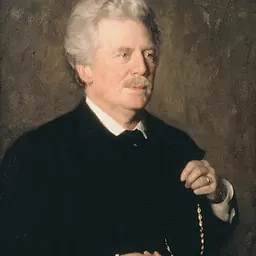
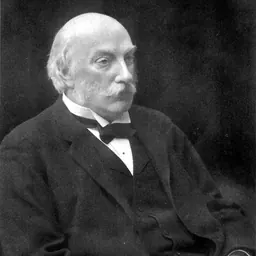
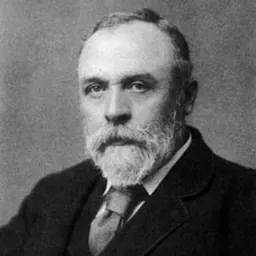

Frequently asked questions
Who was Joseph B. Ely?
American politician (1881-1956)
When was Joseph B. Ely born?
Joseph B. Ely was born on 22 February 1881 in Westfield.
When did Joseph B. Ely die?
Joseph B. Ely died on 13 June 1956 in Westfield.
What was Joseph B. Ely's occupation?
Joseph B. Ely was a lawyer, politician and governor.
What nationality was Joseph B. Ely?
Joseph B. Ely was American.
Sources & further reading
Cite this page
APA: Biography.guide. (2026). Joseph B. Ely. https://biography.guide/joseph-b-ely/
MLA: "Joseph B. Ely." Biography.guide, https://biography.guide/joseph-b-ely/.
Chicago: "Joseph B. Ely." Biography.guide. https://biography.guide/joseph-b-ely/.
Data last updated: 2026-09-20 · Spot an error? Report a correction.
Page generated 2026-09-27 05:25 UTC