
About Joseph Asher
Lived 1921 – 1990 (aged 68–69). Joseph Asher was an American rabbi.
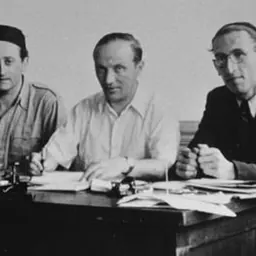
Left to right: Rabbi Zvi Helfgott (later Rabbi Zvi Asaria), Josef Rosensaft and Rabbi Joseph Asher, members of the Central Jewish Committee for the British Zone of Germany. Photo taken at Bergen-Belsen, probably in 1947 Joseph Asher (1921–1990) was an American rabbi born in Germany, known for his advocacy of reconciliation between the Jews and the Germans in the post-Holocaust era, and for his support for the civil rights movement in the United States. He was senior rabbi at Congregation Emanu-El in San Francisco for 19 years.
Family Joseph Asher was born Joseph Ansbacher on January 7, 1921, in Heilbronn-am-Neckar, Germany. He changed his surname as early as 1945.
He was the sixth generation of rabbis in his family. His father, Jonah Ansbacher (1880–1967) was an Orthodox rabbi who had received a doctorate from the University of Erlangen, writing a thesis on a 13th-century Arab cosmologist. His father was ordained by Rabbi Solomon Breuer and he was an ardent follower of Rabbi Samson Raphael Hirsch, founder of the Torah im Derech Eretz trend in Judaism. Joseph Asher left the Orthodox Judaism of his ancestors and later became a Reform rabbi.
Education
After his father received a rabbinic appointment, the Ansbacher family moved to Wiesbaden in 1925, where Joseph attended the Staatliche Gymnasium. When the Nazis took power in Germany in January 1933, he was one of only seven Jews in a student body of around 600, and the only Jew in his class. He endured three years of harassment including an antisemitic insult carved into the top of his desk, and other students singing popular songs calling for the murder of the Jews. In 1936, all Jewish students were expelled from the public schools, and his parents sent him to the Talmud Torah school in Hamburg, led by Rabbi Joseph Carlebach, where he graduated in spring, 1938. Among the frequent guest lecturers in his senior year was Martin Buber.
Because of the severely deteriorating conditions for Jews in Germany, his family had obtained exit visas in 1933 to be used at the appropriate time. His family sent Joseph to London after his graduation in 1938 to begin rabbinical college. He attended Etz Chaim Yeshiva in London and Jews' College (now the London School of Jewish Studies). After the war, he finished his studies at Hebrew Union College in Cincinnati, Ohio. His semikhah described him as shalselet rabbanim, that is, a member of a chain of rabbis in a long family tradition. After the emaciated prisoners arrived in Sydney, they were confined to internment camps until the Japanese attack on Pearl Harbor and the Philippines in December 1941. Asher immigrated to the United States in 1947, and served at synagogues in Olean, New York; Sarasota, Florida; and then in Tuscaloosa, Alabama from 1956 to 1958. He served as rabbi of Temple Emmanuel in Greensboro, North Carolina from 1958 to 1968, and at Congregation Emanu-El in San Francisco from 1967 until his retirement in 1986 as rabbi emeritus.
German-Jewish relations after the Holocaust
In London, Asher had established a friendship with Lily Montagu CBE of the World Union for Progressive Judaism. In 1947, she recommended him to Leo Baeck, the organization's president, as an emissary to visit various German cities to investigate the status of the Jews in the immediate postwar period. He spent six weeks assessing the needs of displaced persons, including a lengthy visit to Bergen-Belsen.
Although many people criticized Asher for this article, Berlin Mayor Willy Brandt responded favorably, as did the Union of American Hebrew Congregations. In 1965, Rabbi Asher led a contingent of four German-speaking rabbis, who met with over 8000 German teachers in training, and helped the German school system develop its first curriculum for secondary schools covering the Holocaust.
He explained the thinking behind his work in Germany in an interview published in the Aufbau on March 11, 1966: "A new generation is growing up that was not born when the horrible crime was committed and for which they cannot be held responsible. The only positive thing we can do is to acquaint them with the Jews, their teachings, customs, and history, which they have not had the opportunity to know."
As the years passed, he repeatedly visited Judaic studies programs in German universities, and late in life became a visiting professor at the Kirchliche Hochschule in Berlin. He served on an international committee of scholars to help design a memorial at the Wannsee Villa, where the Nazi leadership planned the Final Solution in January 1942.
In 1989, the German government awarded him the Grand Cross of Merit. This sit-in movement spread throughout the southern states, leading in many communities to progress toward desegregation, and increasing political pressure on the federal government. The Civil Rights Act of 1964 made segregation of public accommodations illegal. As a rabbi in the deep South, he did not hesitate to speak out against racial discrimination in the workplace, even when the employers were Jewish.
Rabbi Asher was wary of militant extremism. In San Francisco, he refused to share a podium with radical minister Jim Jones, who went on to mass suicide at Jonestown.
Israeli-Palestinian conflict
Rabbi Asher supported reconciliation between Israelis and Palestinians. He participated in Breira, an organization that advocated Israeli territorial concessions in the period following the Yom Kippur War.
Death and legacy Asher died of prostate cancer
His successor at Congregation Emanu-El in San Francisco, Robert Kirschner, wrote that Rabbi Asher "embodied those attributes of German Jewry of which his generation was the last living witness: dignity, sobriety, erudition, and a singular elegance.
Don’t just read it —
keep it.
Full-length biographies made to live with: read them, listen on the way to work, watch them tonight.
- E-book
- Audio
- Video
Instant download · yours to keep · every purchase keeps this site free
Important facts
People in Joseph Asher's life
Named in this biography and alive at the same time
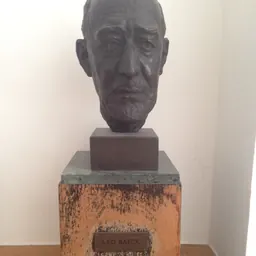



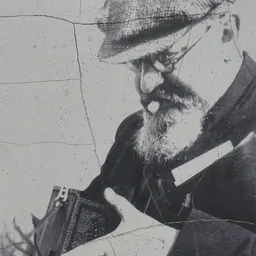


Related people
Same field, nearest in time
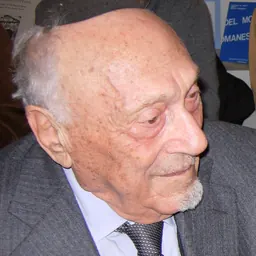



Contemporaries
People whose lives overlapped Joseph Asher's


Frequently asked questions
Who was Joseph Asher?
rabbi (1921–1990)
When was Joseph Asher born?
Joseph Asher was born in 1921 in Heilbronn.
When did Joseph Asher die?
Joseph Asher died in 1990.
What was Joseph Asher's occupation?
Joseph Asher was a rabbi.
What nationality was Joseph Asher?
Joseph Asher was American.
Sources & further reading
Cite this page
APA: Biography.guide. (2026). Joseph Asher. https://biography.guide/joseph-asher/
MLA: "Joseph Asher." Biography.guide, https://biography.guide/joseph-asher/.
Chicago: "Joseph Asher." Biography.guide. https://biography.guide/joseph-asher/.
Data last updated: 2026-09-20 · Spot an error? Report a correction.
Page generated 2026-09-27 05:19 UTC