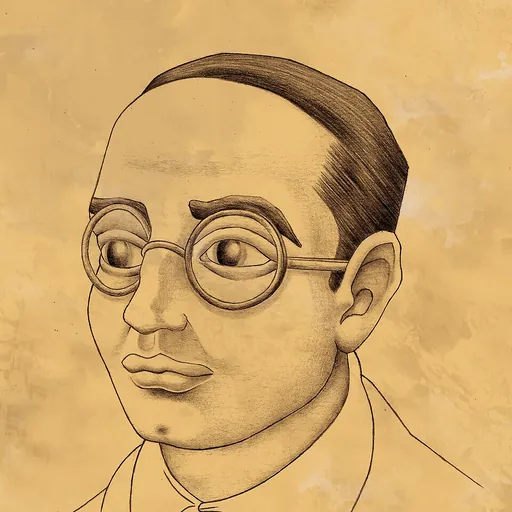
About Josep Dencàs i Puigdollers
Lived 1900 – 1966 (aged 65). Josep Dencàs i Puigdollers was a Spanish politician, physician and medical doctor.
Josep Dencàs i Puigdollers (March 19, 1900 – February 13, 1966) was a Catalan nationalist politician active in the Republican Left of Catalonia.
A supporter of Catalan independence movement, he served as interior minister of short-lived Catalan State during the turbulent Events of 6 October. He was considered a leading figure of the Catalan version of fascism.
Biography
He was born in Vic on March 19, 1900 in a family of pharmacists. He studied at the University of Barcelona, where he graduated in medicine.
Political career
Dencàs participated in the establishment of an earlier Catalan Republic (and the Second Spanish Republic) in 1931, having participated in the founding of the Republican Left of Catalonia (ERC) a few days earlier. He was elected ERC deputy for the Barcelona district in the general elections of June 1931 and in the first elections to the Parliament of Catalonia, in 1932. During these months he focused on organizing the Republican Youth of Catalonia (JEREC), with the aim of gaining influence within the ERC itself. He was also behind the creation of paramilitary groups, the "Escamots", which Dencàs himself led.
In December 1932, he was appointed Minister of Health and Social Assistance in the government of Francesc Macià and later Minister of the Interior in the first government of Lluis Companys in January 1934. As head of police, he implemented a brutal campaign of repression against the anarchists of the CNT-FAI. Influenced by the ultranationalist and racist ideas of Pere Màrtir Rossell i Vilar, Dencàs defined himself as a "national socialist." He was considered one of the most violent leaders of the JEREC. His performance as Minister of the Interior was widely criticized for fleeing while other groups fought to the end. In fact, the British writer Gerald Brenan in his book The Spanish Labyrinth accused him of collusion with the Spanish right-wing, in particular with José María Gil-Robles y Quiñones. According to Ramón Ardit, after the surrender, the resisting Catalans said they wanted to "kill Dencàs."
Later life
Exiled in France, he was arrested by the French authorities and released shortly after. In 1936 when Spanish Republican authorities restored the Catalonian government, Companys re-appointed some former officials but Dencàs, as he was blamed for the previous unsuccessful uprising.
Don’t just read it —
keep it.
Full-length biographies made to live with: read them, listen on the way to work, watch them tonight.
- E-book
- Audio
- Video
Instant download · yours to keep · every purchase keeps this site free
Important facts
People in Josep Dencàs i Puigdollers's life
Named in this biography and alive at the same time
Related people
Same field, nearest in time






Contemporaries
People whose lives overlapped Josep Dencàs i Puigdollers's




Frequently asked questions
Who was Josep Dencàs i Puigdollers?
Spanish politician (1900-1965)
When was Josep Dencàs i Puigdollers born?
Josep Dencàs i Puigdollers was born on 19 March 1900 in Vic.
When did Josep Dencàs i Puigdollers die?
Josep Dencàs i Puigdollers died on 13 February 1966 in Tangier.
What was Josep Dencàs i Puigdollers's occupation?
Josep Dencàs i Puigdollers was a politician, physician and medical doctor.
What nationality was Josep Dencàs i Puigdollers?
Josep Dencàs i Puigdollers was Spanish.
Sources & further reading
· Wikipedia: Josep Dencàs i Puigdollers
Cite this page
APA: Biography.guide. (2026). Josep Dencàs i Puigdollers. https://biography.guide/josep-dencas-i-puigdollers/
MLA: "Josep Dencàs i Puigdollers." Biography.guide, https://biography.guide/josep-dencas-i-puigdollers/.
Chicago: "Josep Dencàs i Puigdollers." Biography.guide. https://biography.guide/josep-dencas-i-puigdollers/.
Data last updated: 2026-09-22 · Spot an error? Report a correction.
Portrait: Wikimedia Commons · author & licence
Page generated 2026-09-27 04:58 UTC