
About José Zorrilla
Lived 1817 – 1893 (aged 75). José Zorrilla was a Spanish and Mexican playwright, poet and writer.
José Zorrilla y Moral was a Spanish poet and dramatist, who became National Laureate.
Biography Zorrilla was born in Valladolid to a magistrate in whom Ferdinand VII placed special confidence. He was educated by the Jesuits at the Real Seminario de Nobles in Madrid, wrote verses when he was twelve, became an enthusiastic admirer of Walter Scott and Chateaubriand, and took part in the school performances of plays by Lope de Vega and Calderón de la Barca.
In 1833, he was sent to study law at the university of Toledo, but after a year of idleness, he fled to Madrid, where he horrified the friends of his absolutist father by making violent speeches and by founding a newspaper that promptly was suppressed by the government. He narrowly escaped transportation to the Philippines, and spent the next few years in poverty.
The death of the satirist Mariano José de Larra brought Zorrilla into notice. His elegiac poem, read at Larra's funeral in February 1837, introduced him to the leading men of letters. In 1837 he published a book of verses, mostly imitations of Alphonse de Lamartine and Victor Hugo, which was so favourably received that he printed six more volumes within three years.
After collaborating with Antonio García Gutiérrez on the play Juán Dondolo (1839), Zorrilla began his individual career as a dramatist with Cada cual con su razón (1840), and during the next five years he wrote 22 plays, many of them extremely successful. His Cantos del trovador (1841), a collection of national legends written in verse, made Zorilla second only to José de Espronceda in popular esteem.
National legends also supply the themes of his dramas, which Zorilla often constructed by adapting older plays that had fallen out of fashion. For example, in El Zapatero y el Rey he recasts El montanés Juan Pascual by Juan de la Hoz y Mota; in La mejor Talon la espada he borrows from Agustín Moreto y Cavana's Travesuras del estudiante Pa-atoja. His famous play Don Juan Tenorio is a combination of elements from Tirso de Molina's Burlador de Sevilla and from Alexandre Dumas, père's Don Juan de Marana (which itself derives from Les Âmes du purgatoire by Prosper Mérimée). However, plays like Sancho García, El Rey loco, and El Alcalde Ronquillo are much more original. He considered his last play, Traidor, inconfeso y mártir (1845), to be his best play.
Upon the death of his mother in 1847, Zorrilla left Spain. He resided for a while at Bordeaux, and settled in Paris, where his incomplete poem Granada was published in 1852. In a fit of depression, he emigrated to America three years later, hoping, he claimed, that yellow fever or smallpox would kill him. During eleven years in Mexico he wrote very little. He returned to Spain in 1866, to find himself half-forgotten and considered old-fashioned.
Friends helped Zorilla obtain a small post, but the republican minister later abolished it. He was always poor, especially for the 12 years after 1871. The publication of his autobiography, Recuerdos del tiempo viejo in 1880, did nothing to alleviate his poverty. Though his plays were still being performed, he received no money from them.
Finally, in his old age, critics began to reappraise his work, and brought him new fame. He received a pension of 30,000 reales, a gold medal of honor from the Spanish Academy, and, in 1889, the title of National Laureate. He died in Madrid on 23 January 1893.
In his early years, Zorrilla was known as an extraordinarily fast writer. He claimed he wrote El Caballo del Rey Don Sancho in three weeks, and that he put together El Puñal del Godo in two days. This may account for some of the technical faults—redundancy and verbosity—in his works. His plays often appeal to Spanish patriotic pride, and actors and audiences have enjoyed his effective dramaturgy. Don Juan Tenorio is his best-known work.
Works Plays Vivir loco y morir más, 1837 Juan Dándolo, 1839 Más vale llegar a tiempo que rondar un año, 1839 Ganar perdiendo, 1839 Cada cual con su razón, 1839 Lealtad de una mujer y aventuras de una noche, 1839 El zapatero y el rey, primera parte, drama en cuatro actos, 1840; segunda parte, 1841 El eco del torrente, 1842 Los dos virreyes, 1842 Un año y un día, 1842 Sancho García, Composición trágica en tres actos, 1842 Caín pirata. Cuadro de introducción al drama en tres actos titulado Un año y un día, 1842 El puñal del godo, 1843 Sofronia, tragedia en un acto a la manera clásica, 1843 La mejor razón, la espada, 1843 El molino de Guadalajara, 1843 La oliva y el laurel. Alegoría escrita para las fiestas de la proclamación de Su Majestad la Reina doña Isabel II de España, 1843 Don Juan Tenorio. Drama religioso-fantástico, 1844 La copa de marfil, 1844 El alcalde Ronquillo, 1845 El rey loco. Drama en tres actos, 1846 La reina y los favoritos, 1846 La calentura, 1847 (segunda parte de El puñal del godo) El excomulgado, drama en tres actos, 1848 La Creación y El Diluvio Universal. Espectáculo teatral en cuatro actos, divididos en seis partes, 1848 Traidor, inconfeso y mártir, 1849 El caballo del rey Don Sancho. Comedia en cuatro jornadas y en verso, 1850
Poetry Poesías, I, Madrid: J. Sancha, 1837 Poesías, II, Madrid: José María Repullés, 1838 Poesías, III, Madrid: José María Repullés, 1838 Poesías, IV, Madrid: José María Repullés, 1839 Poesías, V, Madrid: José María Repullés, 1839 Poesías, VI, Madrid: José María Repullés, 1839 Poesías, VII, Madrid: José María Repullés, 1840 Vigilias del estío. Madrid: Boix, 1842 Recuerdos y fantasías. Madrid: J. Repullés, 1844 Cuentos de un loco, 1853 La flor de los recuerdos. Ofrenda que hace a los pueblos hispano-americanos, 1855 Dos rosas y dos rosales, 1859 Granada mía!, 1885
Don’t just read it —
keep it.
Full-length biographies made to live with: read them, listen on the way to work, watch them tonight.
- E-book
- Audio
- Video
Instant download · yours to keep · every purchase keeps this site free
Important facts
People in José Zorrilla's life
Named in this biography and alive at the same time


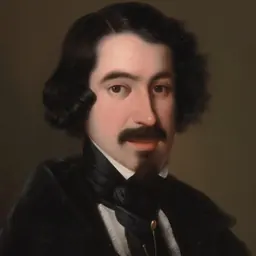
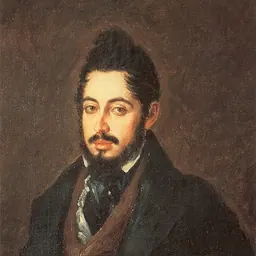
Related people
Same field, nearest in time

Contemporaries
People whose lives overlapped José Zorrilla's

Frequently asked questions
Who was José Zorrilla?
Spanish poet, writer, fighter (1817–1893)
When was José Zorrilla born?
José Zorrilla was born on 21 February 1817 in Valladolid.
When did José Zorrilla die?
José Zorrilla died on 23 January 1893 in Madrid.
What was José Zorrilla's occupation?
José Zorrilla was a playwright, poet and writer.
What nationality was José Zorrilla?
José Zorrilla was Spanish and Mexican.
Sources & further reading
Cite this page
APA: Biography.guide. (2026). José Zorrilla. https://biography.guide/jose-zorrilla/
MLA: "José Zorrilla." Biography.guide, https://biography.guide/jose-zorrilla/.
Chicago: "José Zorrilla." Biography.guide. https://biography.guide/jose-zorrilla/.
Data last updated: 2026-09-20 · Spot an error? Report a correction.
Page generated 2026-09-27 05:23 UTC